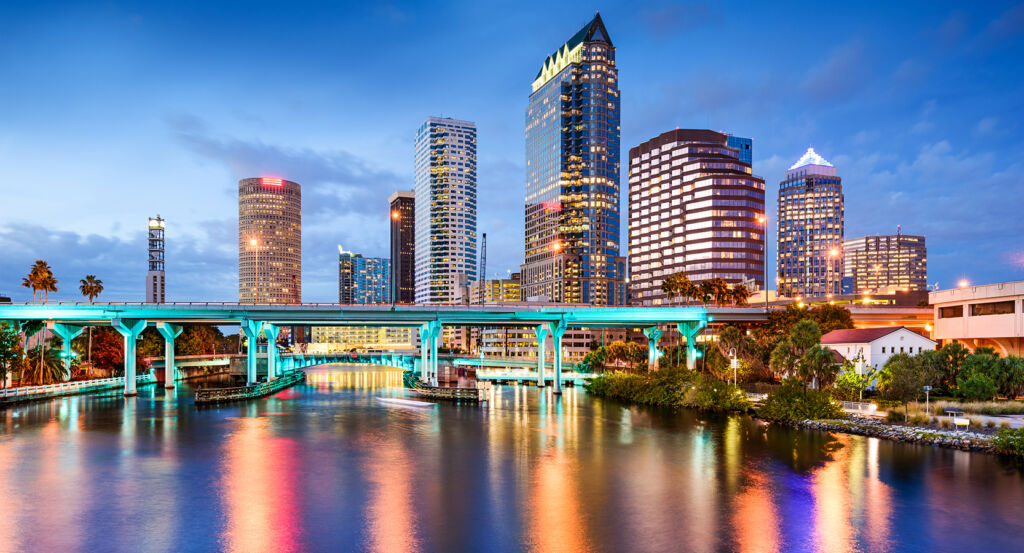
Why you should experience Grand Hyatt Tampa Bay in Tampa, Florida.
Grand Hyatt Tampa Bay is a rare waterfront enclave where seclusion, natural scale, and deliberate calm create an experience that feels unexpectedly removed from the city while remaining firmly within it.
The sensation begins with distance, not measured in miles, but in atmosphere. You turn off the main road and suddenly Tampa loosens its grip. The air feels different. Mangroves replace concrete. Water appears not as backdrop but as boundary. The hotel sits on its own peninsula, wrapped on nearly all sides by bay and greenery, and that geography immediately reshapes how your body understands place. Arrival feels less like checking in and more like crossing into a protected zone. The building rises quietly from the landscape, substantial but not imposing, designed to coexist with its surroundings. Inside, the mood is expansive and grounded. Public spaces open outward toward water and sky, with wide sightlines that invite stillness. Light moves generously through the lobby and lounges, reflecting off the bay and filtering through glass in a way that softens edges and slows perception. You sense space here, not the kind that demands to be filled, but the kind that allows you to exhale. Seating areas are arranged for lingering. Conversations drop in volume. Time stretches subtly. Guest rooms extend this discussion with nature and containment. They are generously scaled, designed to feel restorative. Beds are substantial and deeply comfortable, encouraging real, uninterrupted rest. Windows and balconies frame mangroves, water, or open sky, keeping the exterior world present. Interiors remain composed and neutral, allowing light, weather, and time of day to shape the atmosphere. Bathrooms are calm and spacious, turning daily routines into quiet rituals. What defines Grand Hyatt Tampa Bay is its sense of removal without isolation, a feeling that you've stepped away from urgency without ever leaving the city behind.
What you should know about Grand Hyatt Tampa Bay.
Grand Hyatt Tampa Bay quietly excels by offering one of the most environmentally immersive stays in the Tampa area, using landscape rather than luxury signaling to shape the resonant experience.
The hotel's peninsula setting is not ornamental; it is functional. Surrounded by protected mangroves and open water, the property exists within a living ecosystem that subtly governs the pace of each day. You notice it in small ways at first, the way sound dissipates, how birds replace traffic noise, how wind moves differently across water than streets. Over multiple days, this exposure compounds. Mornings feel calmer. Afternoons feel spacious. Evenings settle earlier and. Another understated strength of the hotel is how it manages scale. Despite its size, the property never feels overwhelming. This is achieved through thoughtful zoning, public spaces that disperse activity, pathways that invite wandering rather than funneling, and outdoor areas that absorb energy rather than amplify it. Pools, walking paths, and waterfront edges feel integrated. You are never told where to be; you simply find yourself where you want to stay. Service reflects this same measured intelligence. Interactions are polished, warm, and situational, guided by attentiveness. Staff understand the rhythms of the property, when the bay is calmest, where the light lands best at sunset, how weather shifts the mood of outdoor spaces, and they offer guidance that feels environmental. Architecturally, the hotel avoids theatrical gestures. Materials feel durable and honest, chosen to age alongside salt air and sun. Over time, guests often realize that the hotel's greatest luxury is environmental quiet. You are not entertained into relaxation; you are placed somewhere that makes relaxation inevitable.
How to fold Grand Hyatt Tampa Bay into your trip.
Grand Hyatt Tampa Bay works best when you allow it to function as a retreat within reach, shaping your Tampa experience through contrast, return, and immersion.
Begin your mornings slowly. Wake to water or greenery outside the window, open the curtains, and let natural light and sound arrive before plans do. Walk the property early, when the air is cool and the bay feels open and reflective. Let the landscape set your internal pace. Breakfast here feels best without urgency, a moment to sit, observe, and orient before deciding whether to move outward. When you do venture into the city, the contrast becomes part of the experience. Tampa's energy feels sharper, more defined, because you know where you're returning. After meetings, sightseeing, or events, coming back across the causeway feels restorative. The shift in sound and space marks a clear boundary. Midday pauses are especially meaningful here. Swim, walk, read, or simply sit as light shifts across the water. This pause isn't a break from the trip; it is the trip's counterweight. Afternoons can remain close or stretch outward again, guided by energy. Evenings arrive gently. Sunset over the bay becomes a natural marker of closure. Dine on property or nearby, then return as darkness settles quietly around the peninsula. Over several days, a rhythm emerges defined by enclosure and release. Mornings shaped by nature, afternoons balanced between engagement and rest, evenings anchored in calm. You stop trying to extract Tampa all at once and begin experiencing it through contrast and perspective.
Where your story begins.
Foresyte Travel reveals places that feel extraordinary long before you arrive.
Experience premium editorial crafted for luxury travelers.