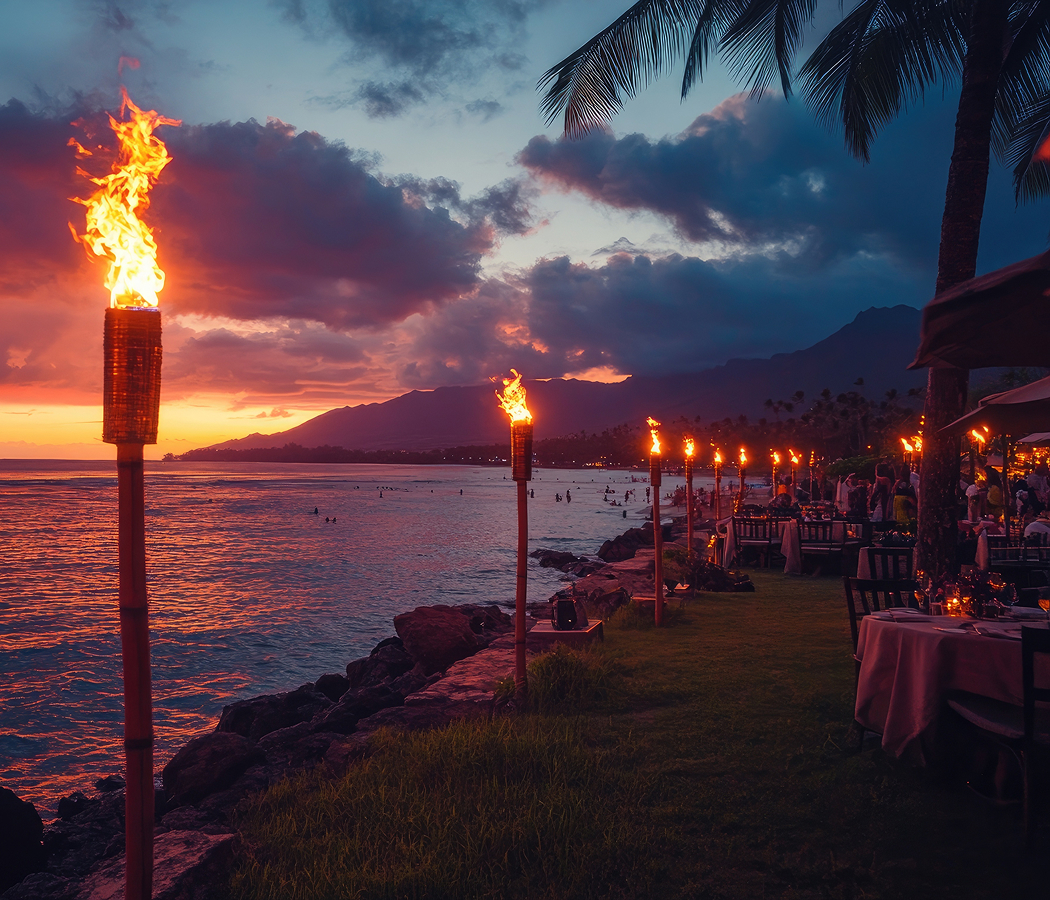
Why Grand Wailea, A Waldorf Astoria Resort matters.
Grand Wailea, A Waldorf Astoria Resort is a large oceanfront resort where Wailea's planned coastal district meets Takeshi Sekiguchi's $600 million vision, Previn Desai's architecture and a substantial art collection.
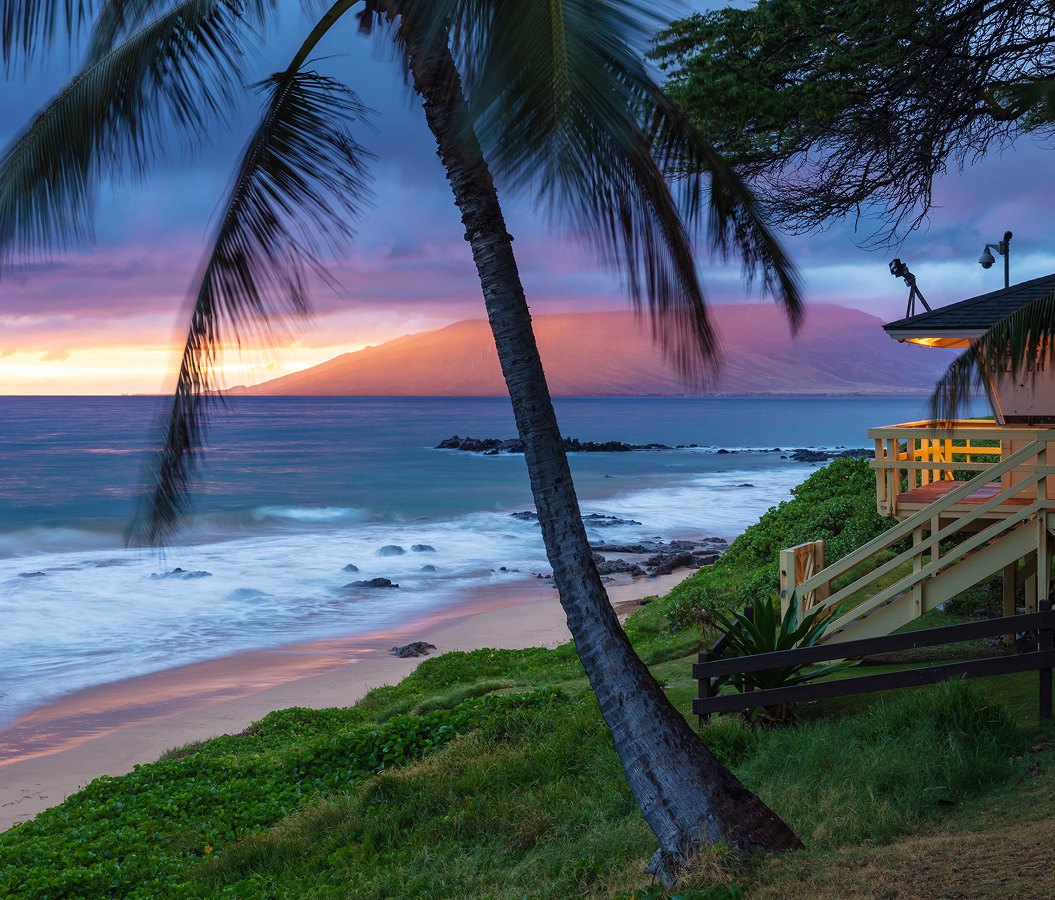
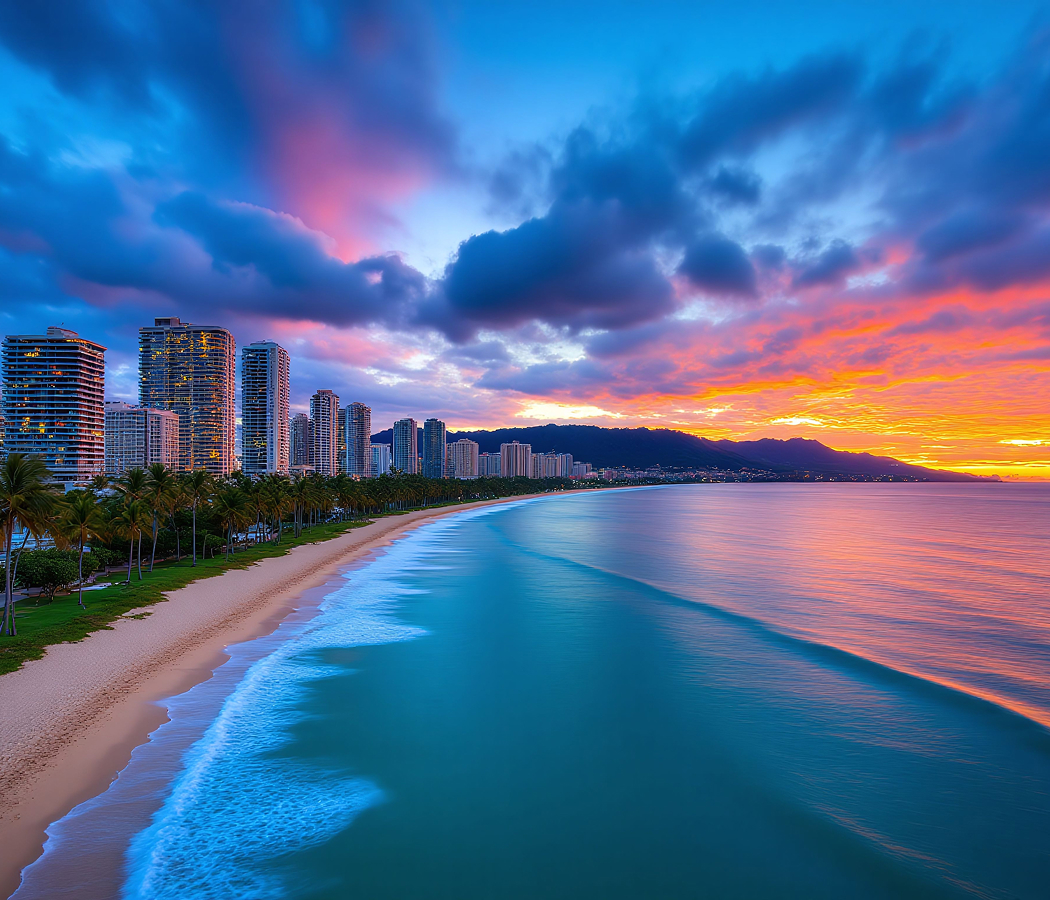
Fronting Wailea Alanui Drive near Okolani Drive, the resort occupies the coast between Wailea Beach, Mokapu Beach, Polo Beach and Palauea Beach, with Wailea Point and Haleakalā's lower slopes rising beyond ʻAlalākeiki Channel. Its shoreline terrace opens to the Pacific while the volcanic mass of Haleakalā rises inland. An open-air atrium forms the resort's central interior, connecting public spaces with water features and landscaped courtyards. Flowering gardens extend from the central buildings toward the beach, bringing the coastal landscape into the resort's layout. The result is an oceanfront property whose architecture, gardens and commissioned art remain direct expressions of Sekiguchi's original plan.
What defines Grand Wailea.
Grand Wailea, A Waldorf Astoria Resort is best known for Takeshi Sekiguchi's ambitious development, its large art collection and a succession of ownership and management changes that brought it from Grand Hyatt Wailea into Hilton's Waldorf Astoria collection. Sekiguchi developed the resort through TSA International on a 40-acre Wailea shoreline parcel, with a reported construction cost of $600 million. His concept treated the property as a cultural project shaped by six influences: water, light, sound, flowers, trees and art. Sekiguchi recruited graphic designer Ryo Urano to create the orchid emblem and visual elements that carried the concept across the resort. The property opened in October 1991 as Grand Hyatt Wailea Resort & Spa. Its enormous investment soon placed the project under financial pressure, and Sekiguchi's management relationship with Hyatt ended in 1993. He then oversaw the hotel through an independent management company. International Hotel Acquisitions acquired the property in June 1998 for $264 million; KSL Recreation purchased it six months later for $373 million. KSL sold the resort to CNL Hotels & Resorts in 2004, shifting ownership while the hotel retained its established name. In January 2006, Hilton assumed management and brought Grand Wailea into the first group of properties in its Waldorf-Astoria Collection. Morgan Stanley acquired CNL Hotels & Resorts in 2007, adding the Maui resort to its extensive portfolio of major properties. Blackstone acquired the resort in 2018 from Singapore's GIC in a transaction valued at $1.1 billion. That sale marked another major ownership change for a property that had grown from Sekiguchi's distinctive vision into an internationally managed resort and high-value real estate asset. The resort's $350 million multiyear renovation, completed in 2024, represents the largest reinvestment since its opening and carries the property into another period of redesign.
How Grand Wailea fits.
Grand Wailea, A Waldorf Astoria Resort works as a starting point for an outing tracing South Maui's coastal communities from a nineteenth-century congregation through a ranch port to a volcanic shoreline.
Begin at Keawalaʻi Congregational Church, whose congregation formed in 1832 and first worshipped in a thatched building. A stone-and-wood meeting house followed, and the present lava-rock church was built in 1855. Its thickened lower walls, shingled gable roof and entrance belfry carry a simple island church form, with side doors recalling New England meetinghouses. The original belfry collapsed in 1962, prompting a rehabilitation that added a replacement tower and protective exterior finish. The church preserves a long-running community institution within Honuaʻula's coastal history. Continue to Mākena Landing, which connected the south coast's ranching economy with Honolulu's market. In 1850, Torbert established a landing at Mākena Bay to ship goods from his upcountry lands, linking ranch roads with the coast. James Makee acquired Torbert's property in 1856 and expanded the ranching operation later known as Rose Ranch. The landing became one of Maui's busiest leeward ports, sending cattle to Honolulu on steamers; early twentieth-century shipments included about a thousand head annually. The cattle trade tied the dry coast to paniolo culture inland and made Mākena a working maritime center. Conclude at La Pérouse Bay, also known as Keoneʻōʻio, where Haleakalā's southwest rift zone reaches the coast through one of Maui's youngest lava fields. French naval officer Jean-François de Galaup, comte de La Pérouse, landed there in 1786 with the frigates Astrolabe and Boussole, becoming the first European explorer to land on Maui. Radiocarbon samples date the bay's youngest lava flows between AD 1480 and 1600, revising an older attribution to 1790. The flows built Cape Kīnaʻu and spread dark volcanic rock along the coast, creating the terrain encountered by La Pérouse's expedition centuries later. The progression moves from Keawalaʻi's enduring congregation through Mākena's ranch port to La Pérouse Bay's volcanic coast, connecting local community, maritime trade and the geological forces that shaped South Maui.
Where your story begins.
Foresyte Travel reveals places that feel extraordinary long before you arrive.
Enjoy editorial crafted for luxury travelers.