
Why Hakkasan matters.
Hakkasan is an internationally recognized Cantonese restaurant where The Bund's historic financial architecture meets contemporary Chinese fine dining, connecting the culinary ambitions of a London-founded restaurant group with Shanghai's waterfront heritage and an acclaimed dining room overlooking the Huangpu River.
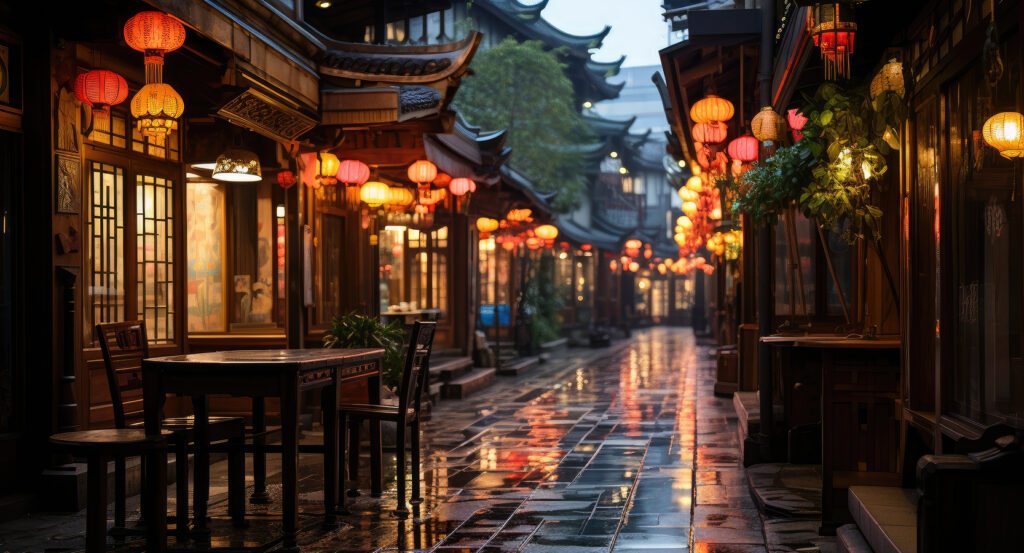
The restaurant occupies the fifth floor of Bund 18 at 18 Zhongshan East 1st Road, near the northern end of the historic waterfront promenade and the intersection with East Nanjing Road. The building's restored stone façade and classical architectural detailing preserve the imposing character of the former banking headquarters beneath the restaurant. Inside, dark timber screens, intricate latticework and subdued lighting divide the dining room into intimate sections inspired by traditional Chinese architectural forms. Deeply upholstered seating and polished surfaces establish a restrained interior, with expansive windows opening toward the river and the illuminated towers of Lujiazui. The result is a sophisticated waterfront restaurant whose enclosed dining spaces and panoramic skyline views connect contemporary Cantonese hospitality with one of Shanghai's most historically significant commercial addresses.
What defines Hakkasan.
Hakkasan is best known for bringing Alan Yau's internationally influential modern Cantonese restaurant concept to the Bund in 2014, establishing the brand's first mainland Chinese location within one of Shanghai's most celebrated historic buildings. Yau, a Hong Kong-born British restaurateur, developed his reputation through Wagamama, the Japanese-inspired restaurant chain he founded in London in 1992. His subsequent projects expanded into Chinese dining, culminating in the opening of Hakkasan at Hanway Place in London in 2001. The restaurant introduced a sophisticated interpretation of Cantonese cooking supported by contemporary interior design, music and an ambitious international wine program. Yau worked with French-born designer Christian Liaigre to develop the original London restaurant's distinctive combination of dark materials, Chinese lattice screens and intimate dining spaces. Hakkasan subsequently expanded internationally, establishing restaurants in destinations including Miami, Abu Dhabi, Dubai and Mumbai. The Shanghai project brought the brand into a city whose modern restaurant culture had developed alongside the restoration of the Bund's historic commercial buildings. Bund 18 originated as the headquarters of the Chartered Bank of India, Australia and China, occupying a prominent waterfront site associated with the financial institutions that shaped Shanghai's international commercial development. The surviving building was completed in 1923, incorporating classical architectural influences into a substantial banking headquarters. A major restoration transformed the property into a luxury commercial destination in 2004, introducing international retail and dining businesses into its former institutional interiors. Hakkasan selected the building for its Chinese debut, investing RMB 70 million in the restaurant's development. The Shanghai location became the brand's twelfth international restaurant when it opened in March 2014. Its arrival carried particular significance because the company was returning its Cantonese culinary concept to China after building an international reputation through restaurants in Europe, the Middle East and North America. The opening culinary program combined established Hakkasan signatures with dishes developed around Shanghai's local ingredients and dining preferences. The restaurant earned immediate recognition through the 2014 That's Shanghai Food and Beverage Awards for Best Chinese Fine Dining Restaurant. Its reputation expanded internationally in 2015 when Asia's 50 Best Restaurants placed Hakkasan at No. 46, establishing the restaurant among the region's recognized fine-dining institutions. Modern Media Awards also honored its interior design and modern Cantonese cooking that year. The restaurant developed a particularly distinguished wine program, receiving recognition from China's Wine List of the Year Awards and The World of Fine Wine. Its 2016 distinctions included Best Wine List in Eastern China and three stars for its medium-sized wine list. Dianping included the restaurant in its Shanghai Must Eat selection in 2017, extending its recognition into the domestic Chinese dining market. The MICHELIN Guide subsequently recognized Hakkasan in its 2018 edition, acknowledging its contemporary Cantonese cuisine within Shanghai's expanding fine-dining sector. The restaurant's beverage program earned further recognition through the 2019 DMBA Restaurant Bar of the Year award. A consequential interruption arrived in April 2020 when Hakkasan announced the permanent closure of its Shanghai establishment during the economic disruption associated with the COVID-19 pandemic. The decision appeared to end the brand's mainland Chinese operation after six years. Hakkasan subsequently reversed that departure, reopening the restaurant at Bund 18 in October 2020 with a lightly remodeled interior and renewed emphasis on Cantonese cooking. The reopening preserved the original waterfront address and restored the brand's presence in Shanghai's international restaurant market. Hakkasan continues to operate within Bund 18, maintaining the culinary and architectural foundations that distinguished its original debut.
How Hakkasan fits.
Hakkasan works as the concluding destination for a Bund itinerary connecting the architectural ambitions of Shanghai's international banking era, the commercial institutions that shaped its waterfront and the riverside promenade that became the city's most recognizable urban landscape.
Begin at Peace Hotel, the historic hotel occupying the intersection of East Nanjing Road and Zhongshan East 1st Road. The property's northern building originated as the Sassoon House, commissioned by Sir Victor Sassoon, the British businessman whose investments contributed to Shanghai's commercial development during the early twentieth century. Architects Palmer and Turner designed the structure, which opened in 1929 with a distinctive pyramidal copper roof and extensive Art Deco interiors. The building housed the Cathay Hotel, an establishment associated with Shanghai's international social life during the interwar period. Its luxurious interiors attracted prominent business figures, entertainers and travelers, establishing the property as an important institution within the city's cosmopolitan hospitality culture. The building subsequently became part of the Peace Hotel complex, preserving its historical association with the Sassoon family and Shanghai's commercial elite. Continue to Shanghai Pudong Development Bank Building, the former Hongkong and Shanghai Banking Corporation headquarters at No. 12 on the Bund. Palmer and Turner designed the expansive building, which was completed in 1923 during a period of intense competition among international financial institutions operating along the waterfront. Its neoclassical façade incorporates a substantial colonnade and imposing entrance, establishing the architectural character of a major international banking headquarters. The building's interior contains an elaborate octagonal entrance hall decorated with mosaics representing important international commercial cities. Its immense central dome and expansive proportions expressed the financial power of the institution that commissioned it. Following the establishment of the People's Republic of China, the building underwent changes in institutional use before becoming the headquarters of Shanghai Pudong Development Bank. The surviving structure preserves a substantial example of the architectural ambitions that accompanied Shanghai's emergence as an international financial center. Conclude at The Bund Promenade, the elevated pedestrian waterfront extending along Zhongshan East 1st Road beside the Huangpu River. The promenade occupies the eastern edge of the historic Bund, where foreign trading firms and financial institutions developed a concentration of commercial buildings during the nineteenth and early twentieth centuries. The waterfront's transformation followed Shanghai's opening as a treaty port in 1843, creating an international commercial district connected to maritime trade. Successive engineering projects strengthened the river embankment and expanded public access along the shoreline. The promenade's modern configuration developed through substantial urban improvements during the late twentieth century, including work associated with the city's preparations for the 2010 Shanghai World Expo. Its elevated pedestrian route provides uninterrupted views across the river toward the skyscrapers of Lujiazui, whose development transformed Pudong into a major financial district. The Oriental Pearl Tower, Shanghai World Financial Center and Shanghai Tower establish a dramatic contrast with the historic commercial buildings lining the western bank. The progression moves from the hospitality architecture of Shanghai's interwar international community through the banking headquarters that concentrated commercial power along the Bund and culminates at the waterfront connecting the city's historic financial district with the contemporary skyline of Pudong.
Where your story begins.
Foresyte Travel reveals places that feel extraordinary long before you arrive.
Enjoy editorial crafted for luxury travelers.

















































































































