
Why Hôtel de Nell matters.
Hôtel de Nell is a cultured five-star hotel where Faubourg-Montmartre's theatrical imagination, collector sensibility, nineteenth-century passage culture and contemporary design confidence converge inside a Haussmannian corner building conceived as the private home of an aesthete.
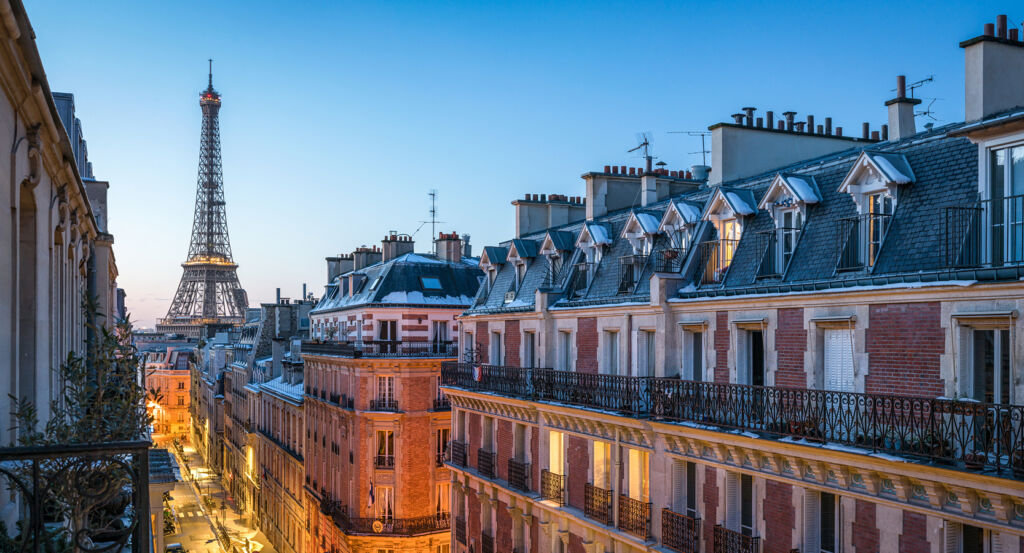
Set along Rue du Conservatoire near Rue Sainte-Cécile and just steps from Église Saint-Eugène-Sainte-Cécile, the hotel inhabits two formerly separate buildings that architect Jean-Michel Wilmotte physically unified during an extensive reconstruction completed in 2013. Behind a façade articulated by caryatids and curved windows, Wilmotte established a restrained material style of wide oak floorboards, walnut paneling, sand tones, midnight blue accents and Japanese paper lighting, punctuated by art drawn from private collections and neighboring galleries. Thirty-three individually composed rooms continue that residential language through organic-wool carpets, black-stone walk-in showers and, in selected accommodations, expansive Japanese baths carved from white marble with Oregon myrtle backrests. The result is a hotel where Wilmotte's architectural precision, evolving art collections and tactile craftsmanship give Faubourg-Montmartre's culture of galleries and performance the intimacy of a collector's Parisian home.
What defines Hôtel de Nell.
Hôtel de Nell is best known for its 2013 transformation by Jean-Michel Wilmotte and Wilmotte & Associés, who rehabilitated and extended 1,800 square meters by joining two previously separate buildings into a single 33-room hotel with a 60-seat restaurant, bar-lobby, private vinothèque and treatment room. The reconstruction retained the buildings' structural skeleton while reorganizing circulation with a new public staircase and service lift, enlarging guestrooms and undertaking substantial basement work to increase the height beneath existing vaults. Engineering became inseparable from the interior concept in bathrooms containing Wilmotte's specially designed Japanese baths, whose white-marble mass required structural reinforcement of the floors, while oak parquet, walnut wall panels, sand-colored surfaces and midnight blue accents established a deliberately restrained material palette. Wilmotte & Industries extended the commission into bespoke furniture and lighting, making the architecture, interiors and individual objects part of a single authored program instead of treating the 2013 intervention as a conventional hotel refurbishment.
Where your story begins.
Foresyte Travel reveals places that feel extraordinary long before you arrive.
Enjoy editorial crafted for luxury travelers.














































































































