
Why Hotel Edouard VII matters.
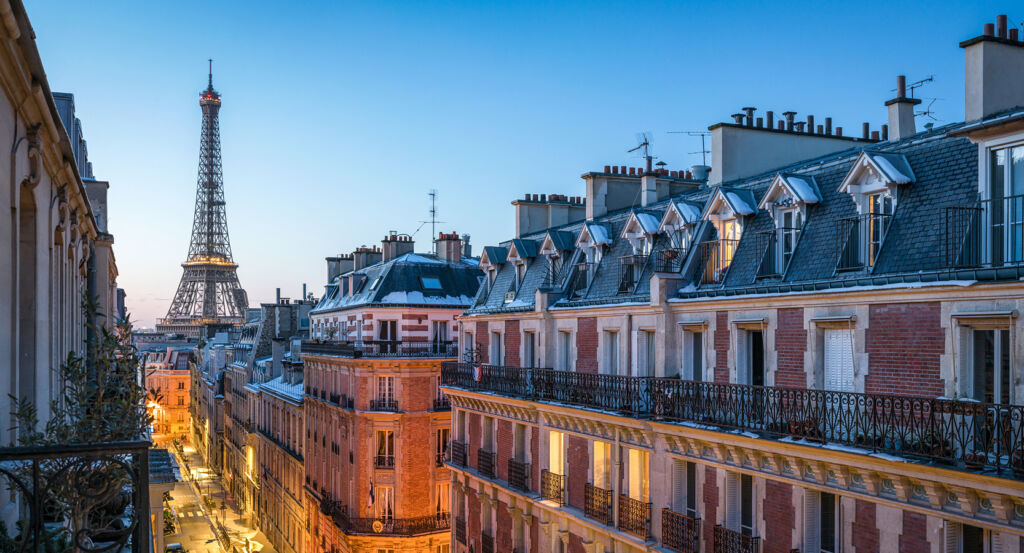
Hotel Edouard VII is a distinguished four-star hotel where Quartier Gaillon's operatic culture, Haussmannian refinement, royal history and couture tradition converge within the former Parisian residence of Britain's future King Edward VII.
Set along Avenue de l'Opéra near Rue Daunou and just steps from Théâtre Daunou, the hotel traces its character to 1877, when the Prince of Wales established a Paris residence here during the same year the property first opened. B Signature incorporated the hotel into its collection in 2007, while interior designer Christophe Daudré later undertook a three-year renovation that recast the house through couture and jewelry, drawing directly upon Edward's reputation for dress and the decorative culture associated with nearby Place Vendôme. Silk, leather, velvet and cashmere establish the material vocabulary, while Daudré divided the interiors between Couture and Edouard 7 floors, with the latter interpreting precious stones through saturated greens, ruby reds, blues, taupes and gold. The result is a hotel where royal biography and Daudré's couture-driven redesign turn a nineteenth-century Parisian residence into a contemporary expression of the sartorial character attached to Edward VII himself.
What defines Hotel Edouard VII.
Hotel Edouard VII is best known for opening in 1877 within a Haussmannian building that became the Parisian residence of the future King Edward VII while he was Prince of Wales, establishing the royal association from which the property still derives its name and creative identity. B Signature added the property to its collection in 2007, and Christophe Daudré subsequently directed a complete three-year redesign of its guestrooms and restaurant between 2011 and 2015, with the finished project unveiled in 2016 as a thematic Couture collection. Daudré conceived individual rooms as silhouettes to be dressed, combining silk, leather, velvet and cashmere with a chromatic spectrum moving through green, ruby, blue, taupe and gold, thereby translating Edward VII's documented reputation for elegance into the physical design mechanism of the hotel. The resulting accommodation program was organized across three Couture floors and four Edouard 7 floors, with the latter drawing upon precious stones and the jewelry culture of Place Vendôme to connect the king's personal style with another explicitly documented source for the interiors. Hotel Edouard VII possesses an unusually coherent factual biography in which its 1877 royal association, 2007 incorporation into B Signature and Daudré's 2011 to 2015 commission each contribute directly to the character of the present house.
Christophe Daudré's commission deepened that biography by treating Edward VII as a design subject rather than simply a namesake, building the interiors around the king's sartorial reputation and the theatrical character associated with his Parisian life. Current hotel materials preserve Daudré's distinction between Couture and Edouard 7 floors and identify jewelry as an explicit inspiration, while silk, velvet and cashmere continue the fashion style through the contemporary rooms and suites. La Cuisine de l'E7 carries the hotel's authorship into gastronomy under chef David Braido, whose contemporary interpretation of French cooking provides another named creative contributor working within the property's Edward VII narrative. Edward VII, B Signature, Christophe Daudré and David Braido represent successive layers of royal biography, ownership, interior design and culinary authorship that remain intrinsically attached to Hotel Edouard VII itself.
How Hotel Edouard VII fits.
Hotel Edouard VII works as the anchor for an afternoon tracing Art Deco theater, operatic invention and nineteenth-century commercial architecture through the cultural fabric surrounding the Opéra quarter.
Begin at Théâtre Daunou, where Jane Renouardt commissioned Auguste Bluysen after the first stone was laid in 1919, Armand Rateau created Persian-inspired woodwork, Lanvin and Janssens contributed to the interiors, and the blue theater opened on December 30, 1921. Continue to Opéra-Comique, founded in 1714 before the 1887 Salle Favart fire prompted Louis Bernier's competition-winning reconstruction, inaugurated in 1898 with puddled iron, electrical systems, Christofle bronze work and a 1,200-seat auditorium. Conclude at Galerie Vivienne, commissioned by notary Maître Marchoux and begun in 1823 under François-Jean Delannoy and Jacques Deschamps, inaugurated in 1826 and enriched from 1880 by Giandomenico Facchina's marble and ceramic mosaics beneath its glass roof. The progression moves from Renouardt, Bluysen and Rateau's intimate theatrical commission through Bernier's technically ambitious opera house into Marchoux and Delannoy's covered commercial gallery, revealing how performance, decorative craftsmanship and metropolitan sociability shaped the cultural world surrounding Hotel Edouard VII.
Where your story begins.
Foresyte Travel reveals places that feel extraordinary long before you arrive.
Enjoy editorial crafted for luxury travelers.
Foresyte may earn a commission when you book.














































































































