
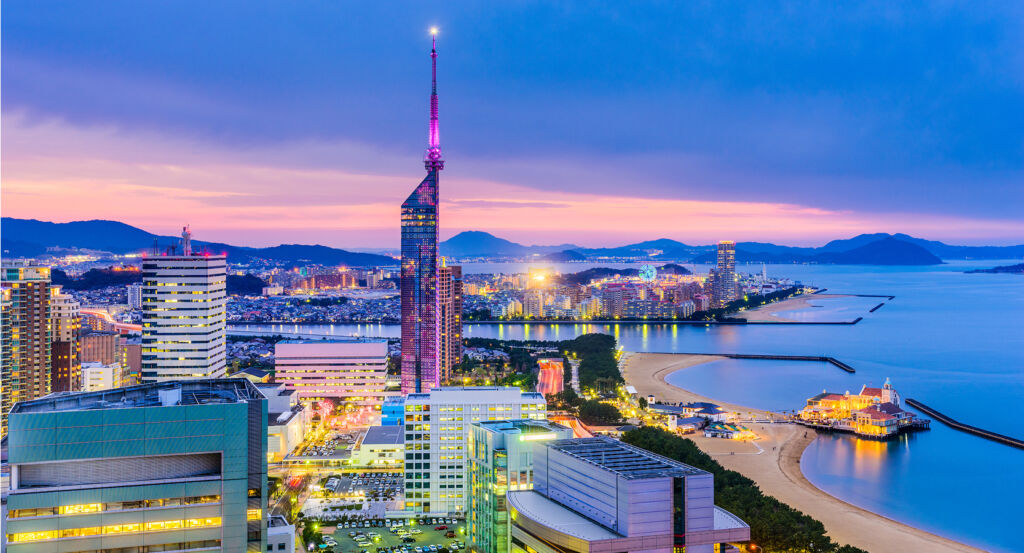
Why you should experience Hotel Forza Hakata Station Hakata Entrance in Fukuoka, Japan.
Hotel Forza Hakata Station Hakata Entrance is a front-line city base that compresses distance, decision-making, and downtime into a single fluent rhythm, turning Fukuoka into a place you move through with instinct.
Located directly at the Hakata Entrance side of Hakata Station, this hotel operates where the city's velocity is highest and its logistics most forgiving. Arrival is immediate and unceremonious in the right way: you cross from platform to street to interior with almost no cognitive handoff, and that speed becomes the defining luxury of the stay. Inside, the environment favors clarity over ceremony. The lobby is legible at a glance, circulation is obvious, and the materials signal durability and calm. Seating supports quick resets, itinerary checks, or a brief pause before the next movement. Lighting is even and practical, allowing orientation. The tone is modern, efficient, and quietly confident. Guest rooms extend this intelligence-forward approach with layouts that are compact but optimized. Everything is where you expect it to be, and nothing competes for attention. Beds are supportive and consistent, designed for true recovery after early trains, late returns, or dense days navigating the city. Furnishings are minimal and useful, selected to reduce visual noise and increase usability. Windows frame the mechanics of Hakata: rail lines, streets, signage, and the constant proof of motion. Bathrooms are clean, contemporary, and frictionless, supporting routine. Across the property, the experience feels purposeful and steady. Hotel Forza Hakata Station Hakata Entrance is ideal for travelers who want Fukuoka to feel immediate, readable, and operationally simple, a city experienced through flow.
What you should know about Hotel Forza Hakata Station Hakata Entrance.
Hotel Forza Hakata Station Hakata Entrance is built around attention preservation, the idea that the best urban hotels remove mental steps so travelers can allocate energy outward to the city.
This principle is visible in how quickly the building becomes invisible to your thinking. Circulation paths are short and intuitive. Elevators, corridors, and exits align with natural movement patterns, so orientation happens once and then disappears. Public spaces are proportioned for efficiency, not performance, allowing the hotel to absorb constant turnover. Materials reinforce this restraint. Surfaces are matte and tactile, finishes resist glare and visual fatigue, and textures dampen sound. Acoustic control is a quiet strength here. Despite sitting at one of Japan's busiest transit nodes, exterior noise resolves into background context rather than interruption, and interior sound dissipates quickly enough to preserve rooms as reliable spaces for rest or focus. Lighting strategy favors predictability. Daylight enters where possible with clarity, while artificial lighting remains warm and even, avoiding dramatic contrast that could disrupt circadian rhythm. This steadiness matters for travelers managing early departures, compressed schedules, or time zone shifts. Service culture mirrors the same logic. Interactions are polite, concise, and autonomy-respecting. Staff assist with clarity and logistics rather than performance, reinforcing the sense that the hotel is an operational partner, not an experiential director. Another understated strength is how the property reframes Hakata Station itself. Instead of feeling overwhelming, the station becomes an extension of your base. Departures feel casual. Returns feel immediate. Over multiple nights, this adjacency reduces planning overhead and turns movement into habit. The hotel does not rely on heritage cues, boutique storytelling, or design theatrics. It captures a contemporary value that connects in modern travel: intelligence through reduction.
How to fold Hotel Forza Hakata Station Hakata Entrance into your trip.
Hotel Forza Hakata Station Hakata Entrance works best when you treat it as a high-efficiency command point, a place that supports rapid deployment and calm recovery.
Begin your mornings. Step outside and you are already inside Hakata's transport ecosystem, with rail, subway, buses, and walkable corridors immediately available. Use this adjacency strategically. Take early trains. Make spontaneous plans. Return midday for short resets that feel seamless. The hotel absorbs brief pauses naturally: a shower, a rest, a regroup all integrate into your day. Afternoons are well suited to layered exploration. Move between Tenjin's commercial streets, neighborhood walks, markets, museums, or regional side trips knowing that return is uncomplicated and close. Evenings remain flexible. Dine nearby, explore nightlife, or return early and let the hotel's calm, efficient environment support decompression. For longer stays, the effect compounds. Fukuoka begins to feel compact and legible. Routes repeat. Familiarity builds. Confidence replaces calculation. Business travelers benefit from the hotel's proximity, dependable rest, and no-nonsense environment that preserves focus between obligations. Leisure travelers gain freedom from logistical drag and the ability to explore deeply. Anchoring your stay at Hotel Forza Hakata Station Hakata Entrance allows Fukuoka to be encountered as a city that cooperates with you, not one that demands constant management. The hotel does not compete with luxury towers, experiential retreats, or design statements. It offers something quieter and more powerful: mental clarity through proximity. In doing so, it delivers a stay that feels efficient, modern, and aligned with real urban movement, where rest supports momentum, proximity supports intuition, and the city reveals itself through rhythm.
Where your story begins.
Foresyte Travel reveals places that feel extraordinary long before you arrive.
Experience premium editorial crafted for luxury travelers.

















































































































