
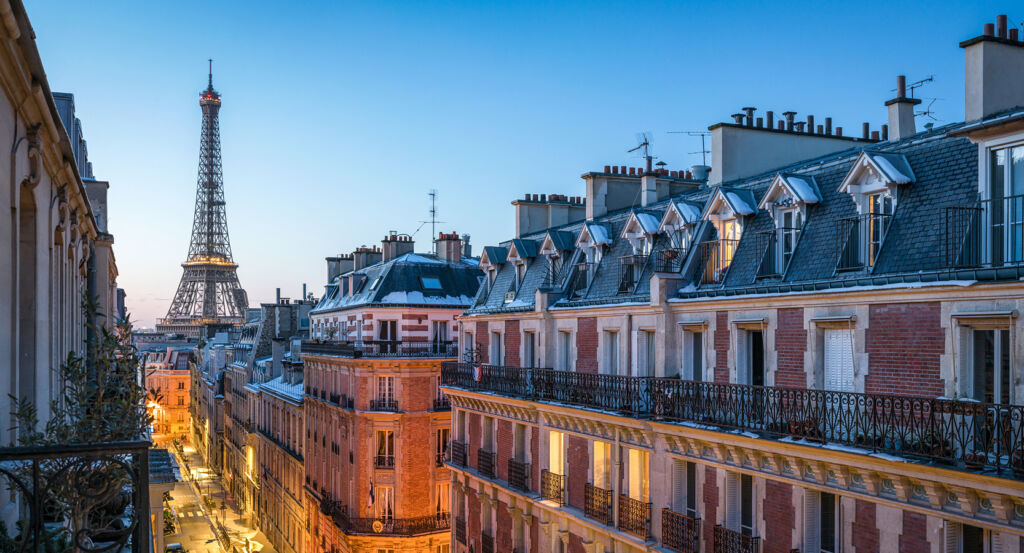
Why you should experience Hôtel Lancaster Paris Champs Elysées in Paris, France.
Hôtel Lancaster Paris Champs Elysées is a storied five-star hotel where Champs-Élysées's cosmopolitan glamour, artistic patronage, cinematic history and private-residence refinement converge within a townhouse shaped by a century of unusually personal hospitality.
Set along Rue de Berri near Avenue des Champs-Élysées, the hotel occupies an 1889 private mansion transformed into a luxury hotel by Swiss hotelier Emile Wolf in 1925, who furnished the property with seventeenth-century art and antiques acquired with the assistance of his housekeeper, the daughter of a Parisian antiques dealer. Russian painter Boris Pastoukhoff subsequently lived at the Lancaster for a decade, exchanging paintings for his accommodation and leaving a substantial body of work within the house, while Marlene Dietrich made a fourth-floor suite her Parisian home for three years. Grace Kelly and Noël Coward joined a wider succession of creative figures associated with Wolf's intimate model of hospitality, while Studio Jean Philippe Nuel completed a major redesign in 2020 without erasing the property's historic furnishings and artistic inheritance. The result is a hotel where Wolf's collecting, Pastoukhoff's paintings, Dietrich's residency and Nuel's contemporary intervention preserve the character of a private Parisian house across a century of cultural history.
What you should know about Hôtel Lancaster Paris Champs Elysées.
Hôtel Lancaster Paris Champs Elysées is best known for evolving from an 1889 private mansion into a luxury hotel opened by Swiss hotelier Emile Wolf in 1925, beginning a century-long history shaped by antique collecting, resident artists, international performers and successive layers of design. Wolf furnished the house with seventeenth-century works and furniture, much of which remains within the property, while Boris Pastoukhoff, a Kyiv-born painter who left Russia after the 1917 Revolution and settled in Paris in 1930, lived at the Lancaster for a decade and paid for his accommodation with paintings. The hotel now preserves 83 works by Pastoukhoff, creating an unusually extensive collection directly produced through the relationship between an artist and the property in which he lived. Marlene Dietrich occupied a fourth-floor suite for three years, and the hotel acquired an Érard grand piano for her, an instrument ordered in October and delivered in November 1926 that remains in the suite after restoration. Studio Jean Philippe Nuel undertook the property's complete 2020 redesign, integrating contemporary pieces with its surviving 1900 architecture, Wolf-era antiques and accumulated artistic collection while the hotel entered its centenary year in 2025.
Marlene Dietrich's surviving association with the house provides a particularly tangible continuation of Wolf's hospitality philosophy, with her present 80-square-meter suite preserving the piano acquired for her and expanding through adjoining accommodations into a 200-square-meter private apartment containing three bedrooms, three bathrooms and two salons. Boris Pastoukhoff provides an equally physical artistic record through the 83 paintings retained by the Lancaster, while four current Signature Suites commemorate Emile Wolf, Pastoukhoff, Felix Ziem and the property's own fictional Monsieur persona. Executive chef Sébastien Giroud adds contemporary authorship at Monsieur Lancaster after experience including Bernard Loiseau, developing a neo-bistro approach around seasonal produce sourced from smaller regional producers while the restaurant's narrative deliberately draws upon Dietrich's years in residence. Emile Wolf, Marlene Dietrich, Boris Pastoukhoff, Jean Philippe Nuel and Sébastien Giroud consequently represent successive generations of collecting, residency, design and gastronomy through which the Lancaster has preserved a highly personal institutional character since 1925.
How to fold Hôtel Lancaster Paris Champs Elysées into your trip.
Hôtel Lancaster Paris Champs Elysées works as the anchor for an afternoon tracing private collecting, nineteenth-century fashion patronage and Napoleonic commemoration through the cultural institutions surrounding Champs-Élysées.
Begin at Musée Jacquemart-André, where Édouard André commissioned Henri Parent to build his Boulevard Haussmann mansion in 1869 before Nélie Jacquemart bequeathed the house and collections to Institut de France, which inaugurated the museum with President Raymond Poincaré on December 8, 1913. Continue to Palais Galliera, commissioned by Marie Brignole-Sale from architect Paul-René-Léon Ginain in 1879, completed in 1894 with metalwork executed by Gustave Eiffel's company and inaugurated in 1895 before becoming Paris's dedicated fashion museum in 1977. Conclude at Arc de Triomphe, where Napoleon's 1806 commission developed through Jean-François-Thérèse Chalgrin's architecture, regime changes and three decades of construction before the 1836 inauguration created a 50-meter-high national memorial inspired partly by Rome's Arch of Titus. The progression moves from André and Jacquemart's private collecting through the Duchess of Galliera's philanthropic museum project into Napoleon's vast architecture of national memory, revealing the interlocking cultures of connoisseurship, fashion and public representation surrounding Hôtel Lancaster Paris Champs Elysées.
Where your story begins.
Foresyte Travel reveals places that feel extraordinary long before you arrive.
Experience premium editorial crafted for luxury travelers.














































































































