
Why Hôtel Le Marquis matters.
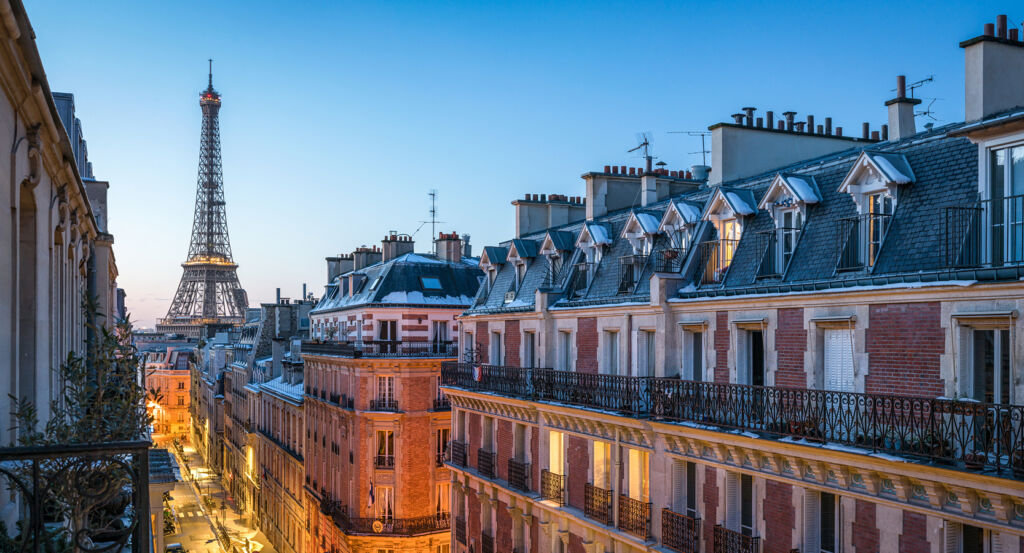
Hôtel Le Marquis is a debonair four-star hotel where Grenelle's cultivated discretion, military heritage, international cultural connections and enduring relationship with the Champ de Mars converge within a contemporary interpretation of Parisian dandyism.
Set along Rue Dupleix near Avenue de Suffren and just steps from Champ de Mars, the 36-room hotel is best known for Oscar Wilde and the nineteenth-century dandy, translating that reference through geometric interiors, saturated accents and artistic columns created by Dutch artist Merijn Kavelaars. The address carries another historical layer through Rue Dupleix, named for Joseph-François Dupleix, the eighteenth-century governor-general of French establishments in India, while nearby Place Dupleix developed from the former Place de Grenelle associated with the Château de Grenelle. Grenelle's wider landscape evolved dramatically after École Militaire opened in the eighteenth century and its adjoining plain became the Champ de Mars, eventually accommodating the 1790 Fête de la Fédération and five major international expositions between 1867 and 1937. The result is a hotel where Oscar Wilde's cultivated persona, Merijn Kavelaars's contemporary art and Grenelle's centuries of military and international history give a small boutique property an unusually layered relationship with its surroundings.
What defines Hôtel Le Marquis.
Hôtel Le Marquis is best known for developing a 36-room boutique-hotel concept around the Art de Vivre of the Dandy, explicitly identifying Oscar Wilde as its creative model and incorporating artistic columns by Dutch artist Merijn Kavelaars into the lobby as a physical expression of that identity. The property organizes its accommodations across 18-square-meter Classic Rooms, 23-square-meter Executive Rooms and 40-square-meter Communicating Rooms formed from two Classics, with the hotel specifying that individual rooms within the categories are not decorated identically. Le Marquis belongs to Inwood Hotels, whose current collection encompasses 13 properties across Paris, Bordeaux, Arcachon and southeastern France, while the hotel's own design style combines geometric minimalism with whites and beiges punctuated by royal blue, tangerine and other saturated tones. Rue Dupleix contributes a deeper historical structure to the concept: the street appears unnamed on Verniquet's eighteenth-century plan, acquired the Dupleix name in the early nineteenth century and commemorates Joseph-François Dupleix, who became first councillor at Pondicherry in 1720 before serving as governor-general of French establishments in India. Oscar Wilde, Merijn Kavelaars, Inwood Hotels and Joseph-François Dupleix give the property an unusually specific combination of literary persona, contemporary artistic authorship, hospitality character and colonial-era street history.
Where your story begins.
Foresyte Travel reveals places that feel extraordinary long before you arrive.
Enjoy editorial crafted for luxury travelers.














































































































