
Why Hôtel Le Walt by Inwood Hotels matters.
Hôtel Le Walt is an art-focused hotel where École Militaire's stately Left Bank character meets early twenty-first-century architecture, a painter-centered decorative concept and Inwood Hotels' interpretation of French artistic culture.
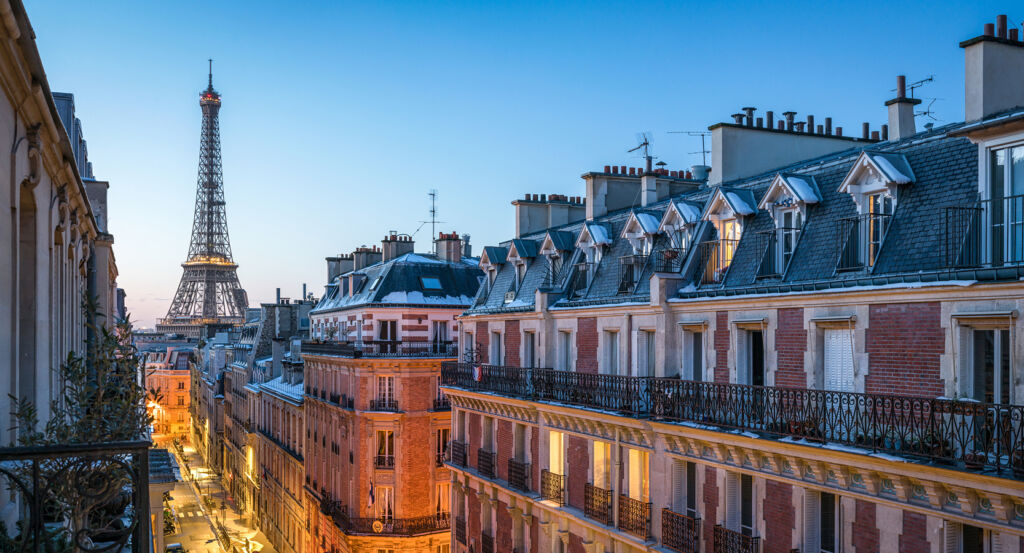
Set along Avenue de la Motte-Picquet near Avenue Duquesne and just steps from Place de l'École-Militaire, the hotel occupies a compact 7th-Arrondissement parcel where the broad military axis meets the narrower residential streets extending toward Grenelle. The six-story structure dates from an early twenty-first-century redevelopment that replaced a substantially smaller hotel and shop previously occupying the address. Tall street-facing windows establish a regular vertical composition across the narrow façade as the building opens internally toward a secluded patio. Oil paintings, watercolors, muted lighting and reproductions of major paintings give the interiors the character of a private collection distributed throughout a contemporary Parisian building. The result is a hotel whose architecture and painterly decorative program turn a completely redeveloped Avenue de la Motte-Picquet site into a concentrated homage to visual art.
What defines Hôtel Le Walt by Inwood Hotels.
Hôtel Le Walt is best known for replacing an older Avenue de la Motte-Picquet hotel with a purpose-built boutique property organized from its earliest years around painting and the decorative arts. A hospitality company had operated from 37 Avenue de la Motte-Picquet since 1958 under the Hôtel de l'Industrie name, establishing a commercial lineage at the address decades before Le Walt appeared. Paris approved demolition of the existing three-story hotel and shop in 2002, clearing the parcel for a new six-story hotel building. Construction fundamentally altered the scale of the site and produced the structure occupied by Le Walt during the following decade. The new hotel was operating under the Le Walt name by 2006, giving the redeveloped address a concept distinct from the earlier Hôtel de l'Industrie designation. Paul Sartres directed the decorative scheme associated with Le Walt's formative period, combining classical references with contemporary furnishings across the new building. Inwood Hotels subsequently incorporated the property into its Paris collection and developed the painter as the governing subject of the hotel. The operating company retained its older Hôtel de l'Industrie corporate name through successive changes in administration even as Le Walt had long defined the public-facing property. AMS Group assumed its presidency in 2018, connecting the hotel more directly with the corporate structure behind Inwood Hotels. The company formally adopted Hôtel Le Walt as its legal name in April 2025, nearly two decades after the hotel name had become established at the address. That final alignment connected a business created in 1958, a complete 2002 redevelopment and the painter-centered hotel that emerged from the rebuilt property during the following years.
Paul Sartres established the artistic premise that still distinguishes Hôtel Le Walt by treating paintings as structural components of the decorative scheme developed for the rebuilt property. Reproductions of works held by the Louvre Museum became oversized headboard compositions, placing individual paintings at the visual center of private interiors. Oil paintings and watercolors extended the same premise into shared spaces, allowing medium and technique to organize the decorative program beyond a single repeated image type. Inwood Hotels later formalized this approach as the “Art de Vivre du Peintre,” making the painter's working world the conceptual basis through which Le Walt operates within its broader collection. Muted illumination and controlled combinations of color and form were retained around the artworks, keeping visual attention on the canvases distributed throughout the property. The internal patio provides a contrasting architectural element within that composition, introducing an enclosed exterior space behind the Avenue de la Motte-Picquet frontage. Le Walt subsequently became one of 13 properties in an Inwood collection extending beyond Paris to Bordeaux, Arcachon and southeastern France, with separate hotels assigned distinct cultural concepts. EU Ecolabel certification added an environmental distinction to the property by 2026. The artistic program connects Sartres's original decoration with Inwood's later collection strategy through a hotel whose paintings have governed its character since the first years of the rebuilt Avenue de la Motte-Picquet property.
How Hôtel Le Walt by Inwood Hotels fits.
Hôtel Le Walt works as an anchor for an outing connecting an international modernist headquarters built around postwar cultural diplomacy, a sculptor's preserved Montparnasse workshops and a postal museum whose architecture translates the graphic language of stamps into expansive concrete.
Begin at Maison de l'UNESCO, inaugurated on November 3, 1958 as the permanent Paris headquarters of the United Nations Educational, Scientific and Cultural Organization. Bernard Zehrfuss, Marcel Breuer and Pier Luigi Nervi designed the principal Y-shaped structure on 72 concrete pilotis under the scrutiny of an international committee that included Walter Gropius, Le Corbusier and Lucio Costa. Isamu Noguchi created its Japanese garden, and major artworks by Picasso, Giacometti, Calder and Miró entered a collection exceeding 1,000 works. The complex later gained Tadao Ando's cylindrical meditation space, extending an architectural ensemble conceived around international artistic collaboration. Continue to Musée Bourdelle, preserving the Montparnasse studios where Antoine Bourdelle settled in 1885 and worked for more than four decades. The original timber-framed atelier building dates to 1878, with north-facing glazing supplying the even illumination required for sculpture. Bourdelle began planning a museum there in 1922, seven years before his death. His widow, Cléopâtre Sévastos, protected the sculpture studio and helped prevent dispersal of its contents before donating the complex to the City of Paris in 1947. The museum opened in 1949, and Christian de Portzamparc added a major exhibition wing in 1992, extending the preserved artist compound through contemporary architecture. Conclude at Musée de La Poste, whose origins reach Eugène Vaillé's campaign during the 1930s to create a permanent institution for French postal history. The museum first opened in 1946 before moving to Boulevard de Vaugirard in 1973 inside a purpose-built structure by Grand Prix de Rome architect André Chatelin. Sculptor Robert Juvin created its expansive molded-concrete façade, enlarging the engraved visual language of a postage stamp into an architectural surface. Atelier Jung Architectures later reorganized the interior around a glazed vertical “totem” during a comprehensive reconstruction completed in 2019. France subsequently awarded Chatelin and Juvin's building the Architecture contemporaine remarquable designation. The progression moves from postwar internationalism expressed through collaborative modern architecture through the preserved workplace of a major French sculptor and culminates in a museum where communications history became the subject of both a national collection and a distinctive work of twentieth-century architecture.
Where your story begins.
Foresyte Travel reveals places that feel extraordinary long before you arrive.
Enjoy editorial crafted for luxury travelers.
Foresyte may earn a commission when you book.














































































































