
Why you should experience Hôtel Mercure Paris Montmartre Sacré-Coeur in Paris, France.
Hôtel Mercure Paris Montmartre Sacré-Coeur is a convivial four-star hotel where Montmartre's artistic irreverence, cabaret lineage, creative sociability and enduring mythology of unconventional Parisian life converge at the foot of the Butte.
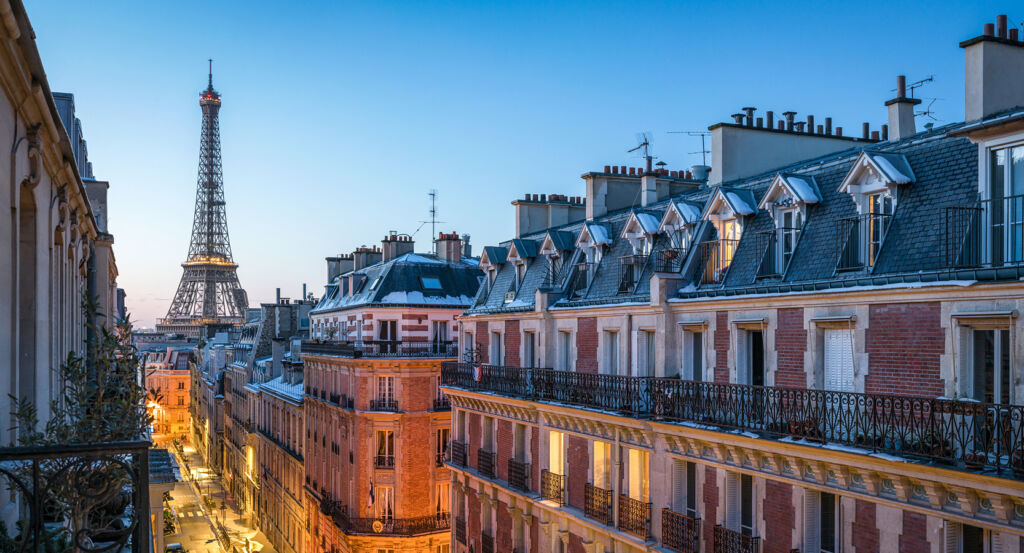
Set along Rue Caulaincourt near Boulevard de Clichy and just steps from Moulin Rouge, the 305-room hotel occupies the threshold between the performance culture surrounding Place Blanche and the rising streets of Montmartre, placing a substantial contemporary property inside a neighborhood shaped by painters, music halls and nightlife. Renovated accommodations carry a Montmartre theme, while Privilege rooms open perspectives toward Sacré-Coeur, the Eiffel Tower and the rooftops of Paris, extending the surrounding cityscape into the property itself. A hidden elevated garden introduces pétanque, planted spaces and rooftop perspectives, while SpeakArt gives the first floor a social center for cocktails, table football and gatherings beyond the guestrooms. The result is a hotel where Montmartre-inspired interiors, garden sociability and the performance culture surrounding Boulevard de Clichy give a large Mercure property an unusually specific relationship with its neighborhood.
What you should know about Hôtel Mercure Paris Montmartre Sacré-Coeur.
Hôtel Mercure Paris Montmartre Sacré-Coeur is best known for emerging from a comprehensive renovation conducted between April 2013 and May 2014 as a 305-room showcase for Mercure's broader effort to rethink the social spaces, workplace functions and food-and-wine programming of its French hotels. The reconstruction introduced EasyWORK, a concept first tested at Mercure Paris Gare de Lyon that reached the Montmartre property with two small meeting rooms, office technology, Wi-Fi and interiors created by Agathe Boquillon, including Dutch designer Jurgen Bey's enveloping Ear Chair. A redesigned 190-square-meter elevated terrace adjoined the former 18.75 Bar Lounge, while Mercure's Vins Gourmands program paired a glass of wine with three savory or sweet Grignotises as part of the brand's wider French hospitality strategy. Mercure simultaneously reworked conventional divisions between reception, lounge, bar and restaurant functions, replacing the traditional reception counter with circular host tables and tablet-assisted arrival procedures as the company tested a more fluid model of hotel social space. The 2013 to 2014 reconstruction, Agathe Boquillon's EasyWORK interiors, the 190-square-meter terrace, Vins Gourmands and the redesigned arrival experience made the Montmartre property a concentrated physical expression of Mercure's early twenty-first-century repositioning.
Topager extended that localizing philosophy onto the roof in spring 2018, planting 24 containers of hops on a terrace connecting Hôtel Mercure Paris Montmartre Sacré-Coeur with the neighboring ibis Montmartre and cultivating the crop between April and September. The first Topager harvest produced more than one kilogram of Montmartre-grown hops, which Brasserie de l'Être transformed into 2,800 bottles of MiM, a name referencing both “Made in Montmartre” and Mercure-ibis-Montmartre, with the finished beer served at the bars of both properties. Paris je t'aime documents another neighborhood-specific reference in the 80-square-meter Mistinguette room, whose name evokes the French music-hall performer closely associated with Parisian cabaret culture and whose configurations accommodate 50 people in theater seating, 30 in U-shape and 70 for cocktails. Topager's 24 hop containers, Brasserie de l'Être's 2,800-bottle production, the MiM character and the Mistinguette room connect urban cultivation, independent Parisian brewing and music-hall nomenclature to the neighborhood-facing philosophy established during the hotel's reconstruction.
How to fold Hôtel Mercure Paris Montmartre Sacré-Coeur into your trip.
Hôtel Mercure Paris Montmartre Sacré-Coeur works as the anchor for an afternoon and evening tracing the studios, salons and performance culture that shaped the artistic mythology surrounding Montmartre.
Begin at Musée de Montmartre, where one of the Butte's oldest surviving architectural ensembles preserves a creative address associated with Pierre-Auguste Renoir, Suzanne Valadon, Maurice Utrillo, Émile Bernard and Raoul Dufy, placing Montmartre's painting culture within the rooms and gardens where part of that history unfolded. Continue to Musée de la Vie Romantique, where painter Ary Scheffer settled in 1830 and developed studios that became gathering places for a circle including Eugène Delacroix, Frédéric Chopin, Franz Liszt, George Sand, Charles Dickens and Gioachino Rossini within the artistic enclave of Nouvelle Athènes. Conclude at Moulin Rouge, founded by Joseph Oller and Charles Zidler in 1889, where the red windmill, French Cancan and visual culture immortalized by Henri de Toulouse-Lautrec turned the cabaret into a defining expression of Belle Époque entertainment. The progression moves from Montmartre's painterly workshops through the private salons of nineteenth-century Paris into its cabaret culture, revealing the continuum of artistic production, social gathering and performance that gives Hôtel Mercure Paris Montmartre Sacré-Coeur its strongest cultural context.
Where your story begins.
Foresyte Travel reveals places that feel extraordinary long before you arrive.
Experience premium editorial crafted for luxury travelers.














































































































