
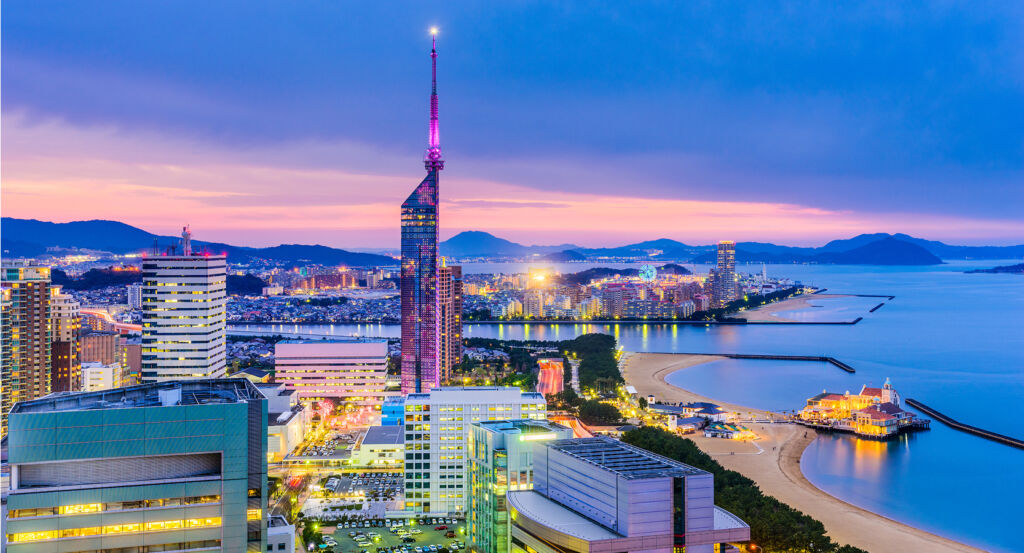
Why you should experience Hotel Okura Fukuoka in Fukuoka, Japan.
Hotel Okura Fukuoka is a considered, elegantly nostalgic urban retreat that positions Fukuoka not as a hurried itinerary to conquer, but as a city to inhabit with composure, cultural awareness, and refined ease. This is a place where first impressions feel intentional: arrival unfolds without ostentation, yet every space quietly signals care, restraint, and confidence.
Located in the center of Tenjin - Fukuoka's energetic commercial, cultural, and dining district, the hotel marries convenience with calm. From the street, you step inside a lobby where proportion and quiet finishes immediately absorb the bustle outside. Public spaces are arranged with clear spatial logic: seating for genuine pause, lighting that supports visibility without mood theater, and surfaces that feel tactile rather than decorative for decoration's sake. The atmosphere is composed and unforced, reflecting a commitment to dignified comfort. Guest rooms continue this theme with spatial clarity and considered comfort. Layouts are generous without excess, allowing space to unpack, rest, and orient without distraction. Beds are deeply comfortable, engineered for restorative sleep after full days exploring Fukuoka's neighborhoods, parks, temples, and waterfront. The design language is contemporary and refined, muted palettes, premium materials, and furnishings selected for enduring comfort. Windows often frame city streets, glimpses of greenery, or distant urban skyline, reinforcing a feeling of being part of the city's living rhythm. Bathrooms are thoughtfully appointed with high-quality fixtures and finishes that support everyday routines with dignity and ease. Across the property, the experience feels calm, capable, and purposefully composed. Hotel Okura Fukuoka is ideal for travelers who want Fukuoka to feel walkable, intelligible, and comfortably memorable, a city encountered through intention.
What you should know about Hotel Okura Fukuoka.
Hotel Okura Fukuoka is best known for design restraint and operational coherence, the philosophy that a hotel should support clarity of experience rather than demand attention, and this principle subtly governs how the hotel feels over time.
Unlike hotels that advertise their character with visual performance, Okura Fukuoka occupies its space with measured confidence. Circulation paths are direct and intuitive; once you learn the layout, movement through the building feels automatic. Public areas are proportioned to support calm occupancy, not cavernous, not compressed, allowing presence, conversation, and brief planning to coexist. Materials throughout are chosen for substance: solid woods that age gracefully, textiles that absorb sound rather than reflect it, and surfaces that reveal layered texture without visual noise. This material coherence creates an environment where attention remains available for engagement with Fukuoka outside rather than internal negotiation of interior drama. Acoustic behavior further reflects this logic. Exterior sounds, street movement, distant voices, seasonal breeze, become context rather than intrusion; rooms feel private without artificial isolation. You remain aware of being in a living city while retaining the ability to decompress. Lighting strategy reinforces continuity. Daylight enters shared spaces with clarity, while artificial illumination remains warm and steady, supporting day-to-night transitions. This smooth lighting rhythm aligns with human energy cycles, alertness in the morning, clarity in the afternoon, calm in the evening. Service culture mirrors this operational coherence. Interactions are polished, courteous, and unobtrusive. Staff provide guidance with precision rather than ceremony, anticipating needs with warmth and competence rather than scripted gestures. There is an implicit respect for autonomy here: guests are supported. Another understated strength of the hotel is how it reframes proximity. Being located in Tenjin, a lively commercial and cultural node, does not feel chaotic; it feels enabling. The hotel absorbs city movement and returns calm, making arrival and departure feel smooth. Over multiple nights, this becomes increasingly evident: Fukuoka begins to feel navigable and familiar through repetition and presence.
How to fold Hotel Okura Fukuoka into your trip.
Hotel Okura Fukuoka works as a calm urban anchor, a base that supports exploration with clarity, presence, and ease.
Begin your mornings with orientation. The hotel's composed environment allows you to wake and orient before stepping into Fukuoka's streets with intention. From here, Tenjin's corridors of cafés, boutiques, galleries, and transit nodes are easily accessible, allowing exploration to feel fluid. Return midday. Because the environment remains composed rather than dramatic, short breaks feel genuinely restorative rather than disruptive. Use these pauses to regroup, enjoy light meals, or simply reflect on the morning's movement before heading back out. Afternoons lend themselves to layered engagement, visits to Ohori Park, Fukuoka Castle ruins, museums, and waterfront promenades, supported by the knowledge that your base remains calm and easy to reenter. Evenings unfold with flexibility. Dine in a local izakaya, explore nightlife around Tenjin, or take waterfront walks before returning to an environment that restores. For longer stays, this rhythm becomes deeply sustaining. Fukuoka begins to feel navigable and familiar through repeated interaction. Routes become instinctive, landmarks become familiar, and presence becomes easier to maintain. Business travelers benefit from the hotel's strategic location, dependable rest, and logical spatial flow that supports focus. Leisure travelers gain resonant bandwidth, the freedom to engage with Fukuoka's culture, gastronomy, and urban texture. Anchoring your stay at Hotel Okura Fukuoka allows Fukuoka to be encountered as a coherent, lived city rather than a series of isolated attractions. The hotel does not compete with grand narratives or immersive performance. It offers something quietly essential: operational clarity and composed presence. In doing so, it delivers a stay that feels aligned with how people actually move through, rest within, and remember a city, where rest supports exploration, orientation supports intention, and presence unfolds with clarity.
Where your story begins.
Foresyte Travel reveals places that feel extraordinary long before you arrive.
Experience premium editorial crafted for luxury travelers.

















































































































