
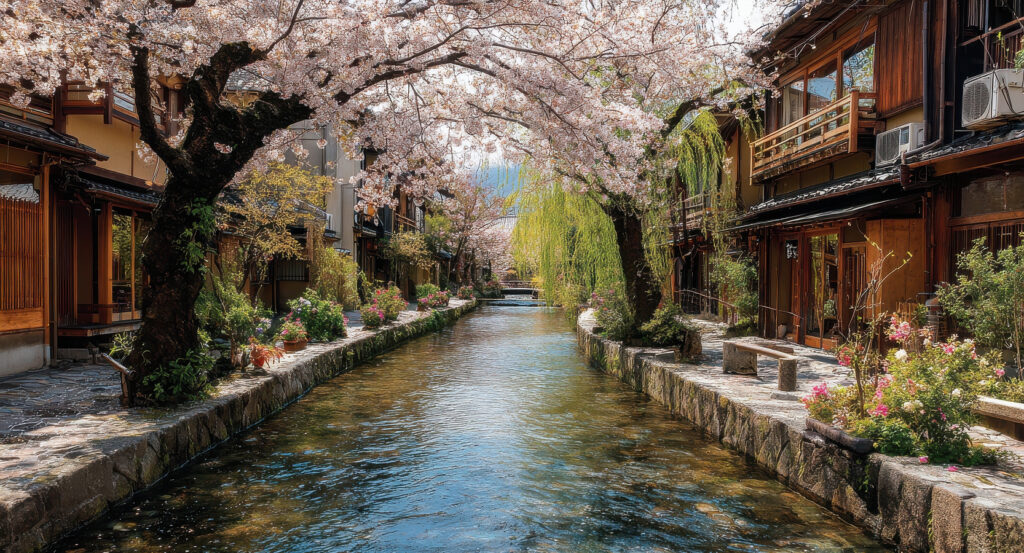
Why you should experience Hotel Okura Kyoto in Kyoto, Japan.
Hotel Okura Kyoto is Kyoto lived with grace, discipline, and cultural fluidity, a hotel that does not attempt to compete with the city's history or architecture but instead reveals them through carefully composed presence, refined service, and contextual restraint.
Located in the Kamigyo Ward near the Kamigyo-ku Government Office and within walking distance of the Kyoto Imperial Palace, this property occupies a mature residential and cultural neighborhood that feels lived-in. Arrival is composed and immediate. You move from Kyoto's layered urban texture into a space that signals intentional stillness. Public areas are spacious yet quiet, designed with a clarity of proportion and a material palette that tempers visual noise. Here, luxury is expressed through spatial restraint: soft light, thoughtful circulation, and a feeling of measured calm that envelops. Guest rooms embody this philosophy with disciplined coherence. They are generous by Kyoto standards and arranged to support rest, reflection, and practical use. Beds are substantial and deeply comfortable, engineered for restorative sleep after days spent walking temple precincts, gardens, and historic streets. Windows frame quiet streets, private gardens, or Kyoto's low rooftops, views that connect you to place. Furniture is purposeful and elegantly restrained. Desks support real work, seating invites pause rather than display, and storage allows you to unpack and settle rather than live out of luggage. The rooms feel composed and calm, resisting the urge to overcrowd with unnecessary features. Lighting is layered and warm, enabling smooth transitions from morning energy to evening rest. Bathrooms are practical yet refined, prioritizing usability and comfort. Deep soaking tubs, strong showers, and quality finishes emphasize the body's rhythms. Dining at Hotel Okura Kyoto reflects the hotel's cultural intelligence. Culinary experiences are rooted in Japanese and international traditions, with menus that respect seasonality, local sourcing, and precise technique. Restaurants and lounges are composed to support conversation and presence, allowing meals to unfold as part of your daily rhythm. The hotel's wellness and spa offerings extend this thoughtful approach to rest and recovery, providing spaces that favor calm restoration over physical stimulation. Service throughout the hotel is polished, attentive, and deeply aware of context. Interactions are guided by timing and sensitivity. Staff anticipate needs with subtle confidence and step back with equal grace, creating an environment where support feels intuitive. The property attracts travelers who value coherence and presence: cultural explorers, professionals on extended stays, couples seeking refined calm without cliché, and anyone who wants Kyoto to be experienced in layers rather than snapshots. Hotel Okura Kyoto does not attempt to define Kyoto for you or soften its complexity. Instead, it offers a structure in which the city's texture becomes intelligible, balanced, and genuinely felt.
What you should know about Hotel Okura Kyoto.
Hotel Okura Kyoto was shaped by a philosophy that luxury in a historic city should feel grounded and supportive.
The property's architectural and interior planning integrates insights from Kyoto's spatial logic: horizontality, controlled enclosure, and mindful transitions. Public spaces were composed as sequences of movement and pause rather than singular statements, allowing your body and attention to adjust gradually from outside noise to interior calm. Materials were selected for their capacity to age with dignity, stone, wood, and muted textiles that absorb light and sound. Guest room layouts were determined by careful observation of how people actually inhabit space during extended stays: where they unpack, where they pause, how they transition between rest and activity. This led to designs that feel intuitive under repeated use, such as generous circulation, adaptable lighting, and storage that supports a rhythm of habitation. Bathrooms were designed with attention to ritual and recovery, focusing on water experience, surface tactility, and spatial clarity. Culinary spaces and restaurant planning were treated as social infrastructure rather than destination theatres, supporting nourishment and conversation without visual noise. Operational culture at Hotel Okura Kyoto reflects this architectural intent. Staff training emphasizes situation awareness, cultural fluency, and empathetic service. Interactions feel grounded and personal, recommendations are precise, guidance is contextual, and assistance feels aligned with your pace. Over time, the hotel has attracted a loyal following of travelers who return not for novelty, but because the experience remains coherent, grounded, and deeply supportive under repeated stays. In a landscape where many luxury hotels oscillate between themed historicism and international uniformity, Hotel Okura Kyoto stands apart by insisting on contextual presence, an environment that supports Kyoto's texture.
How to fold Hotel Okura Kyoto into your trip.
Hotel Okura Kyoto works best when you allow it to anchor your Kyoto experience without isolating you from the city's movement and nuance.
Begin mornings with intention: enjoy breakfast in a calm setting, letting the hotel's composure orient your sense of time before stepping into Kyoto's layered streets. Walk toward the Kyoto Imperial Palace, local gardens, or smaller shrines as light softens the city. Because the hotel sits in a quieter district near important civic and cultural spaces, returning midday feels restorative. Come back to rest, read, or plan before heading out again. Afternoons are ideal for exploring Kyoto's depth: neighborhoods with craft stores, quiet temple precincts, or tea houses where experience unfolds gradually. The hotel's position makes it easy to pivot between focused exploration and restful retreat. Evenings unfold with coherence. Dine thoughtfully on local cuisine or international variation, attend performances, or stroll tree-lined streets as the city softens at dusk. Returning late never feels abrupt because the hotel's interior language absorbs energy. Hotel Okura Kyoto pairs especially well with extended stays, repeat visitors, cultural immersion, and trips where presence matters as much as sights. By the time you leave, Kyoto will feel less like a checklist and more like a place you inhabited with clarity and presence, and the hotel will feel like the structure that made that experience possible. In a destination defined by ritual, nuance, and layered beauty, Hotel Okura Kyoto offers something rare: hospitality that supports duration.
Where your story begins.
Foresyte Travel reveals places that feel extraordinary long before you arrive.
Experience premium editorial crafted for luxury travelers.

















































































































