
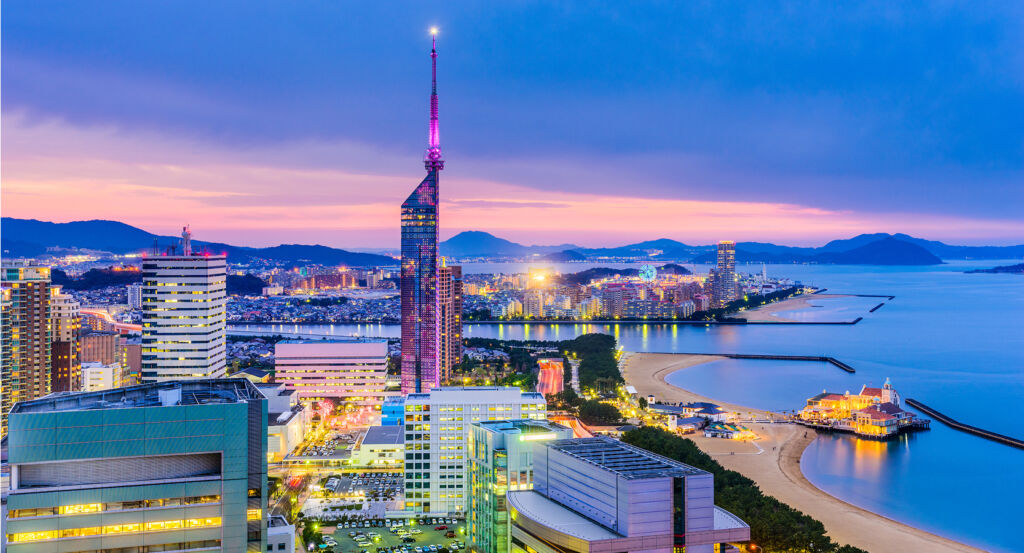
Why you should experience Hotel Resol Trinity Hakata in Fukuoka, Japan.
Hotel Resol Trinity Hakata reframes Fukuoka not as a checklist of sights to tick off, but as an urban field of movement, intention, and sustained presence, offering a stay defined by functional clarity, everyday comfort, and a sense of being embedded in the city's everyday flow.
Situated within walking distance of Hakata Station and central transit corridors, the hotel makes movement an asset. Arrival feels direct and purposeful: you step from street or platform into a lobby that emphasizes orientation and ease of use. The spatial logic is clear, sightlines are open, wayfinding is intuitive, and the design prioritizes clarity over drama. Public areas are arranged for genuine occupation: seating that supports brief planning or quiet pause, lighting that enhances visibility rather than mood, and finishes chosen for tactility and resilience rather than performance. The atmosphere feels grounded, unfussy, and genuinely attentive to what matters most in urban hospitality: making the city accessible without making the hotel the destination itself. Guest rooms extend this principle into private retreat. Layouts are efficiently organized to support rest, work, and recovery. Beds are comfortable and engineered to support real, restorative sleep after full days navigating Hakata's streets, markets, and cultural venues. The design language leans modern and functional, clean lines, neutral palettes, and furnishings selected for utility and comfort. Windows frame urban movement, rooftops, or distant skyline, reinforcing that you are positioned within the city's rhythm. Bathrooms are crisp, modern, and well-equipped, supporting daily routine with clarity. Across the property, the experience feels calmly assured, access-oriented, and usefully composed. Hotel Resol Trinity Hakata is ideal for travelers who want Fukuoka to feel manageable, connected, and intelligently present, a city encountered through continuity.
What you should know about Hotel Resol Trinity Hakata.
Hotel Resol Trinity Hakata is best known for efficiency as design logic and transit-anchored clarity, the understanding that in a city defined by movement, proximity and operational fluency are themselves forms of comfort, and this principle quietly governs how the hotel functions from check-in to departure.
Unlike properties that foreground themselves through visual gesture or thematic narrative, this hotel emphasizes useful spatial coherence. Circulation paths are immediate and intuitive; you learn the layout quickly and then forget it, allowing your attention to remain on your plans. Public zones are proportioned to prevent congestion while supporting the varied ways travelers actually use them: brief meetings, quick resets, work with coffee, or simple decompression. Materials emphasize tactile assurance: surfaces are solid and familiar under hand, finishes are resilient without glare, and textiles absorb sound rather than amplify it. This grounded material logic creates interiors where attention remains available for engagement with Fukuoka outside. Acoustic behavior demonstrates this balance. Exterior city noise, footsteps, distant conversation, seasonal wind, becomes context rather than intrusion, allowing rooms to function as dependable spaces for rest, focus, or planning without forced isolation. Lighting strategy reinforces continuity. Daylight enters shared spaces and guest rooms with clarity, while artificial lighting remains warm and consistent, supporting transitions through the day. This visual rhythm aligns with natural energy cycles, alertness in the morning, balanced presence in the afternoon, and calm in the evening. Service culture at Hotel Resol Trinity Hakata mirrors this operational clarity. Interactions are polite, efficient, and unobtrusive. Staff provide support with precision rather than performance, offering information grounded in local context rather than scripted recommendation. There is an implicit respect for autonomy here: guests are supported. Another understated strength of the hotel is how it reframes centrality. Being close to Hakata Station and major transit corridors does not feel chaotic; it feels enabling. Over multiple nights, this strategic advantage becomes especially clear: regional excursions, evening plans, and day trips require less logistical effort, and returns feel smooth. The hotel does not lean on regional narrative or design performance. Instead, it captures a contemporary hospitality principle: clarity through structure and dignity through function.
How to fold Hotel Resol Trinity Hakata into your trip.
Hotel Resol Trinity Hakata works best when you treat it as a logistical and resonant base, a place that stabilizes your presence in Fukuoka through clarity and access.
Begin your mornings grounded. The hotel's composed interior allows you to wake, orient yourself, and step into Fukuoka with intention. From here, Hakata Station connects you to Tenjin's shopping districts, Nakasu's nightlife, regional rail lines, and beyond, making exploration flexible and efficient. Use this connectivity strategically. Explore one neighborhood deeply rather than scattering energy across many, knowing that your base remains calm and easy to return to. Midday returns are especially effective here. A brief pause, a meal in a nearby café, or a quick reset in your room feels integrated into your day. The hotel absorbs these transitions naturally, preserving momentum. Afternoons lend themselves to layered engagement: museums, waterfront walks, architectural wandering, or neighborhood browsing, all supported by the knowledge that your base remains calm and accessible. Evenings unfold with adaptability. Dine locally, attend performances, or wander Nakamura or Hakata's evening streets before returning to a space that encourages decompression. For longer stays, this rhythm becomes particularly stabilizing. Fukuoka begins to feel navigable through repetition. Routes become familiar, landmarks recognizable, and presence more sustainable. Business travelers benefit from the hotel's proximity to transit and meeting infrastructure and from the calm environment that preserves focus between obligations. Leisure travelers gain resonant bandwidth, the ability to engage deeply without exhausting physical or cognitive energy by day's end. Anchoring your stay at Hotel Resol Trinity Hakata allows you to encounter Fukuoka as a connected, comprehensible city rather than a sequence of disconnected moments. The hotel does not compete with boutique storytelling or thematic design narratives. It offers something equally essential: clarity of place and supportive structure. In doing so, it delivers a stay that feels dependable, composed, and genuinely aligned with how people actually move through, rest within, and remember a city, where rest supports exploration, orientation supports intention, and presence unfolds with coherency.
Where your story begins.
Foresyte Travel reveals places that feel extraordinary long before you arrive.
Experience premium editorial crafted for luxury travelers.

















































































































