
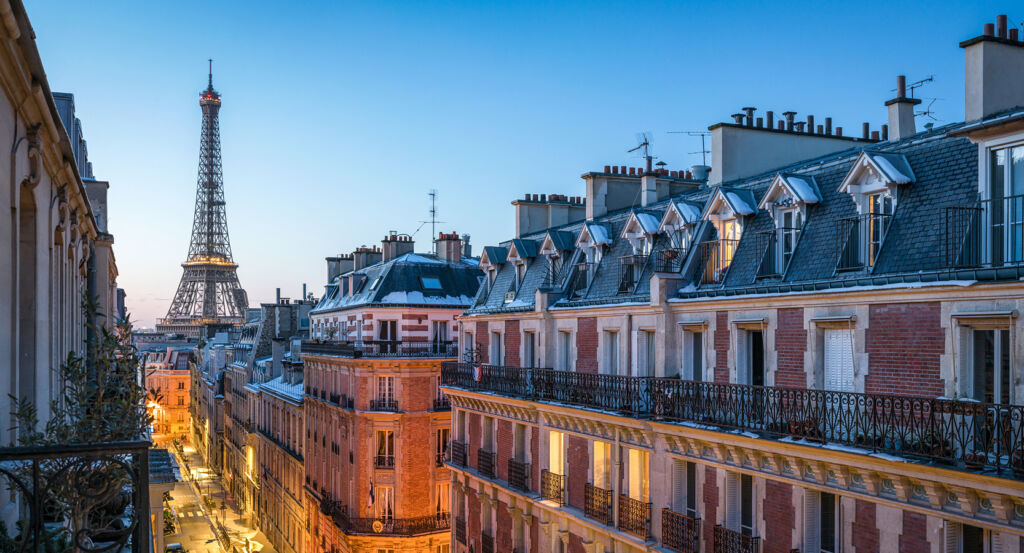
Why you should experience Hôtel Rochechouart in Paris, France.
Hôtel Rochechouart is an Art Deco hotel where Rochechouart's cabaret culture, the exuberance of the Années Folles, Josephine Baker's Paris and Festen's historically grounded restoration converge inside a 1920s house at the foot of Montmartre.
Set along Boulevard Marguerite de Rochechouart near Rue Duperré, the property began life as Hôtel Charleston and developed alongside a district crowded with musicians, dancers, artists and late-night performance culture. Orso founders Anouk and Louis Solanet acquired the hotel and commissioned Festen, the architecture and design studio of Charlotte de Tonnac and Hugo Sauzay, to recover that history rather than overwrite it, retaining elements including the restaurant's mosaic floor, period elevator and broader Art Deco vocabulary. The resulting 105 rooms and suites combine alabaster lighting, burl wood, warm bronze, tobacco and sunflower tones with the curved forms and decorative detailing associated with the building's original era. Hôtel Rochechouart consequently feels less like a contemporary hotel dressed nostalgically than a surviving piece of the boulevard's entertainment history brought back into active circulation.
What you should know about Hôtel Rochechouart.
Hôtel Rochechouart is best known for occupying a purpose-built Art Deco hotel established as Hôtel Charleston in the late 1920s, where its eight-story presence became associated with the entertainment culture surrounding Montmartre and Pigalle and the house counted Josephine Baker among its celebrated patrons. Orso founders Anouk and Louis Solanet later acquired the property and entrusted its reinvention to Festen, the Paris studio founded by Charlotte de Tonnac and Hugo Sauzay, whose restoration retained original elements including the blue mosaic restaurant floor and ornate period elevator while reviving the building's Belle Époque and Art Deco vocabulary. Festen extended that historical reconstruction across 105 contemporary rooms and suites using alabaster sconces, burl-wood headboards, brass fixtures, faience, bronze and tobacco tones, while the accommodation occupies eight floors beneath a rooftop overlooking Paris. The building's nightlife history survives below ground through Mikado Dancing, originally a Roaring Twenties dance hall devoted to tango and tea dances that subsequently operated as a clandestine gambling room before its revival as part of the restored hotel. Orso has held Clef Verte certification for Hôtel Rochechouart since 2023, while the property joined Design Hotels and received recognition in the Condé Nast Traveller Readers' Choice Awards 2024, extending a hospitality character rooted in nearly a century of Parisian hotel culture.
Mikado Dancing provides the clearest continuation of Festen's historical approach, with Charlotte de Tonnac and Hugo Sauzay rebuilding the subterranean club around Japanese lanterns, Art Deco counter motifs, velvet curtains, retro carpets and a parquet dance floor while preserving the name of the hotel's original nightlife venue. Marion Mailaender extended that creative program through Citrons et Huîtres, giving Hôtel Rochechouart a second designer-authored hospitality space distinct from Festen's principal interiors and the restored Mikado. Maggie develops the house's social character at street level through a 154-square-meter brasserie capable of accommodating 150 people, while the 100-square-meter Maggie Rooftop accommodates 55 and carries the hotel's entertainment program onto the uppermost level. Together, Festen, Marion Mailaender, Mikado Dancing and Maggie demonstrate how Orso transformed Hôtel Rochechouart through multiple interconnected creative environments, allowing the building's historic relationship with dining, dancing and Parisian nightlife to remain active rather than reducing its 1920s history to decorative nostalgia.
How to fold Hôtel Rochechouart into your trip.
Hôtel Rochechouart works as the anchor for an afternoon tracing Romantic art, Symbolist collecting and cabaret history through the streets below Montmartre.
Begin at Musée de la Vie Romantique, where painter Ary Scheffer established his Rue Chaptal home and studios in 1830 and received figures including George Sand, Frédéric Chopin, Eugène Delacroix and Franz Liszt within one of Nouvelle Athènes's defining artistic salons. Continue to Musée Gustave Moreau, where Gustave Moreau commissioned architect Albert Lafon in 1895 to enlarge his family residence with grand upper-floor studios intended to preserve the thousands of paintings, watercolors and drawings he would leave to the French state. Conclude at Moulin Rouge, founded by Joseph Oller and Charles Zidler in 1889 and inseparable from the development of the French cancan, Toulouse-Lautrec's poster art and the performance culture that transformed the boulevards beneath Montmartre into an international symbol of Parisian nightlife. The progression moves from Scheffer's Romantic salon through Moreau's deliberately preserved artistic universe into the cabaret culture of Oller and Zidler, revealing the creative territory from which Hôtel Rochechouart's own history emerged.
Where your story begins.
Foresyte Travel reveals places that feel extraordinary long before you arrive.
Experience premium editorial crafted for luxury travelers.














































































































