
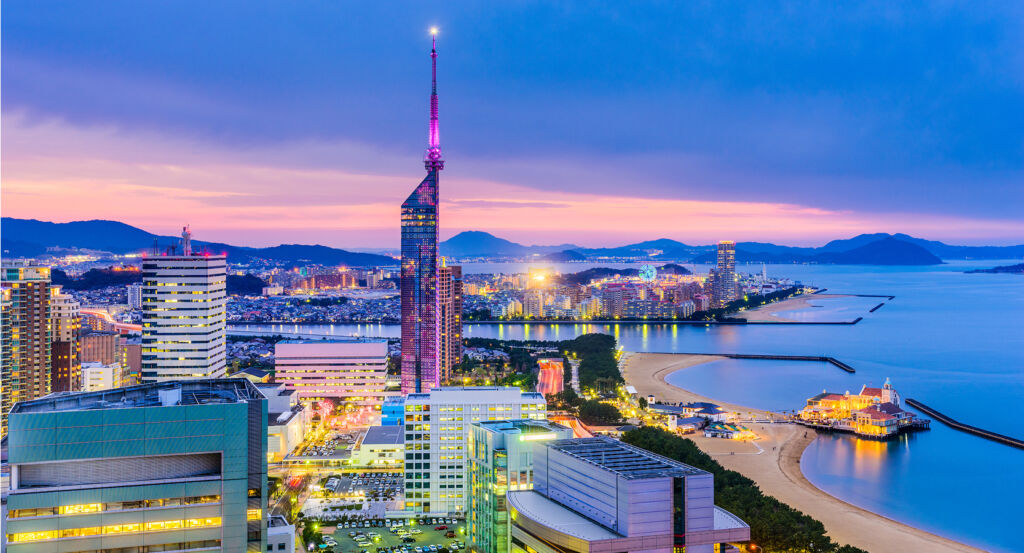
Why you should experience Hotel Wing International Hakata Shinkansen in Fukuoka, Japan.
Hotel Wing International Hakata Shinkansen is a hyper-connected urban base that turns Fukuoka into a city of momentum, precision, and effortless movement, where travel friction disappears and presence takes over.
Positioned directly beside Hakata Station's Shinkansen gates, the hotel operates at the exact seam where arrival, departure, and daily life intersect. This is not proximity as convenience, it is proximity as strategy. You step out of the station and into a space designed to absorb motion. Arrival feels immediate and grounding. The lobby is composed, legible, and intentionally restrained, prioritizing orientation over impression. Sightlines are clean, circulation is intuitive, and nothing competes for your attention unnecessarily. Seating supports short pauses, recalibration, and planning. Materials lean durable and neutral, reinforcing the sense that this is a place meant to be used, not admired. The atmosphere is calm but alert, a hotel tuned to the rhythm of people who are moving with purpose. Guest rooms continue this clarity-first philosophy. Layouts are efficient without feeling compressed, giving you exactly what you need and nothing extraneous. Beds are dependable and restorative, designed to support real sleep after long journeys, early departures, or dense days navigating the city. Furnishings are straightforward and practical, chosen for usability. Windows frame rail lines, streets, and urban movement, reinforcing the hotel's embeddedness in Fukuoka's transit-driven pulse. Bathrooms are modern, clean, and efficient, supporting routine. Across the property, the experience feels precise, stabilizing, and quietly empowering. Hotel Wing International Hakata Shinkansen is ideal for travelers who want Fukuoka to feel fast, navigable, and fully within reach, a city experienced through motion.
What you should know about Hotel Wing International Hakata Shinkansen.
Hotel Wing International Hakata Shinkansen is best known for mobility-first hospitality, a philosophy that treats transit adjacency not as a bonus but as the core of the guest experience.
Unlike hotels that attempt to buffer guests from movement, this property is built to collaborate with it. Circulation throughout the building mirrors the logic of a transit hub: direct, predictable, and efficient. You learn the layout immediately, then stop thinking about it, a hallmark of good operational design. Public spaces are proportioned to prevent congestion without feeling empty, allowing travelers to regroup, work, or pause without physical overload. Materials are selected for resilience and tactility. Surfaces feel solid and familiar underhand, finishes resist glare and visual fatigue, and textures absorb sound. Acoustic control is a quiet strength here. Despite being adjacent to one of Japan's busiest rail nodes, exterior noise becomes ambient context rather than intrusion, and interior sound dissipates quickly, preserving rooms as genuine spaces for rest and focus. Lighting strategy reinforces predictability. Daylight enters where possible with clarity, while artificial lighting remains warm and even, avoiding dramatic contrast or mood manipulation. This consistency supports circadian rhythm, especially for travelers crossing time zones or managing early departures. Service culture reflects this same efficiency-forward mindset. Interactions are polite, concise, and respectful of autonomy. Staff assist with logistics and local navigation rather than narrative performance, reinforcing the hotel's role as an operational ally rather than experiential host. Another understated strength of the property is how it reframes Hakata Station itself. Instead of feeling overwhelming, the station becomes an extension of your base. Departures feel effortless. Returns feel immediate. Over multiple nights, this proximity reduces cognitive load, you stop budgeting time for transit and start moving intuitively. The hotel does not rely on heritage cues or symbolic design. It captures a modern Japanese principle: clarity through infrastructure.
How to fold Hotel Wing International Hakata Shinkansen into your trip.
Hotel Wing International Hakata Shinkansen works best when you treat it as a movement-centric command point rather than a retreat, a place that supports both rapid deployment and calm recovery.
Begin your mornings. Step out of the hotel and directly into the city's rail network, whether you're heading into Tenjin, Nakasu, the waterfront, or beyond Fukuoka entirely. Use the adjacency strategically. Take early trains. Return midday for a reset that feels seamless. The hotel absorbs short pauses naturally, a shower, a rest, a regroup, without breaking the rhythm of your day. Afternoons are ideal for layered exploration: museums, markets, river walks, or regional side trips, all supported by the knowledge that return is immediate and uncomplicated. Evenings unfold with flexibility. Dine locally, explore nightlife, or return early and let the hotel's composed environment support decompression. For longer stays, the effect compounds. Fukuoka begins to feel compact and intelligible. Routes repeat. Confidence builds. Business travelers benefit from the hotel's transit integration and ability to preserve focus between engagements. Leisure travelers gain freedom, the ability to explore deeply. Anchoring your stay at Hotel Wing International Hakata Shinkansen allows Fukuoka to be encountered as a city of flow, not friction. The hotel does not compete with luxury towers, boutique narratives, or resort-style escape. It delivers something equally powerful: command over movement. In doing so, it creates a stay that feels efficient, stabilizing, and unmistakably urban, where rest supports motion, proximity supports intuition, and the city reveals itself through momentum.
Where your story begins.
Foresyte Travel reveals places that feel extraordinary long before you arrive.
Experience premium editorial crafted for luxury travelers.

















































































































