
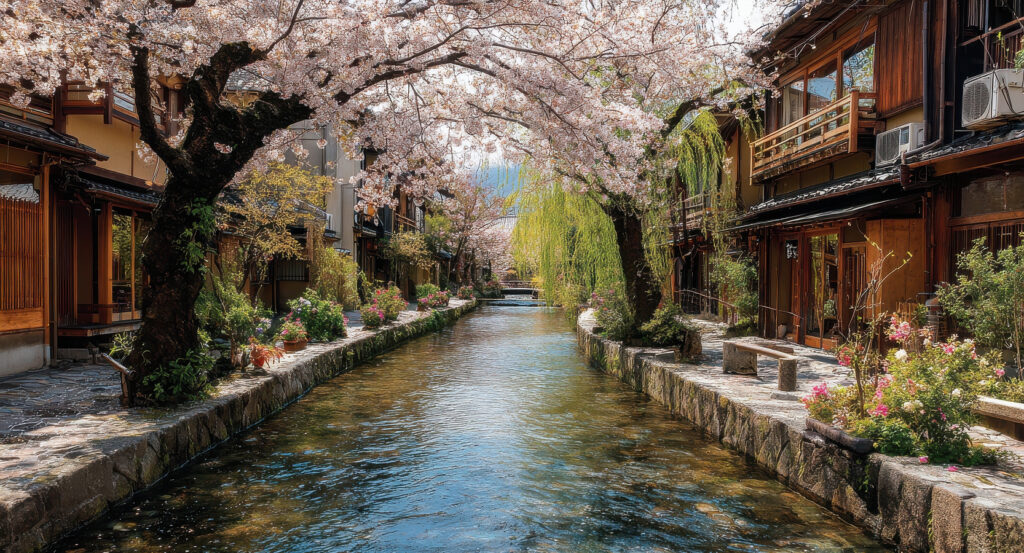
Why you should experience Hyatt Regency Kyoto in Kyoto, Japan.
Hyatt Regency Kyoto is Kyoto lived with breadth, composure, and refined ease, a hotel that doesn't compete with the city's deep history or architectural heritage, but frames them in a way that feels naturally calibrated for both exploration and repose.
Located in the historic Higashiyama district, a short walk from celebrated temples like Sanjūsangendō, Kiyomizu-dera, and the National Museum of Modern Art, the hotel occupies a zone where Kyoto's cultural depth becomes accessible. Arrival feels purposeful and composed. You move out of Kyoto's streets, dense with history and movement, into interiors shaped by generous proportions, clean geometry, and a tonal restraint that immediately lowers visual tension. Public spaces are designed with clarity rather than spectacle; volumes are open without being cold, light is soft without being dim, and circulation feels intuitive rather than theatrical. These areas feel grounded rather than decorative, encouraging calm orientation rather than task distraction. Guest rooms exemplify this character with spatial intelligence and comfort. They are generously sized for the city's historic quarters and arranged to support rest, work, and reflection. Beds are substantial and engineered for deep restorative sleep after days spent walking temple paths or museum galleries. Windows frame garden views, quiet streets, or inner courtyards, grounding you in place. Furniture is purposeful and calibrated: desks that accommodate real work, seating that invites lingering rather than posing, and storage that allows for full habitation rather than transient use. Lighting is layered and warm, supporting smooth transitions from day to evening. Bathrooms are composed and efficient, designed for usability and ease, strong showers, thoughtful circulation, and finishes chosen for calm continuity. Dining at Hyatt Regency Kyoto reflects the hotel's commitment to depth over flash. Restaurants and lounges here prioritize seasonal ingredients, culinary precision, and balance. Spaces are composed to support conversation and presence, making meals feel organically integrated into the rhythm of your day. The hotel's spa and fitness facilities add another dimension of calm and restoration, offering physical reset. The spa's intentional lighting, natural materials, and quiet programing allow your body and nervous system to decompress after long urban explorations. Service throughout the hotel is polished. Interactions feel informed and situational rather than rehearsed, guided by local knowledge and contextual awareness. Staff anticipate needs subtly and support autonomy. The hotel attracts travelers who value coherence over spectacle: cultural explorers, professionals on extended stays, couples desiring calm presence over climactic romance, and repeat visitors to Kyoto who appreciate steadiness under varied use. Hyatt Regency Kyoto does not attempt to overdefine your experience of the city or dilute its complexity. Instead, it offers a structure of calm, clarity, and reliability that allows Kyoto's layered beauty to exist.
What you should know about Hyatt Regency Kyoto.
Hyatt Regency Kyoto was designed around the idea that space and movement matter as much as visual identity, particularly in a city where history, rhythm, and human scale are primary layers of experience.
Rather than imposing a uniform global luxury template, the architects and designers integrated elements of Japanese spatial philosophy, emphasizing proportion, material restraint, and rhythm over surface performance. Public spaces were arranged as sequences rather than destinations; sightlines were choreographed to ease transitions between interior calm and the city's textured exterior; and materials were selected for quiet resonance rather than immediate show value. In guest room design, planners prioritized behavior-grounded use, observing how people move through space across multiple nights, how they unpack, rest, and reset, leading to layouts that feel intuitive under repeated occupancy. This results in environments where storage, workspaces, and circulation mesh seamlessly with rest zones and views, reducing visual noise and supporting everyday comfort. Lighting systems were integrated early in the design process to support circadian rhythm and reduce fatigue, using indirect sources and layered illumination that complement natural light. Bathrooms were designed as ritual spaces rather than transitional zones, emphasizing tactile quality, water clarity, and spatial calm. Culinary spaces were conceived as extended infrastructure for nourishment and presence rather than destinations of performance, reinforcing the idea that meals can be grounding moments in the flow of a day rather than isolated events. Operational culture echoes this architectural philosophy. Staff training emphasizes situational awareness, cultural fluency, and anticipatory support. The result is service that feels naturally aligned with the guest's pace and intent. Over time, Hyatt Regency Kyoto has drawn a loyal following among travelers who return not for novelty or performance, but because the experience performs reliably under real use, spaces that feel coherent, comfortable, and consistently calibrated.
How to fold Hyatt Regency Kyoto into your trip.
Hyatt Regency Kyoto works best when you let it act as a supportive base of rhythm and return rather than a backdrop you pass through between sights.
Begin mornings with calm intention. Enjoy breakfast in an environment that feels composed rather than rushed, letting the hotel's spatial tone orient you before stepping into nearby temple precincts and cultural corridors. From here, explore Kyoto's eastern districts at a pace that feels responsive to place rather than frenetic: walk through Sanjūsangendō's long halls, trace quiet garden edges, and absorb museum spaces early. Because the hotel sits slightly removed from the city's busiest transit routes, returning midday feels restorative. Come back to rest, reset in the spa, or simply sit with tea before heading out again. Afternoons lend themselves to deeper exploration: local craft streets, smaller shrines, and refined cafés reveal themselves when you move with fewer constraints. Evenings unfold with coherence. Dine thoughtfully on seasonal cuisine here or in neighborhood establishments, attend performances, or walk riverside paths as lights soften the city. Returning late never feels abrupt because the hotel's interior language absorbs energy. Hyatt Regency Kyoto pairs especially well with extended stays, cultural immersion, work-leisure blends, and repeat visits where how you feel at day's end matters as much as what you saw during it. By the time you leave, Kyoto will feel less like a series of highlights and more like a lived city, and the hotel will feel like the place that made that lived experience possible, not softened, not diluted, but purposefully present. In a destination defined by depth, rhythm, and understated beauty, Hyatt Regency Kyoto offers a rare equilibrium: calm that enables presence.
Where your story begins.
Foresyte Travel reveals places that feel extraordinary long before you arrive.
Experience premium editorial crafted for luxury travelers.

















































































































