
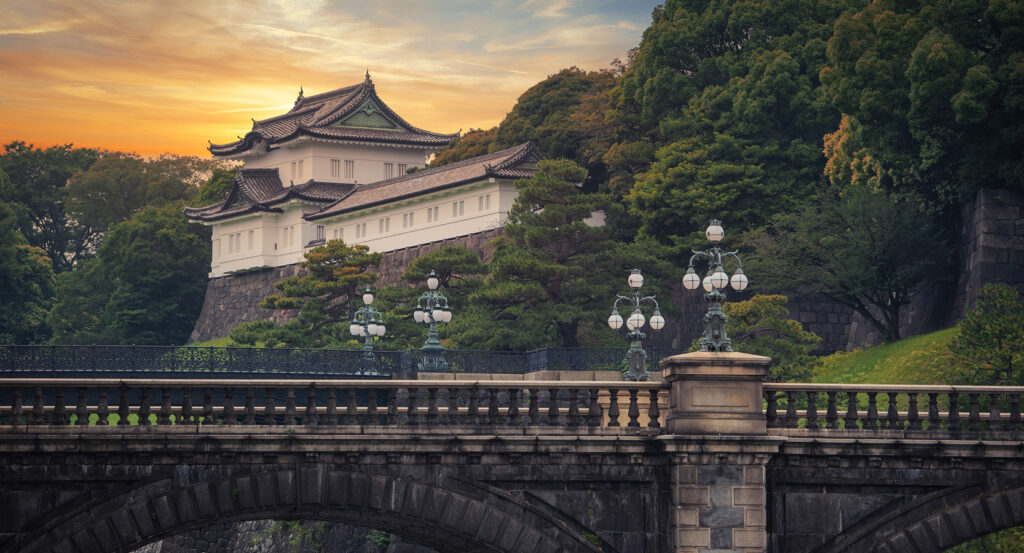
Why you should experience Imperial Palace East National Gardens in Tokyo, Japan.
The Imperial Palace East National Gardens are Tokyo's most poetic paradox, a tranquil expanse where royal heritage and natural grace coexist in perfect stillness.
Spread across the former innermost grounds of Edo Castle, the gardens unfold like a living scroll of history. Moss-covered stone walls and watchtower remains stand quietly amid ponds, plum groves, and sculpted pines, while pathways wind past azalea bushes and bamboo groves that shift gently in the wind. It's one of the few places in Tokyo where centuries of power have softened into serenity, where samurai battlements now frame lily ponds, and wildflowers bloom where warriors once stood guard. Every season transforms the landscape anew: cherry blossoms in spring, deep greens in summer, amber leaves in autumn, and crisp, clear air in winter that makes the old stones glow gold in the sun.
What you should know about Imperial Palace East National Gardens.
Once the private stronghold of shoguns, the East Gardens were opened to the public in 1968 as a gesture of imperial openness and renewal.
The site retains fragments of Edo Castle's Honmaru and Ninomaru, its central and secondary enclosures, offering a rare glimpse into Japan's feudal past. Yet, unlike a museum, the gardens are alive: meticulously pruned trees frame the remains of ancient gates, while koi ripple through quiet ponds designed with centuries-old precision. The Ninomaru Rest House offers a subtle nod to the balance of tradition and modernity, where visitors can rest while overlooking restored landscapes that once dictated the rhythm of an empire. Few realize that the gardens' layout follows the same plan drawn by Edo-period architects, ensuring that every turn, every bridge, carries history beneath your feet.
How to fold Imperial Palace East National Gardens into your trip.
Arrive early in the morning, when the mist still clings to the moat and the sound of footsteps on gravel feels sacred.
Enter through Otemon Gate, where the stone ramparts rise in quiet grandeur, and follow the gentle incline toward the site of Edo Castle's former keep. Pause often, the gardens are less a destination than a meditation in motion. Find a bench by the Ninomaru Pond, where reflections of pine and sky merge into perfect stillness, or explore the plum garden if you visit in late winter, when the air carries a faint, honeyed fragrance. Before you leave, walk to the upper lawn of the Honmaru ruins and gaze across Tokyo's skyline beyond the ancient walls. In that single view, centuries of empire, resilience, and peace, you'll see Japan's story written in the language of nature.
Where your story begins.
Foresyte Travel reveals places that feel extraordinary long before you arrive.
Experience premium editorial crafted for luxury travelers.

















































































































