
Why you should experience InterContinental Shanghai Ruijin in Shanghai, China.
InterContinental Shanghai Ruijin is a rare garden-embedded luxury estate where colonial-era architecture, diplomatic history, and refined contemporary hospitality coexist inside one of the most tranquil pockets of Central Shanghai.
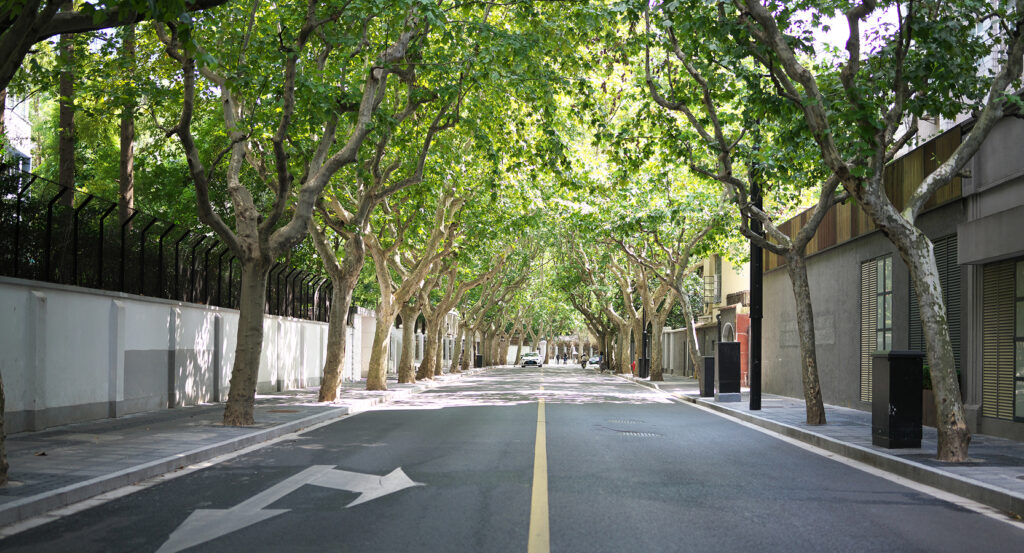
This hotel does not announce itself loudly, and that is precisely its power. Hidden behind gates and mature trees in the former French Concession, InterContinental Shanghai Ruijin feels more like a private compound than a city hotel. From the moment you enter the grounds, the surrounding traffic, density, and noise dissolve into landscaped paths, historic villas, and a sense of spatial calm that is almost disorienting for a city of this scale. The arrival experience is deliberate and ceremonial. You move through greenery, past heritage façades, and into an environment that feels preserved. The property spans multiple low-rise historic buildings, many dating back to the early 20th century, originally used as private residences and diplomatic estates. This layout immediately sets it apart from Shanghai's vertical luxury hotels. Instead of height, the experience is defined by horizontality, gardens, and distance between spaces. Inside, interiors balance classical elegance with modern restraint. Public areas feel composed and dignified, using warm woods, stone, and soft lighting to create an atmosphere that encourages quiet conversation. Guest rooms continue this tone with generous proportions, high ceilings, and a sense of insulation from the outside world. Beds are plush and deeply comfortable, dressed in fine linens that emphasize rest and ritual. Furnishings feel residential rather than corporate, chosen to support lingering rather than turnover. Windows often overlook gardens, trees, or internal courtyards rather than streets, reinforcing the sense that you are staying inside a protected enclave. Bathrooms are refined and serene, featuring deep soaking tubs, walk-in rain showers, stone finishes, and lighting designed to feel restorative. Dining at InterContinental Shanghai Ruijin aligns with the hotel's understated confidence. Restaurants emphasize quality, calm, and classical execution. Meals feel composed and unhurried, whether enjoyed in formal dining rooms or more relaxed garden-adjacent settings. Breakfast, in particular, benefits from the surroundings, allowing mornings to begin in greenery. Public spaces throughout the property invite slow movement. Garden paths, terraces, and quiet seating areas encourage guests to step outside, wander, and pause, an experience that feels increasingly rare in modern Shanghai. Service is polished, discreet, and deeply professional. Staff interactions feel measured and respectful, prioritizing privacy and intuition over overt personalization. The location completes the experience. Situated in the former French Concession, the hotel places you within walking distance of tree-lined streets, cafés, boutiques, and cultural landmarks, while remaining entirely shielded from the district's energy once you pass back through the gates. InterContinental Shanghai Ruijin is serene, historic, and deeply grounding, ideal for travelers who want to experience Shanghai through space, heritage, and stillness.
What you should know about InterContinental Shanghai Ruijin.
InterContinental Shanghai Ruijin occupies a site that has played a quiet but significant role in Shanghai's political, diplomatic, and social history for over a century.
The Ruijin property was originally developed as a collection of private villas and institutional buildings during Shanghai's concession era, when the former French Concession functioned as a semi-autonomous enclave shaped by European planning principles and elite residential life. Over time, the site hosted foreign diplomats, high-ranking officials, and important state functions, embedding it deeply into the city's political and cultural fabric. Unlike many historic properties that were stripped of context during redevelopment, the Ruijin estate retained its garden layout and low-rise configuration, preserving the spatial logic of early 20th-century residential Shanghai. When InterContinental assumed stewardship of the property, the approach was preservation-first. Restoration efforts focused on maintaining original façades, rooflines, and garden relationships while integrating modern systems discreetly. A lesser-known aspect of the hotel's design is how carefully movement through the property was considered. Paths between buildings intentionally slow guests down, using distance, greenery, and visual separation to create psychological decompression. This is why the hotel feels calm even at high occupancy. Acoustic quiet is achieved not just through materials, but through layout. Buildings are separated, traffic is diffused, and sound dissipates naturally into the landscape. The guest room experience benefits from this as well, with rooms positioned to minimize shared walls and corridor noise. Another underappreciated strength lies in the hotel's resonant register. InterContinental Shanghai Ruijin does not attempt to reinterpret Shanghai's past in a decorative way. Instead, it allows history to remain present through proportion, material, and silence. This restraint creates a sense of authenticity that many heritage-themed hotels lack. The property's gardens also carry symbolic weight. In a city defined by density, preserved green space at this scale represents continuity, privilege, and foresight. Over decades, the Ruijin grounds have served as places of negotiation, retreat, and reflection, roles that subtly continue today for modern guests. InterContinental Shanghai Ruijin stands as a reminder that Shanghai's luxury is not only vertical and futuristic, but also horizontal, historic, and quietly enduring.
How to fold InterContinental Shanghai Ruijin into your trip.
InterContinental Shanghai Ruijin works best when you allow it to counterbalance Shanghai's intensity.
Begin your days slowly, taking advantage of the hotel's gardens and low-rise layout to ground yourself before stepping into the city. Enjoy breakfast without rush, then walk out into the former French Concession's shaded streets, where cafés, boutiques, and cultural sites unfold naturally on foot. Use the hotel as a midday retreat. After hours of movement, meetings, or exploration, returning to the Ruijin grounds feels like crossing into another tempo entirely. Rest, read, or simply walk the paths before heading out again in the evening. Nights can be flexible. Some evenings may involve dining on property, leaning into the hotel's calm elegance, while others take you into Shanghai's energetic dining and nightlife scenes just beyond the gates. The contrast is what makes the experience powerful. Over multiple days, the hotel becomes more than accommodation. It becomes a refuge that allows you to experience Shanghai fully.
Where your story begins.
Foresyte Travel reveals places that feel extraordinary long before you arrive.
Experience premium editorial crafted for luxury travelers.

















































































































