Why InterContinental Tahiti Resort & Spa matters.
InterContinental Tahiti Resort & Spa is a historic Polynesian waterfront resort where Faa'a's aviation gateway meets the development of international island hospitality and the preservation of Tahitian cultural traditions.
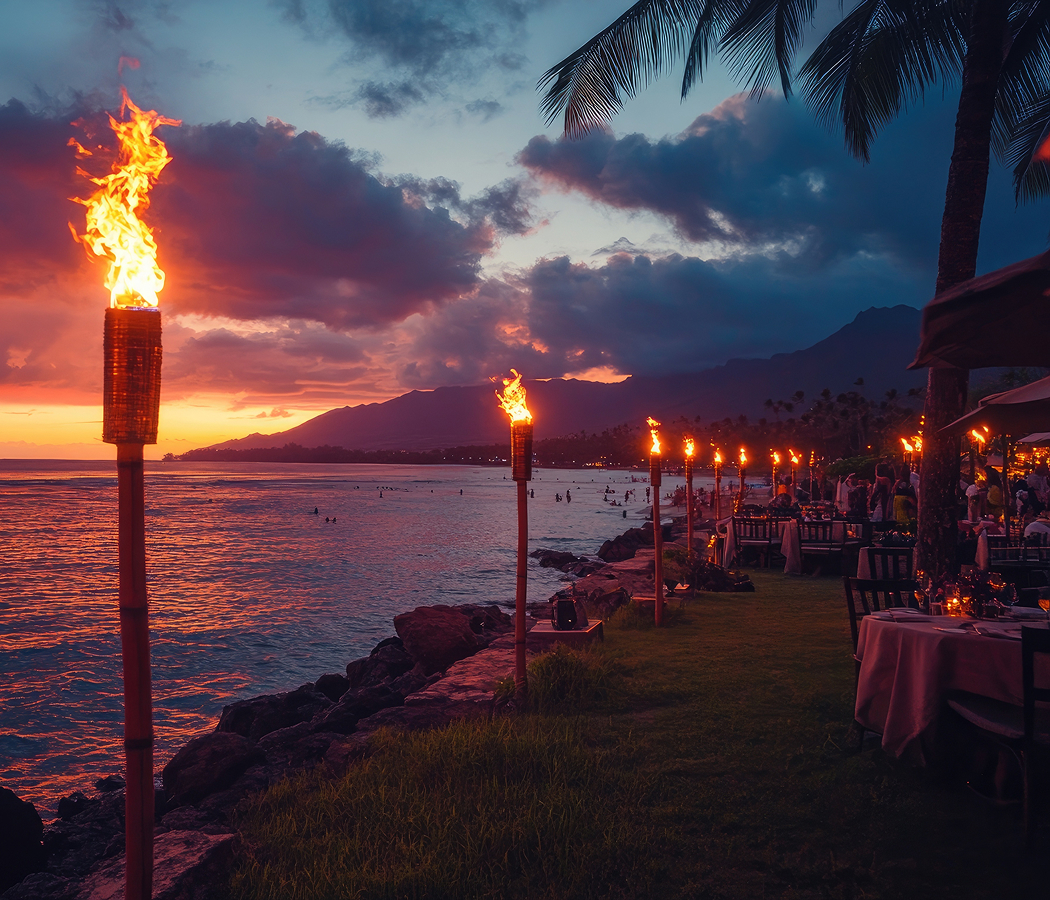
Occupying a landscaped peninsula on Tahiti's northwestern coast, InterContinental Tahiti Resort & Spa extends along the lagoon near Faa'a International Airport, with the volcanic mountains of Moorea rising across the water and the urban coastline of Papeete stretching northeast toward the island's principal harbor. The resort's low-rise buildings, tropical gardens, and thatched overwater structures establish a horizontal architectural composition shaped by the surrounding lagoon and the distant island's mountainous silhouette. Arrival through the principal building leads toward open-air terraces and garden pathways, where the landscape gradually reveals the waterfront and the broad expanse of water separating Tahiti from Moorea. A network of wooden walkways connects the overwater accommodations and Le Lotus restaurant, creating a separate encounter with the lagoon through elevated structures extending beyond the shoreline. The result is a coastal resort whose original landscape, overwater architecture, and uninterrupted views toward Moorea establish the physical character of one of Tahiti's longstanding international hospitality institutions.
What defines InterContinental Tahiti Resort & Spa.
InterContinental Tahiti Resort & Spa is best known for developing from the Travelodge Tahiti into one of French Polynesia's established international resorts through successive expansions, ownership changes, and the growth of Pacific Beachcomber. The property opened on June 19, 1974, with a development incorporating a private motu and an architectural program distinguished by extensive timber construction. Its original configuration emerged during a period when international air travel was reshaping Tahiti's tourism economy and creating demand for substantial accommodation facilities near the island's principal airport. A major renovation during 1979-1980 accompanied its transition to the Tahiti Beachcomber name, establishing the foundation for a more ambitious hospitality operation. Richard H. Bailey assumed management in 1988, beginning a relationship with the property that subsequently became central to the development of his Polynesian hotel group. Bailey had developed his interest in French Polynesia through childhood travel and returned during the early 1970s, eventually establishing his professional career within the islands' hospitality industry. The hotel introduced a substantial overwater expansion in 1993, constructing fifteen bungalows and the Le Lotus restaurant above the lagoon. The project also incorporated a sand-bottomed infinity pool, an early example of a design that subsequently became associated with tropical resort development. Bailey acquired Tahiti Beachcomber SA in 1998, bringing the Tahiti and Moorea Beachcomber properties under his ownership and establishing the commercial foundation for Pacific Beachcomber. Two additional accommodation buildings followed during 1999-2000, expanding the resort during a period of increasing international demand for French Polynesian travel. A comprehensive renovation accompanied the adoption of the InterContinental name in 2001, connecting the established Polynesian property with a global luxury hospitality organization. Pacific Beachcomber subsequently expanded its holdings across the Society Islands, developing a portfolio that included InterContinental resorts in Bora Bora and the environmentally focused Brando resort on Tetiaroa. The Tahiti property received recognition as the fifth-best South Pacific resort in Travel + Leisure's 2020 World's Best Awards, extending its international reputation beyond its original Beachcomber association. Its fiftieth anniversary in 2024 included a program of cultural performances, historical exhibitions, and commemorative events celebrating the employees and artists associated with the resort's development. Laurent Vigneron assumed the general manager's position during the anniversary year, succeeding Thierry Brovelli after nine years of leadership. The property's history connects the emergence of international air tourism, the expansion of overwater resort architecture, and the development of a locally established hospitality group into one of French Polynesia's principal luxury operators.
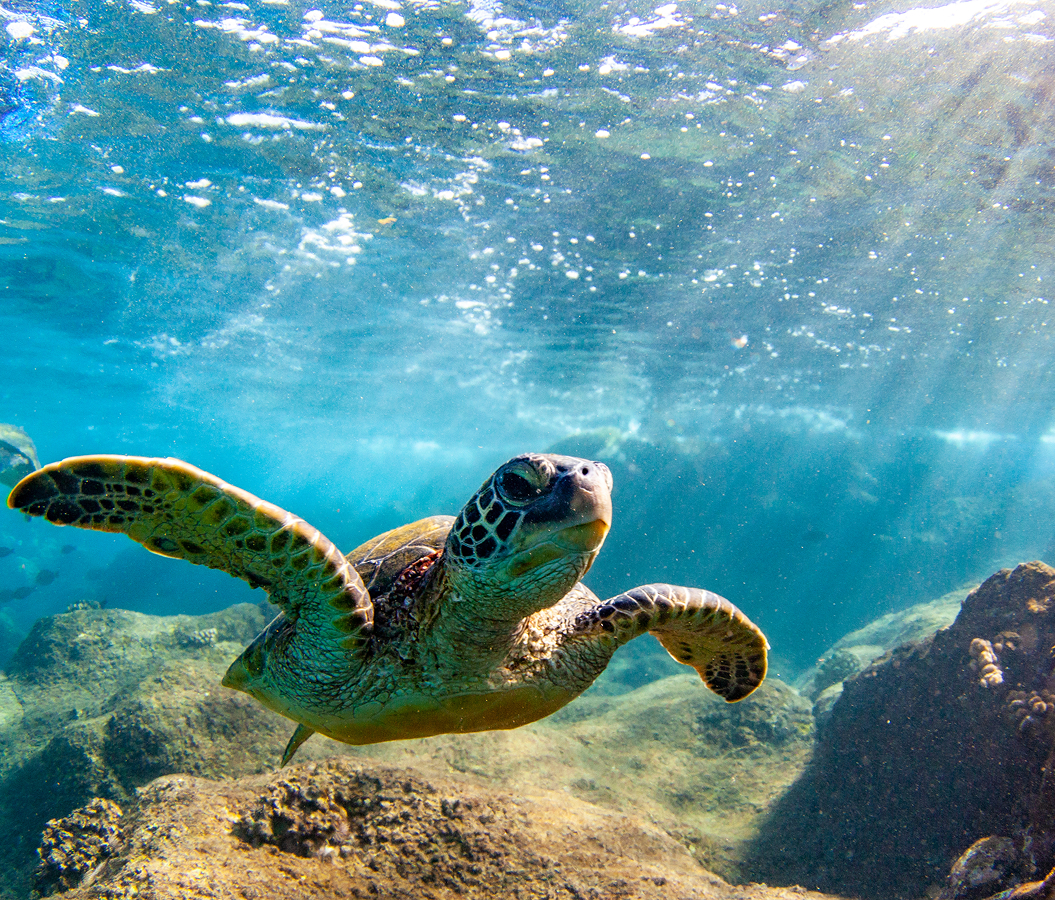
Coco Hotahota established a particularly important relationship between the resort and Tahitian performing arts through the introduction of a regular Friday evening dance program in 1982. Hotahota founded the troupe Temaeva in 1962, developing an influential approach to 'ori Tahiti through choreography grounded in Polynesian language, mythology, music, and ceremonial traditions. His performances contributed to the revival and international recognition of Tahitian dance during a period when cultural organizations were strengthening the preservation of indigenous artistic practices. The resort's weekly program created a recurring performance setting for Temaeva, connecting international hospitality with the professional development of local dancers and musicians. In 1998, Les Grands Ballets de Tahiti began performing at the property, introducing a different choreographic approach that combined traditional Tahitian movement with theatrical staging and contemporary production techniques. The troupe's collaboration continued for seventeen years, establishing a sustained relationship between the hotel and one of the territory's prominent dance organizations. Saturday performances developed around the theme of the Bounty mutiny, drawing upon the eighteenth-century maritime episode associated with HMS Bounty and its encounter with Tahiti. The program incorporated staged performances and Polynesian dining, connecting historical subjects with the resort's cultural entertainment traditions. The property's association with Polynesian cultural preservation subsequently expanded into marine conservation through the work of Te mana o te moana. Richard Bailey and veterinarian Cécile Gaspar established the organization in 2004, creating a nonprofit dedicated to protecting sea turtles and the marine environment of French Polynesia. After nineteen years at the former InterContinental Moorea Resort & Spa, the association relocated its principal operations to the Tahiti property in June 2023. The move incorporated a rehabilitation lagoon, veterinary care facilities, educational structures, and a public reception area devoted to marine conservation. Its rehabilitation program treats injured and vulnerable sea turtles under authorization from French Polynesia's environmental authorities, including hawksbill and green turtles requiring specialized care. The association's educational program introduces participants to Polynesian marine ecosystems, the biological characteristics of sea turtles, and the environmental pressures affecting their survival. These cultural and conservation initiatives connect the resort's hospitality operations with the professional preservation of Tahitian performing arts and the protection of the surrounding marine environment.
How InterContinental Tahiti Resort & Spa fits.
InterContinental Tahiti Resort & Spa works as the starting point for exploring Papeete's colonial religious history, the development of its municipal marketplace, and the transformation of the capital's waterfront into a substantial public landscape.
Begin at Cathédrale Notre-Dame de Papeete, the principal Catholic cathedral of French Polynesia and an important surviving example of nineteenth-century colonial religious architecture. Bishop Étienne Jaussen directed its construction, which began in 1856 with the assistance of fifty skilled workers from Mangareva in the Gambier Islands. Financial and political difficulties interrupted construction between 1857 and 1870, during which Mangarevan artisans transported three doorways to their home island for carving. The cathedral was consecrated on December 23, 1875, establishing a permanent religious institution within the expanding colonial capital. Its surviving interior incorporates carved timberwork, stained glass, and a marble mosaic of Christ Pantocrator completed in 2008 by Guy Bernardin. The building also marks Tahiti's kilometer-zero reference point, connecting its religious significance with the island's geographical measurement system. Continue to Marché de Papeete, the municipal marketplace established by Governor Armand Joseph Bruat in 1847 to organize the commercial exchange of fish, agricultural produce, and other provisions within the growing port settlement. The original market incorporated separate areas for fishing and agricultural trade, with a covered timber structure introduced in 1860. Subsequent expansion incorporated adjoining land belonging to Mapuru a Paraita, whose name became associated with the institution. The municipality acquired the market in 1890, and the surrounding streets developed into an important commercial district through the activities of Chinese immigrant merchants. German naval bombardment damaged the neighborhood in September 1914, marking a significant episode in Papeete's First World War history. The market building underwent reconstruction in 1989, followed by modernization in 2006 and 2015, preserving its function as a center for Polynesian agricultural products, seafood, flowers, textiles, and traditional crafts. Conclude at Jardins de Paofai, a five-hectare waterfront park developed through a major public investment in the reconstruction of Papeete's coastal landscape. The project incorporated 655,000 cubic meters of maritime reclamation, establishing new public land between Place Jacques Chirac and Place To'ata. Landscape architect Alexis N'Guyen-The directed the design, organizing the park around extensive lawns, pedestrian pathways, and traditional fare pote'e structures roofed with pandanus. Construction began in July 2008, with landscaping advancing during the following year and the completed park inaugurated on February 2, 2010. The development incorporated 24,000 square meters of lawns and 11,000 square meters of pedestrian circulation, creating substantial recreational space along the capital's waterfront. Its design also accommodated traditional va'a outrigger canoe activities, preserving a connection between the public landscape and Polynesian maritime practices. The progression moves from Papeete's nineteenth-century Catholic foundation through the commercial history of its municipal marketplace and culminates in the waterfront's contemporary public landscape, connecting three institutions central to the capital's religious, economic, and civic development.
Where your story begins.
Foresyte Travel reveals places that feel extraordinary long before you arrive.
Enjoy editorial crafted for luxury travelers.
Foresyte may earn a commission when you book.