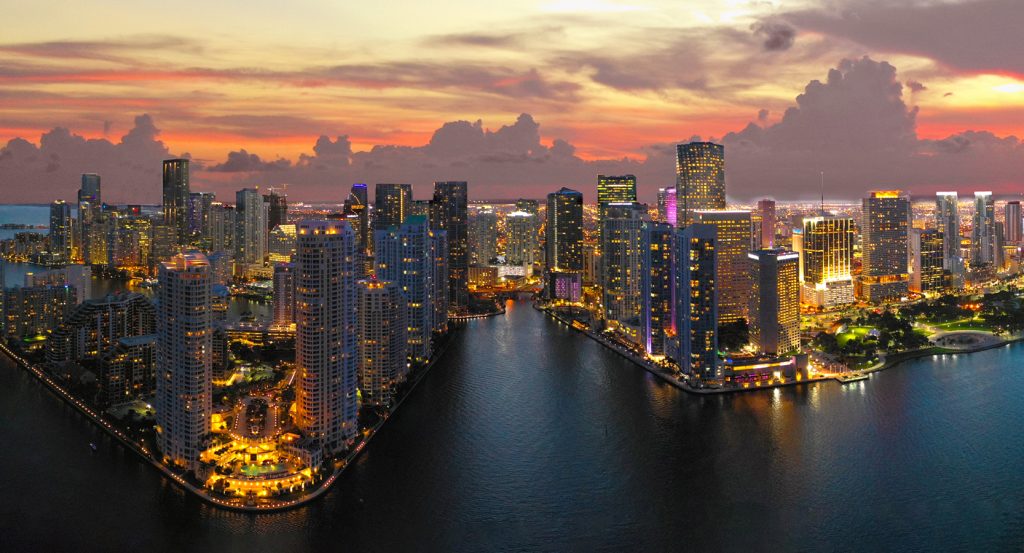
Why you should experience James Avenue in Miami, Florida.
James Avenue is a polished corridor where City Center's architectural sophistication, cultural vitality, tropical landscape, and refined urban character come together along one of Miami Beach's most engaging streets.
Running through City Center between South Beach and Bayshore, the corridor links celebrated hotels, architect-designed commercial buildings, performing arts venues, landscaped public spaces, and shaded pedestrian routes that collectively reflect Miami Beach's evolution from an early resort community into an internationally recognized center for design and culture. Art Deco façades, Mid-Century Modern architecture, mature royal palms, and thoughtfully designed streetscapes create an inviting environment where architecture and public life remain closely connected. Throughout the corridor, distinguished buildings, cultural destinations, and carefully maintained public spaces reinforce a setting whose character has evolved through preservation, thoughtful planning, and creative investment. The result is an experience defined by elegance, walkability, and one of Miami Beach's most rewarding urban corridors.
What you should know about James Avenue.
James Avenue is best known for occupying a central position within the Miami Beach Architectural District, listed on the National Register of Historic Places in 1979 as the nation's first historic district recognized primarily for twentieth-century resort architecture. Development accelerated during the 1920s through the 1940s as Carl G. Fisher's ambitious promotion of Miami Beach encouraged construction of apartment houses, hotels, commercial buildings, and civic facilities designed in Mediterranean Revival, Art Deco, and Streamline Moderne styles. Architects including Henry Hohauser, L. Murray Dixon, Albert Anis, Anton Skislewicz, and Lawrence Murray shaped the surrounding streetscape through rounded corners, ribbon windows, glass block, terrazzo entrances, nautical ornamentation, and geometric relief that established an architectural style recognized throughout the world. James Avenue developed within a carefully planned street network that strengthened connections between residential neighborhoods, commercial districts, and public gathering spaces while preserving a highly walkable urban form. Royal palms, live oaks, gumbo limbo, sea grape, silver buttonwood, and flowering subtropical plantings continue reinforcing the lush landscape that distinguishes the corridor from conventional downtown streets.
The Bass occupies a building originally completed in 1930 as the Miami Beach Public Library, designed by Russell Pancoast before its expansion into a leading contemporary art institution, illustrating the district's longstanding commitment to cultural investment. Collins Park's public sculpture program and thoughtfully designed green spaces have strengthened the surrounding civic environment while complementing the architectural character of nearby streets. Coral stone, decorative cast stone, terrazzo paving, steel casement windows, and hand-forged wrought iron incorporated throughout neighboring historic buildings demonstrate the craftsmanship and regional materials that continue defining this section of Miami Beach. Together, these cultural resources, public improvements, and enduring architectural materials deepen the historical narrative established by James Avenue's streetscape, demonstrating why the corridor remains an important expression of Miami Beach's architectural evolution.
How to fold James Avenue into your trip.
James Avenue works as an exploration of Miami Beach's design heritage and cultural landscape.
Begin at The Fillmore Miami Beach at the Jackie Gleason Theater, where celebrated performance spaces, Mid-Century Modern architecture, and decades of entertainment history establish a compelling introduction before following James Avenue through the surrounding architectural district. Continue to Miami Beach Botanical Garden, whose native Florida plant collections, orchids, palms, and tranquil water features provide a refreshing contrast while expanding the appreciation for the city's subtropical landscape traditions. Conclude at Lincoln Road, where acclaimed architecture, open-air cafés, public art, and one of America's most influential pedestrian promenades provide the culminating reward by revealing the civic vision that reshaped the heart of Miami Beach. The progression moves naturally from performing arts through botanical beauty before culminating within the city's defining pedestrian boulevard, revealing how James Avenue unites architecture, culture, and landscape into a distinctly Miami Beach experience.
Where your story begins.
Foresyte Travel reveals places that feel extraordinary long before you arrive.
Experience premium editorial crafted for luxury travelers.