
Why you should experience Jinjiang Hotel in Shanghai, China.
Jinjiang Hotel is a living artifact of Shanghai's political, diplomatic, and social history, offering a stay where classical architecture, state-level heritage, and restrained hospitality converge inside one of the city's most storied compounds.
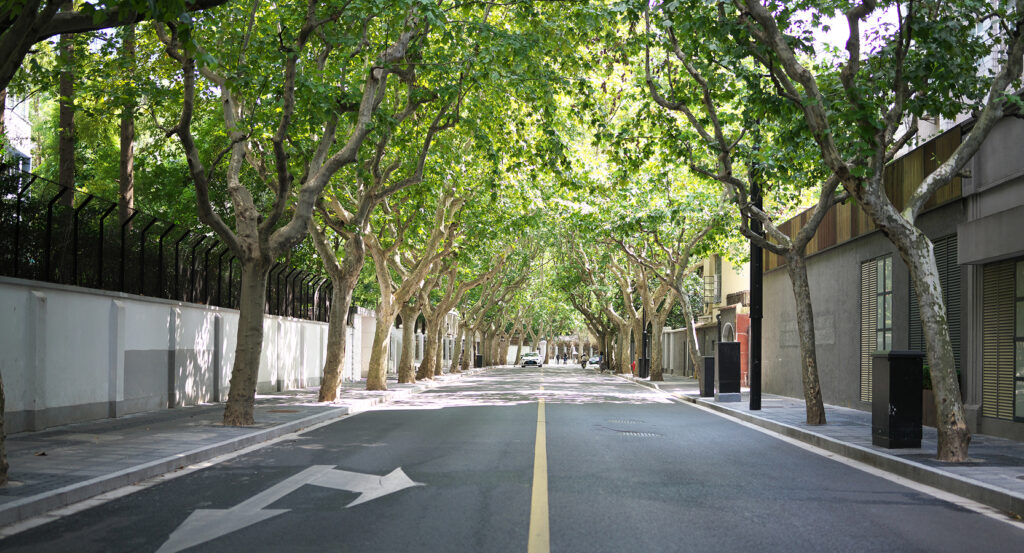
This is not a hotel shaped by trends or tourism cycles. Jinjiang Hotel exists in a category of its own, occupying a grand garden estate in the former French Concession that has witnessed some of the most consequential moments in modern Chinese history. From the moment you pass through the gates, the tone shifts. Traffic noise fades, the street dissolves, and you enter an environment defined by trees, open lawns, and dignified low-rise buildings that feel anchored in permanence. The arrival experience is formal without being theatrical, conveying authority and continuity rather than indulgence. The architecture reflects early 20th-century European influences adapted to Shanghai's climate and scale, with symmetrical façades, deep-set windows, and proportions that emphasize stability over drama. Inside, public spaces feel ceremonial and composed. High ceilings, polished stone, dark woods, and restrained décor create an atmosphere that values order and gravity. This is a hotel that expects you to meet it at its level. Guest rooms continue this sense of classical restraint. Layouts are generous and deliberate, prioritizing space and quiet over visual novelty. Beds are comfortable and substantial, designed for rest rather than performance, with linens that feel crisp and traditional. Furnishings lean toward classic rather than contemporary, reinforcing the sense that you are staying somewhere with institutional memory. Seating areas invite reading or reflection rather than entertainment, and workspaces are practical without being dominant. Windows often overlook gardens or internal courtyards, reinforcing the feeling of separation from the surrounding city. Bathrooms are well maintained and functional, with deep tubs, solid fixtures, and lighting that supports unhurried routines. Dining at Jinjiang Hotel reflects its legacy. Restaurants emphasize formal service, classical technique, and consistency. Meals feel structured and composed, often echoing the kind of dining historically associated with state functions and diplomatic hosting. Breakfast unfolds calmly, without the frenetic energy common in modern hotels, reinforcing the hotel's unchanging rhythm. Public spaces throughout the property encourage slow movement. Garden paths, lounges, and wide corridors invite pause and observation, creating an experience that feels almost ceremonial in its pacing. Service is formal, professional, and deeply respectful. Staff interactions prioritize discretion and protocol, offering assistance efficiently. The location enhances the experience. Situated in the former French Concession, the hotel places you within walking distance of tree-lined streets, embassies, cafés, and historic neighborhoods, while remaining entirely insulated from their noise once you return inside the gates. Jinjiang Hotel is dignified, historic, and quietly powerful, ideal for travelers who want to experience Shanghai through legacy, space, and institutional gravitas.
What you should know about Jinjiang Hotel.
Jinjiang Hotel has played a central role in China's modern diplomatic history, serving as the site of high-level negotiations, state banquets, and international meetings that shaped the country's global relationships.
Originally developed as part of a prestigious residential and diplomatic estate during Shanghai's concession era, the property later became one of the most important state guesthouses in the People's Republic of China. Most notably, Jinjiang Hotel hosted key meetings during the 1972 Shanghai Communiqué negotiations between China and the United States, making it among the physical settings where modern Sino-American relations were formalized. This history is not abstract; it is embedded in the layout and atmosphere of the property. The expansive gardens, formal dining rooms, and discreet meeting spaces were designed to support privacy, protocol, and controlled interaction. A lesser-known aspect of the hotel's design is how intentionally it separates public visibility from private movement. Buildings are arranged to allow guests to circulate without crossing unnecessarily, a layout originally conceived for diplomatic security and confidentiality. Acoustic quiet is achieved through space. The distance between structures, the thickness of walls, and the buffering effect of gardens create a level of calm that modern high-rise hotels struggle to replicate. When Jinjiang Hotel transitioned into a commercial luxury property, preservation was prioritized over reinvention. Architectural elements, materials, and spatial relationships were maintained to preserve the site's historical integrity. Even today, the hotel's service culture reflects its origins. Formality is not a stylistic choice but a continuation of protocol-driven hospitality, where precision, respect, and discretion matter more than personalization theatrics. Dining traditions similarly reflect the hotel's role as a host of state functions, emphasizing classical preparation, presentation, and consistency. Another underappreciated dimension of Jinjiang Hotel is its symbolic endurance. As Shanghai modernized rapidly around it, the hotel remained structurally and philosophically anchored, offering a counterpoint to the city's vertical acceleration. It stands as a reminder that Shanghai's character is not only futuristic and commercial, but also diplomatic, historical, and deeply layered. Jinjiang Hotel is not simply a place to stay; it is a site where history continues to reside quietly within daily operations.
How to fold Jinjiang Hotel into your trip.
Jinjiang Hotel works best when you allow it to frame your experience of Shanghai through contrast and reflection.
Begin your days slowly, walking the gardens before breakfast and letting the stillness recalibrate your pace. Use the hotel's location in the former French Concession to explore on foot, moving through shaded streets, historic residences, and neighborhood cafés. Return to the hotel during the afternoon for rest or quiet work, using the calm environment to recover from the city's intensity. Evenings can unfold with intention. Some nights may involve dining within the hotel, leaning into its formal elegance and sense of ceremony, while others take you into Shanghai's energetic dining and nightlife scenes just beyond the gates. The power lies in the contrast. After experiencing the city's energy, returning to Jinjiang Hotel feels like stepping back into a different temporal register. For longer stays, the hotel becomes a grounding force. Unpack fully, establish routine, and allow the environment to guide your rhythm. Over time, the property reveals itself not as an indulgence, but as a stabilizing presence.
Where your story begins.
Foresyte Travel reveals places that feel extraordinary long before you arrive.
Experience premium editorial crafted for luxury travelers.

















































































































