Why Kennedy Space Center Visitor Complex matters.
Kennedy Space Center Visitor Complex is a major space exploration attraction where Merritt Island's aerospace heritage meets the engineering achievements of NASA, the history of American human spaceflight and the launch infrastructure that carried astronauts from Florida's Atlantic coast to the Moon.
Set along Space Commerce Way near NASA Parkway and just steps from the Kennedy Space Center entrance plaza, the complex occupies a landscaped site within the Merritt Island spaceport, surrounded by coastal wetlands, protected wildlife habitats and the operational facilities of America's principal human spaceflight launch center. Expansive rocket displays, contemporary exhibition buildings and expansive outdoor plazas establish an architectural environment organized around the machinery and history of space exploration. Historic spacecraft, astronaut equipment, launch vehicles and interactive exhibits connect the technical achievements of successive NASA programs with the people responsible for their development. Bus excursions extend beyond the principal exhibition grounds toward the launch infrastructure and historic facilities associated with the Apollo program, providing a geographical connection between the museum environment and the working spaceport. The result is a destination defined by its extraordinary collection of spaceflight artifacts, direct relationship with operational launch facilities and central role in preserving the technological achievements of American space exploration.
What defines Kennedy Space Center Visitor Complex.
Kennedy Space Center Visitor Complex is best known for its preservation of major American spaceflight artifacts, including Space Shuttle Atlantis and an Apollo-era Saturn V rocket, alongside exhibitions devoted to the astronauts, engineers and missions that transformed human exploration beyond Earth. Its origins belong to the establishment of NASA's Launch Operations Center on Merritt Island in 1962, when the federal government expanded the Cape Canaveral launch infrastructure to support the ambitious objectives of the Apollo program. President John F. Kennedy's commitment to landing Americans on the Moon before the end of the decade required the development of substantially larger launch vehicles, assembly facilities and mission-support infrastructure. The launch center was renamed John F. Kennedy Space Center in November 1963, following the president's assassination. Public interest in the space program increased as the Mercury, Gemini and Apollo missions established successive milestones in human spaceflight. NASA began accommodating visitors through organized tours of the launch facilities, introducing the public to the extraordinary scale of the developing spaceport. The visitor complex opened in 1967, creating a permanent institutional setting for exhibitions, educational programming and public access to the center's history. Its early facilities incorporated displays of rockets, spacecraft and technical equipment associated with the first decades of American space exploration. The Apollo program transformed the complex's historical importance through the development of Launch Complex 39, the principal departure point for the Saturn V missions that carried astronauts toward the Moon. Apollo 11 launched from Pad 39A on July 16, 1969, carrying Neil Armstrong, Buzz Aldrin and Michael Collins on the mission that achieved the first crewed lunar landing. The subsequent Apollo missions expanded scientific exploration of the lunar surface, establishing an extraordinary technological legacy associated with the Florida launch center. The development of the Space Shuttle program introduced a new generation of reusable spacecraft, launch systems and mission operations. Columbia launched on the first shuttle mission, STS-1, in April 1981, beginning an operational era that continued for three decades. The shuttle program supported satellite deployment, scientific research and the assembly of the International Space Station, connecting Kennedy Space Center with the development of sustained human activity in low Earth orbit. Atlantis completed the final Space Shuttle mission, STS-135, in July 2011, marking the conclusion of the program's operational history. The visitor complex subsequently expanded its permanent exhibitions to preserve major spacecraft and interpret the engineering achievements of the shuttle era. The development of commercial launch operations introduced another chapter in the spaceport's history, with private aerospace companies using Kennedy Space Center facilities for crewed and uncrewed missions. The visitor complex's historical significance rests on its direct association with the principal achievements of American human spaceflight and its preservation of the machinery, infrastructure and personal histories that shaped exploration beyond Earth.
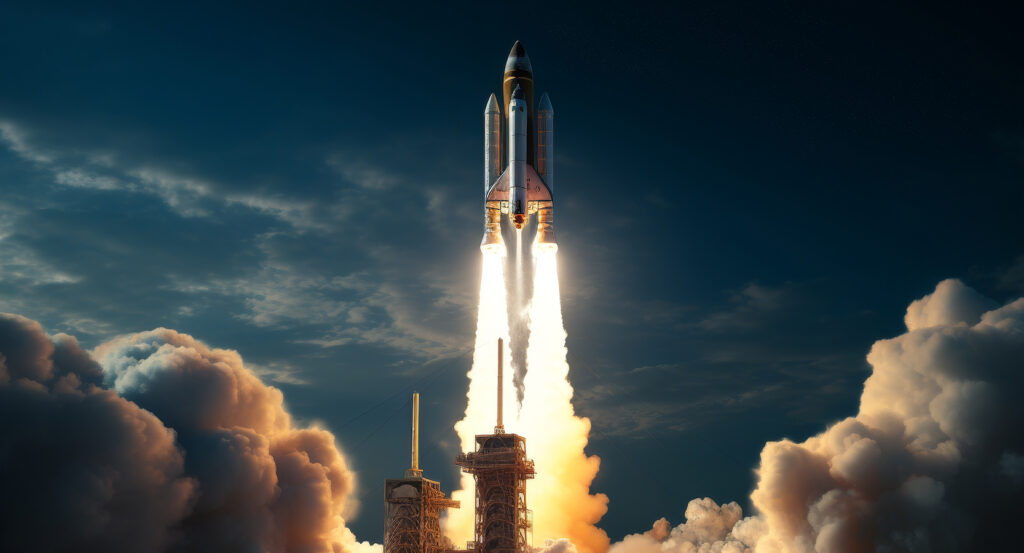
Space Shuttle Atlantis occupies one of the complex's principal exhibition buildings, presented in an elevated position that reveals the orbiter's distinctive delta wings, open payload bay and intricate thermal protection system. The spacecraft completed 33 missions between 1985 and 2011, contributing to satellite deployment, scientific research and the construction of the International Space Station. Its permanent exhibition presents the orbiter with its payload bay doors open, allowing detailed observation of the equipment and structural features associated with orbital operations. The surrounding displays explore the development of reusable spacecraft, including the engineering challenges of atmospheric reentry, thermal protection and controlled landing. A full-scale external tank and solid rocket booster display establishes the enormous dimensions of the launch configuration used throughout the shuttle program. The exhibition also incorporates the Shuttle Launch Experience, a motion-based attraction simulating the physical sensations and operational sequence of a shuttle ascent. The Apollo/Saturn V Center preserves another major component of the spaceflight collection through an immense Saturn V rocket displayed horizontally within a purpose-built exhibition hall. The vehicle's stages reveal the engineering complexity of the launch system developed to carry Apollo spacecraft beyond Earth orbit. The rocket's first stage employed five F-1 engines, generating the thrust required to lift the fully assembled launch vehicle from the pad. Its upper stages incorporated additional propulsion systems designed to accelerate the spacecraft toward orbital insertion and translunar flight. The center also contains an Apollo command and service module exhibition, connecting the launch vehicle's engineering with the spacecraft used to transport astronauts during lunar missions. Historical displays examine the development of the lunar module, the coordination of mission operations and the scientific objectives of surface exploration. The center's presentation incorporates original artifacts, audiovisual installations and reconstructed environments associated with the Apollo era. The Rocket Garden provides an outdoor architectural setting for historic launch vehicles associated with early American spaceflight programs. Its collection includes rockets connected with the Mercury, Gemini and Apollo development periods, establishing a chronological progression through the engineering advances that preceded lunar exploration. The vehicles' vertical presentation creates a striking landscape of cylindrical structures, stabilizing fins and propulsion stages against the surrounding Florida sky. Heroes & Legends, featuring the U.S. Astronaut Hall of Fame, develops the human dimension of the space program through exhibitions devoted to astronaut selection, training and mission achievements. Its displays connect individual careers with the institutional development of NASA and the broader history of American aerospace engineering. Gateway: The Deep Space Launch Complex introduces contemporary spacecraft concepts and technologies associated with lunar exploration, commercial spaceflight and future missions beyond low Earth orbit. The building incorporates spacecraft displays, interactive exhibits and a simulated spaceport experience exploring the development of new launch systems. The complex's distinctive importance emerges from the concentration of original spacecraft, expansive launch vehicles and technical exhibitions within the geographical setting of an operational space center.
How Kennedy Space Center Visitor Complex fits.
Kennedy Space Center Visitor Complex works as the historical centerpiece for a Space Coast itinerary connecting America's principal launch infrastructure with the Atlantic coastal ecosystems and aerospace communities that developed around the space program.
Begin at Cape Canaveral Space Force Museum, the historical institution associated with the military launch facilities at Cape Canaveral Space Force Station. The museum preserves artifacts, photographs and technical material documenting the development of American missile testing and space launch operations along Florida's Atlantic coast. Its collections connect early ballistic missile programs with the launch vehicles that supported the first American satellite and human spaceflight missions. The surrounding military installation contains historic launch complexes associated with the formative decades of the space age. Access to certain facilities is controlled, making advance confirmation of public tour arrangements essential. The museum's historical scope establishes the military and technological foundations from which the larger civilian space program developed. Continue to Merritt Island National Wildlife Refuge, the protected coastal landscape surrounding substantial portions of Kennedy Space Center. Established in 1963, the refuge encompasses extensive wetlands, coastal marshes, pine forests and estuarine habitats supporting a remarkable diversity of wildlife. Its ecosystems provide habitat for migratory birds, alligators, manatees and numerous species associated with Florida's Atlantic coastal environment. The Black Point Wildlife Drive passes through marshland and shallow-water habitats, providing opportunities to observe the ecological character of the region. The refuge's relationship with the space center demonstrates the coexistence of major aerospace infrastructure and protected natural landscapes within the same geographical territory. Conclude at American Space Museum & Space Walk of Fame, the aerospace heritage institution located in nearby Titusville. Its exhibitions preserve equipment, photographs, documents and personal artifacts associated with the engineers, technicians and astronauts who contributed to America's space program. The museum emphasizes the experiences of the workforce responsible for developing, assembling and operating launch systems, extending the historical perspective beyond the most celebrated missions. The adjoining Space Walk of Fame commemorates individuals associated with the development of American space exploration, connecting the city's waterfront heritage with the achievements of the nearby launch facilities. The progression moves from the military origins of American spaceflight through the protected coastal ecosystems surrounding the launch center and culminates in the community history of the people who built and sustained the Space Coast's aerospace industry.
Where your story begins.
Foresyte Travel reveals places that feel extraordinary long before you arrive.
Enjoy editorial crafted for luxury travelers.
Foresyte may earn a commission when you book.