
Why Kichisen matters.
Kichisen is a distinguished Japanese kaiseki restaurant where Shimogamo's ancient Shinto heritage meets Yoshimi Tanigawa's revival of classical Kyoto cuisine, the ceremonial disciplines of Japanese tea culture and a culinary philosophy shaped by more than four decades of independent craftsmanship.
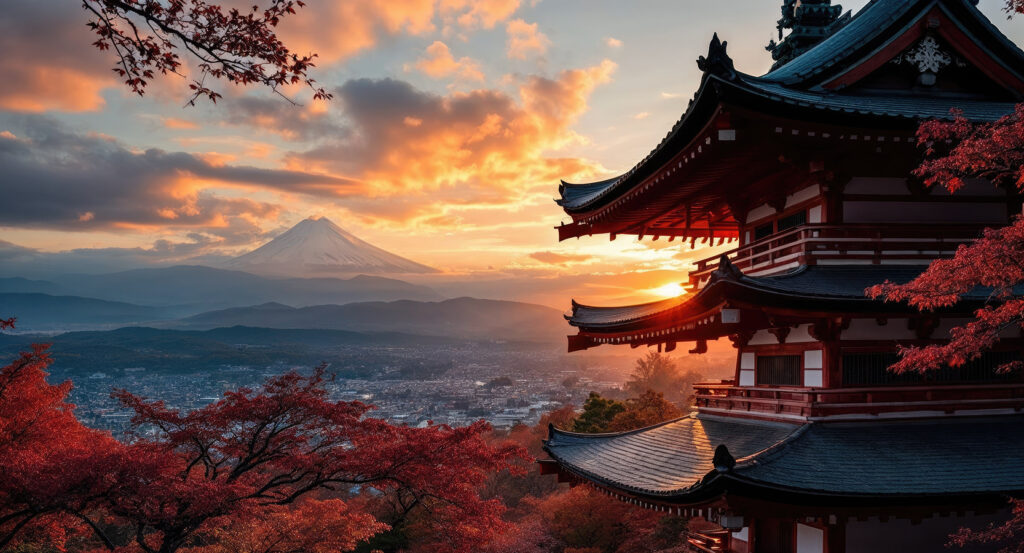
Positioned beside the southern precincts of Shimogamo Shrine, near the confluence of the Kamo and Takano rivers, the restaurant occupies a secluded setting in northern Kyoto, between the ancient woodland of Tadasu-no-Mori, the residential streets of Sakyo Ward and the historic approaches to the shrine. Its traditional Japanese architecture establishes a restrained transition from the surrounding neighborhood into a sequence of carefully arranged dining spaces. Tatami-floored private rooms accommodate different party sizes, with sliding partitions, seasonal flower arrangements and carefully selected decorative objects reinforcing the character of a formal Kyoto ryōtei. A counter provides a more direct encounter with the kitchen, and the Suisho-an tearoom preserves the intimate proportions associated with traditional Japanese tea gatherings. The result is a restaurant whose architecture, ceremonial spaces and proximity to one of Kyoto's oldest sacred landscapes establish an unusually coherent setting for classical Japanese hospitality.
What defines Kichisen.
Kichisen is best known for chef-proprietor Yoshimi Tanigawa's rigorous preservation of Kyoto's classical culinary traditions and his remarkable ascent from a teenage apprentice to one of Japan's most accomplished independent kaiseki chefs. Tanigawa discovered his enthusiasm for cooking at nine and moved to Kyoto at fifteen to begin professional training. His education developed through successive restaurant appointments and an unusually extensive engagement with Japanese cultural disciplines, including tea ceremony, flower arrangement, incense appreciation, calligraphy and poetry. During his youth, he studied under fifty teachers, treating culinary craftsmanship as part of a broader system of aesthetic and philosophical knowledge. Among his most influential mentors was Settei Fukutome, the former chief abbot of Daitoku-ji, whose Zen Buddhist teachings contributed to Tanigawa's understanding of discipline and hospitality. Kankai Onozawa of Jukō-in, the family temple of tea master Sen no Rikyū, strengthened his connection with the ceremonial traditions underlying Kyoto cuisine. Tea master Kenzo Sugata of the Omotesenke school and chef Toraichi Takebata contributed further instruction in the relationship between formal technique and cultural expression. This extensive training culminated in Tanigawa's appointment as executive chef of an Arashiyama restaurant at twenty-six, an exceptional promotion within an industry whose senior kitchen positions traditionally demanded considerably greater professional seniority. In 1983, at thirty-one, he established Kichisen within a Kyoto hotel, creating an independent restaurant devoted to the culinary principles developed through his apprenticeship. Two years later, he invested ¥650 million in a purpose-built establishment near Shimogamo Shrine, relocating the restaurant to a setting closely associated with Kyoto's religious and literary heritage. The location also carried a personal association: Tanigawa's family traditions connected his ancestors with a business bearing the Kichisen name in the surrounding district eight centuries earlier. International recognition followed in October 1986 when Daniel Goleman introduced the restaurant's tea-centered culinary philosophy to readers of The New York Times. Tanigawa subsequently became known for his mastery of hamo, the pike conger eel closely associated with Kyoto's summer food traditions. His reputation expanded considerably in 1999 through an appearance on the television competition Iron Chef, where he defeated Masaharu Morimoto in a unanimous decision during a contest devoted to preparing hamo. Tanigawa organized his competition menu around Gion Matsuri, connecting the seasonal significance of the ingredient with one of Kyoto's principal religious festivals. Kichisen received two MICHELIN stars in the guide's Kyoto editions from 2010 through 2013, advancing to three stars in 2014 and retaining that distinction through 2019. His professional activities also extended into the revival of yūsoku-ryōri, the formal cuisine of Japan's imperial court, and the associated ikama-ryū traditions of ceremonial knife handling. Tanigawa developed specialized kaiseki preparations for guests with diabetes, applying the principles of Japanese cooking to carefully controlled nutritional requirements. His demanding approach to apprenticeship became the subject of television programs produced by NHK and TV Tokyo, extending his influence into discussions of professional education and the transmission of traditional skills. Kichisen's significance rests on this progression from Tanigawa's independent training to his preservation of classical Kyoto hospitality, establishing a restaurant whose culinary achievements reflect sustained engagement with Japanese religious, artistic and ceremonial traditions.
Yoshimi Tanigawa's cooking develops through cha-kaiseki, the formal culinary tradition associated with the Japanese tea ceremony, whose progression emphasizes seasonal ingredients, precise technique and the relationship between host and guest. His approach incorporates elements of imperial court cuisine, Buddhist temple cooking and traditional samurai hospitality, bringing several historical strands of Kyoto gastronomy into a disciplined sequence of courses. The meal begins with sake-ikken, a ceremonial offering of sake expressing gratitude and welcome, establishing the importance of hospitality within the restaurant's culinary philosophy. Sakizuke follows as an introductory preparation, presenting seasonal ingredients through a carefully balanced combination of flavors, textures and visual details. The clear soup course, o-wan, provides a particularly concentrated expression of Tanigawa's technical discipline, with dashi prepared from kombu and dried bonito establishing the foundation of the dish. Its aromatic character changes throughout the year, incorporating pepper leaf buds in spring, green yuzu in summer, yellow yuzu in autumn and ginger in winter. Drops of water placed upon the soup bowl's lid contribute a visual suggestion of freshness, connecting the presentation with the season's natural conditions. Mukōzuke introduces carefully prepared sashimi accompanied by seasonal garnishes, extending the relationship between ingredient quality and precise knife work. Tanigawa's repertoire incorporates mountain vegetables, aromatic herbs, edible flowers and carefully selected seafood, reflecting the agricultural and maritime diversity of Japan. Hamo occupies a particularly important position during the warmer months, requiring meticulous cutting techniques to render its numerous fine bones suitable for delicate preparations. The ingredient's preparation demonstrates the relationship between technical mastery and Kyoto's established summer food culture. Subsequent courses develop through grilled fish, simmered vegetables and rice, with individual cooking methods selected to preserve the characteristics of each ingredient. Kyoto ceramics and lacquerware contribute an additional dimension through vessels chosen for their seasonal associations and relationship with the food. The restaurant's tea ceremony traditions inform the timing of service, the arrangement of decorative objects and the attentive presentation of successive courses. Tanigawa's culinary distinction emerges from this sustained integration of ceremonial hospitality, technical precision and seasonal cooking, preserving the principles of classical Kyoto cuisine through an intensely personal approach to craftsmanship.
How Kichisen fits.
Kichisen works as the dining culmination of an exploration connecting Kyoto's ancient Shinto traditions, the literary heritage of medieval Japan and the preservation of aristocratic residential architecture, placing the restaurant within the cultural landscape surrounding the northern reaches of the Kamo River.
Begin at Shimogamo-jinja Shrine, the historic Shinto sanctuary whose origins precede Kyoto's establishment as Japan's imperial capital in 794. Dedicated to Kamotaketsunomi-no-mikoto and Tamayorihime-no-mikoto, the shrine developed as an important religious center associated with the Kamo clan and the protection of the ancient capital. Its surviving architecture includes two National Treasure sanctuary buildings and numerous Important Cultural Properties, reflecting centuries of religious patronage and periodic reconstruction. Together, with Kamigamo Shrine, it hosts the annual Aoi Matsuri, whose elaborate procession preserves ceremonial traditions associated with the imperial court. The shrine's inclusion within UNESCO's Historic Monuments of Ancient Kyoto recognizes its importance within the religious and architectural development of the city. Continue to Kawai Shrine, the subsidiary sanctuary situated near the southern entrance to the larger shrine precinct. Dedicated to Tamayorihime-no-mikoto, the shrine is particularly associated with prayers for beauty and personal well-being. Its distinctive mirror-shaped ema votive plaques allow worshippers to decorate a stylized face before presenting their wishes, preserving an established devotional practice. The grounds also contain a reconstruction of the small dwelling associated with Kamo no Chōmei, the poet and Buddhist recluse whose Hōjōki, completed in 1212, became a major work of medieval Japanese literature. The modest structure connects the sanctuary with Chōmei's reflections on impermanence and the spiritual significance of a deliberately simplified life. Conclude at Old Mitsui Family Shimogamo Villa, the historic residence established by Hachirōemon Takamine, the tenth head of the Mitsui Kita family. Completed in 1925, the compound served as a retreat for members of the eleven Mitsui family branches visiting their ancestral shrine, established nearby in 1909. Its principal building originated as an earlier Mitsui residence constructed in 1880 and subsequently relocated from the Kiyamachi district, preserving an important example of late nineteenth-century Japanese domestic architecture. The property passed into national ownership in 1949 and accommodated the chief judge of the Kyoto Family Court from 1951 until 2007. Designated an Important Cultural Property in 2011, the residence opened to the public in 2016 following restoration, preserving its formal reception rooms, tea facilities and carefully maintained moss garden. The progression connects Kyoto's ancient religious institutions with medieval literary culture and concludes at an important surviving merchant-family residence, establishing the historical and architectural setting surrounding Kichisen.
Where your story begins.
Foresyte Travel reveals places that feel extraordinary long before you arrive.
Enjoy editorial crafted for luxury travelers.
Foresyte may earn a commission when you book.

















































































































