
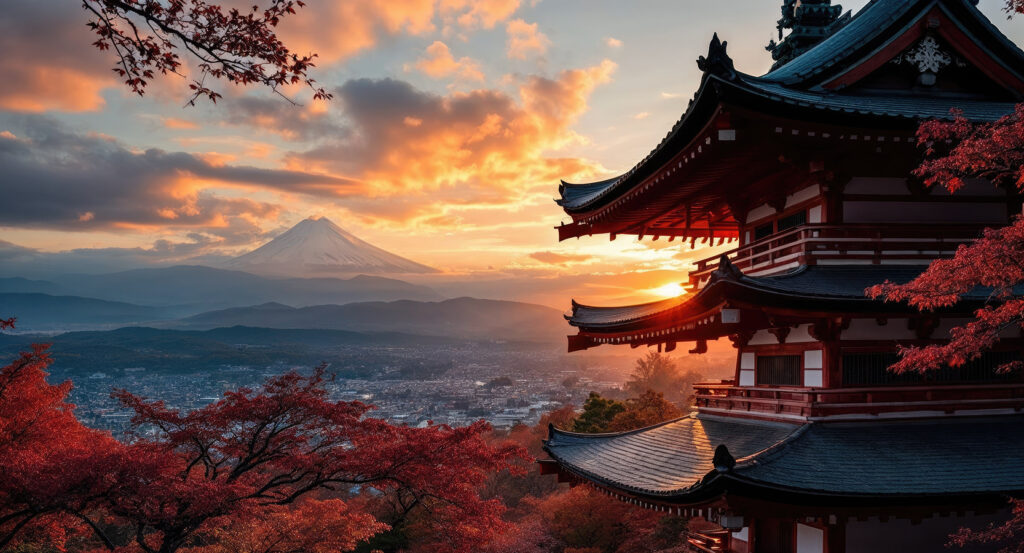
Why Kikunoi Honten matters.
Kikunoi Honten is a landmark Japanese kaiseki restaurant where Higashiyama's imperial-era cultural heritage meets the Murata family's centuries-old connection to Kyoto, Yoshihiro Murata's internationally influential culinary philosophy and the preservation of traditional Japanese hospitality through three MICHELIN stars.
Positioned along Shimogawara-dori south of Maruyama Park and near the western approach to Kōdai-ji, the restaurant occupies a secluded hillside setting in eastern Kyoto, between the historic lanes descending toward Yasaka Shrine, the wooded temple precincts of Higashiyama and the traditional residential compounds surrounding Nene-no-Michi. Its entrance opens into a carefully maintained Japanese garden, where stone paths, seasonal plantings and traditional architectural details establish a gradual transition from the surrounding streets. The principal building incorporates timber construction, tatami-floored rooms, sliding partitions and garden-facing interiors organized around the conventions of a traditional Kyoto ryōtei. Individual dining rooms provide distinct views of the landscaped grounds, with alcove arrangements, hanging scrolls and seasonal flowers contributing to the architectural composition. The result is an exceptionally refined restaurant setting whose garden, historic neighborhood and carefully maintained interiors connect formal Japanese dining with the aesthetic traditions of Kyoto.
What defines Kikunoi Honten.
Kikunoi Honten is best known for the Murata family's stewardship of Kyoto's kaiseki traditions and Yoshihiro Murata's influential efforts to preserve Japanese culinary knowledge through innovation, education and international cultural exchange. The family's historical associations extend to the service of Kita-no-Mandokoro, the principal wife of the sixteenth-century military leader Toyotomi Hideyoshi. Their ancestors served as attendants responsible for protecting the Kikusui well, whose water was associated with her tea gatherings. The well's name, meaning chrysanthemum water, became the foundation of the Kikunoi name and established a lasting connection between the family and Kyoto's ceremonial culture. The Murata family transformed this inheritance into a restaurant enterprise in 1912, establishing a formal dining institution devoted to the seasonal cooking traditions of the former imperial capital. Its development reflected the relationship between Kyoto's aristocratic culinary heritage, Buddhist food practices and the elaborate hospitality customs associated with tea culture. Successive generations maintained the restaurant's reputation through the careful transmission of cooking techniques, ingredient knowledge and the conventions of formal service. Yoshihiro Murata, the third-generation proprietor, inherited this professional tradition and subsequently became one of Japan's most influential advocates for the international recognition of Japanese cuisine. Born in Kyoto in 1951, Murata initially pursued university studies before entering the culinary profession and undertaking training in France. His exposure to European restaurant culture contributed to an approach that combined technical innovation with a rigorous understanding of Japanese culinary principles. Murata assumed responsibility for Kikunoi's culinary direction during the 1970s, strengthening its reputation through a systematic emphasis on seasonal ingredients, precise preparation and the relationship between food and cultural expression. His professional interests extended into the scientific foundations of Japanese cooking, particularly the interaction of glutamates and nucleotides responsible for the development of umami. This engagement with food science informed his advocacy for the distinctive characteristics of dashi and the culinary importance of fermentation, preservation and ingredient preparation. Murata subsequently expanded the Kikunoi enterprise through Roan Kikunoi in Kyoto and Akasaka Kikunoi in Tokyo, establishing complementary interpretations of the family's culinary philosophy. His international activities included participation in the Japanese Cuisine and Food Culture Human Resource Development Committee and initiatives supporting the preservation of traditional Japanese cooking. Murata played an important role in the movement that culminated in UNESCO's 2013 inscription of washoku, traditional Japanese dietary cultures, on the Representative List of the Intangible Cultural Heritage of Humanity. The recognition strengthened the international understanding of Japanese cuisine as a cultural system grounded in seasonality, ceremonial practice and relationships between food and community. Kikunoi Honten received three MICHELIN stars in the inaugural MICHELIN Guide Kyoto Osaka 2010, establishing its position among Japan's most highly regarded restaurants. The restaurant retained that distinction in the MICHELIN Guide Kyoto Osaka 2026, demonstrating the continuity of its culinary standards across successive editions. Murata received the MICHELIN Mentor Chef Award in 2024, recognizing his contributions to professional education and the development of younger chefs. His training initiatives have included welcoming international apprentices into the restaurant, extending the transmission of Japanese cooking techniques beyond established domestic culinary networks. Kikunoi's historical significance rests on this progression from a family associated with Kyoto's ceremonial water traditions into an internationally influential culinary institution, preserving the technical and cultural foundations of kaiseki through successive generations of leadership.
Yoshihiro Murata's culinary philosophy develops through the seasonal sequence of kaiseki, a formal Japanese dining tradition whose structure reflects the relationship between ingredients, cooking techniques and the changing natural environment. His approach emphasizes the distinct characteristics of individual foods, particularly the interaction between texture, temperature, aroma and the carefully controlled extraction of umami. Dashi provides the essential foundation for this philosophy, with kombu and dried bonito contributing complementary glutamates and inosinates that create the savory depth characteristic of Japanese cooking. The stock's preparation requires precise control of water temperature and extraction time, preserving clarity and balance within dishes whose apparent simplicity depends upon technical discipline. Sakizuke, the introductory course, establishes the seasonal character of the meal through a small composition of carefully selected ingredients, often incorporating vegetables, seafood and aromatic garnishes. Its presentation introduces the visual and culinary themes that develop across subsequent courses, connecting the sequence of flavors with the season's natural imagery. Wanmono, the clear soup course, provides a particularly direct expression of the kitchen's technical standards, combining delicate broth with carefully prepared fish, vegetables or dumplings. The restrained composition emphasizes the relationship between the principal ingredient and the clarity of the surrounding stock, allowing subtle variations in aroma and texture to emerge. Hassun establishes another important stage of the meal through an arrangement of small seasonal preparations, traditionally connecting ingredients associated with mountains and the sea. Its presentation draws upon Japanese aesthetic conventions, incorporating leaves, branches and carefully selected serving vessels to express the character of the season. The progression subsequently develops through sashimi, grilled preparations, simmered dishes and rice, with each course introducing a distinct cooking technique and complementary combination of ingredients. Seasonal fish occupy an important position within the kitchen's repertoire, particularly through the precise handling required to preserve their natural texture and flavor. Vegetables contribute equally significant expressions of seasonality, with bamboo shoots, mountain greens, mushrooms and root vegetables appearing according to their respective harvest periods. Murata's approach also accommodates carefully considered international influences, incorporating selected Western ingredients into preparations grounded in traditional Japanese technique. The resulting cuisine preserves the structural conventions of kaiseki through an evolving understanding of ingredients and their culinary possibilities. Tableware contributes a further dimension through ceramics, lacquerware and decorative objects selected to complement the season, establishing relationships between food presentation and Japanese craft traditions. The service follows the conventions of formal ryōtei hospitality, with each course introduced through attentive timing and an understanding of its place within the meal. Kikunoi Honten's culinary distinction emerges from this integration of seasonal ingredients, precise technique and aesthetic composition, preserving the depth of Kyoto's kaiseki tradition through a sophisticated contemporary culinary philosophy.
How Kikunoi Honten fits.
Kikunoi Honten works as the dining culmination of an exploration connecting Higashiyama's Shinto religious traditions, the development of Kyoto's public garden culture and the architectural legacy of Japan's late sixteenth-century political unification, placing the restaurant within the historic landscape surrounding the city's eastern hills.
Begin at Yasaka Shrine, the major Shinto sanctuary whose religious traditions have shaped the eastern entrance to Kyoto's historic urban center for more than a millennium. Its origins are traditionally associated with the seventh century, and the sanctuary subsequently developed into an important center of Gion worship. The shrine's principal buildings include a distinctive architectural arrangement in which the main sanctuary and worship hall are united beneath a substantial roof, an arrangement known as Gion-zukuri. Its most celebrated annual observance is Gion Matsuri, whose origins trace to a purification ceremony conducted in 869 during a period of widespread epidemic disease. The festival subsequently developed into one of Japan's most important urban religious celebrations, incorporating elaborate processions and the construction of expansive festival floats. Continue to Maruyama Park, Kyoto's historic public garden established in 1886 on land formerly associated with Buddhist temples. The park developed during the Meiji period, when the reorganization of religious properties and urban landscapes created opportunities for new public recreational spaces. Landscape architect Ogawa Jihei VII subsequently contributed to its development, introducing garden elements that connected traditional Japanese landscape design with the requirements of a modern municipal park. Its celebrated weeping cherry tree occupies a central position in the garden and has become closely associated with Kyoto's springtime hanami celebrations. The surrounding ponds, bridges and landscaped paths establish a transition between the shrine precincts and the wooded eastern hills. Conclude at Kōdai-ji, the Zen Buddhist temple founded in 1605 by Kita-no-Mandokoro in memory of her husband, Toyotomi Hideyoshi. The temple developed through the patronage of Tokugawa Ieyasu and incorporated buildings associated with the architectural traditions of the Momoyama period. Its surviving structures include the Kaisandō, the Otama-ya mausoleum and historic tea houses, preserving important examples of the decorative and ceremonial architecture associated with Japan's political unification. The Otama-ya contains lacquer decoration employing the elaborate techniques characteristic of Momoyama craftsmanship, connecting the memorial complex with the artistic achievements of the late sixteenth and early seventeenth centuries. The temple's landscaped gardens, attributed to the influential garden designer Kobori Enshū, extend this architectural heritage through carefully composed relationships among stone, water and vegetation. The progression connects Kyoto's historic Shinto worship with the development of its public garden landscape and concludes at a major Momoyama-period memorial temple, establishing the cultural setting surrounding Kikunoi Honten.
Where your story begins.
Foresyte Travel reveals places that feel extraordinary long before you arrive.
Enjoy editorial crafted for luxury travelers.
Foresyte may earn a commission when you book.

















































































































