Why you should experience Kingsbury Street in Chicago, Illinois.
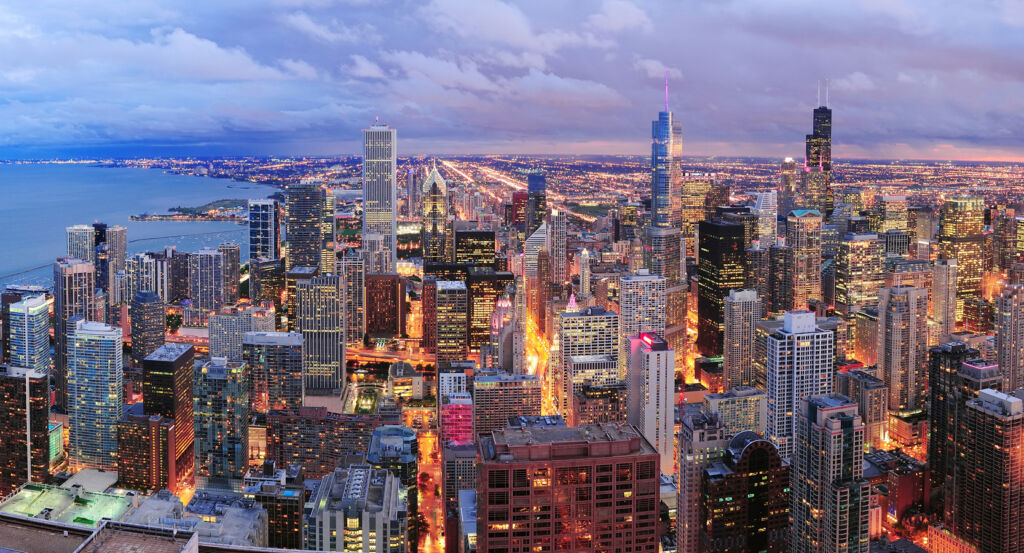
Kingsbury Street is an enterprising corridor where River North's industrial legacy, architectural reinvention, commercial vitality, and Chicago's enduring relationship with the Chicago River continue shaping one of downtown's most distinctive streets.
Running through River North between Goose Island and the Grand Mile, Kingsbury Street connects former manufacturing buildings, converted lofts, contemporary residential towers, neighborhood institutions, and riverfront corridors that collectively reflect more than 150 years of urban evolution. The corridor reveals how industry, rail infrastructure, river commerce, and adaptive reuse transformed a nineteenth-century manufacturing district into one of Chicago's most successful redevelopment stories. Historic brick warehouses and modern construction remain closely integrated throughout the streetscape while preserving successive chapters of the neighborhood's commercial history. The result is a corridor distinguished by architectural continuity, economic resilience, and an enduring place within Chicago's central urban core.
What you should know about Kingsbury Street.
Kingsbury Street is best known for extending through River North, where reconstruction following the Great Chicago Fire of 1871 accelerated industrial development along the North Branch of the Chicago River through factories, wholesale warehouses, machine works, and freight facilities supporting the city's rapidly expanding manufacturing economy. Construction between the late nineteenth century and the 1930s introduced substantial brick loft buildings, heavy timber industrial structures, commercial warehouses, and masonry office buildings that established the corridor's enduring architectural identity. Expansion of railroad freight infrastructure, nearby waterborne shipping, and wholesale distribution reinforced Kingsbury Street's importance within Chicago's industrial network before late twentieth-century redevelopment introduced residential, office, and technology investment. Continued adaptive reuse and preservation have retained much of the corridor's historic industrial fabric while reinforcing its evolving role within River North.
Creation of the North Branch Framework Plan established a comprehensive strategy for balancing employment growth, infrastructure improvements, river access, and compatible redevelopment throughout the industrial districts surrounding Kingsbury Street. Designation of the Clybourn Corridor Planned Manufacturing District preserved strategically important employment lands while guiding long-term land-use decisions that influenced redevelopment across adjacent industrial properties. Architect Alfred S. Alschuler designed numerous warehouses, factories, and commercial buildings throughout Chicago, contributing durable masonry industrial architecture that helped define districts surrounding Kingsbury Street during the early twentieth century. Together, the North Branch Framework Plan, the Clybourn Corridor Planned Manufacturing District, and Alfred S. Alschuler demonstrate how coordinated planning, industrial stewardship, and architectural durability have collectively reinforced Kingsbury Street's enduring identity.
How to fold Kingsbury Street into your trip.
Kingsbury Street works as an exploration of River North's industrial heritage, architectural evolution, and riverfront renewal.
Begin at Chicago Riverwalk, where restored public access, engineering landmarks, and uninterrupted views of the Chicago River establish the geographic and historical foundation that shaped Kingsbury Street before naturally introducing the city's relationship with its working waterfront. Continue to Merchandise Mart, where pioneering commercial architecture, wholesale trade history, and grand interior spaces expand the experience from river commerce into the economic forces that transformed River North into one of Chicago's great business districts before leading toward the final destination. Conclude at East Bank Club, where adaptive reuse of former industrial buildings and decades of neighborhood reinvestment provide the historical and civic payoff, demonstrating how Chicago successfully transformed a manufacturing landscape into a thriving mixed urban environment while preserving its architectural character. The complete sequence reveals how the river, commerce, and adaptive reinvention collectively explain Kingsbury Street's enduring significance within the evolution of Downtown.
Where your story begins.
Foresyte Travel reveals places that feel extraordinary long before you arrive.
Experience premium editorial crafted for luxury travelers.