Why you should experience Koko Crater Botanical Garden in Hawaii.
Koko Crater Botanical Garden in Honolulu feels like a hidden oasis tucked inside the bones of a volcano, a world apart from the beaches and bustle of the city.
Tucked within the vast, sunbaked bowl of Koko Crater, this 60-acre garden is part of the Honolulu Botanical Gardens system but has a character all its own. The air here is dry and fragrant with plumeria, the trails winding through an arid landscape that somehow feels otherworldly and ancient at once. Instead of the lush, tropical greenery found elsewhere on Oʻahu, Koko Crater's garden celebrates resilience, showcasing plants that thrive in drought and heat, from towering cacti and succulents to baobabs, acacias, and desert-adapted aloes. As you walk the two-mile loop trail, the crater walls rise around you like a natural amphitheater, the sound of wind echoing through its slopes. It's quiet here, a kind of sacred silence that allows you to hear your own breath and notice the subtle beauty in textures, shadows, and blooms that glow against volcanic rock. Koko Crater Botanical Garden isn't lush, it's luminous, a reminder that beauty can bloom in even the harshest of places.
What you should know about Koko Crater Botanical Garden.
Koko Crater's transformation into a botanical sanctuary is one of Oʻahu's most remarkable examples of ecological restoration.
Once barren and eroded, the crater basin was selected in the mid-20th century as an ideal environment for a dryland botanical collection, one that could represent the diversity of arid ecosystems from around the world. Established officially in 1960, the garden's layout follows the natural contours of the crater, divided into thematic zones representing Africa, Madagascar, the Americas, and Hawaii. Many of the trees planted here, like the African baobab and Madagascar's spiny euphorbia, were experimental introductions, carefully curated to study how arid-zone plants adapt to Hawaii's microclimates. In contrast, the Hawaiian section focuses on native dryland species that are often overlooked compared to their rainforest counterparts, rare wiliwili trees, aʻa shrubs, and ʻilima blossoms that once dominated the island's leeward plains. The garden's plumeria grove, planted along the main loop, has become its unofficial centerpiece, dozens of fragrant varieties from around the world, blooming in pink, gold, and ivory beneath the crater's blazing sun. Few visitors realize that beneath their feet lies a geological story millions of years old, Koko Crater itself was formed by explosive eruptions along the Honolulu Volcanic Series, its basin now a living museum of life adapting to heat, rock, and time.
How to fold Koko Crater Botanical Garden into your trip.
Visiting Koko Crater Botanical Garden is a meditative counterpoint to Honolulu's coastal energy, slow, quiet, and deeply grounding.
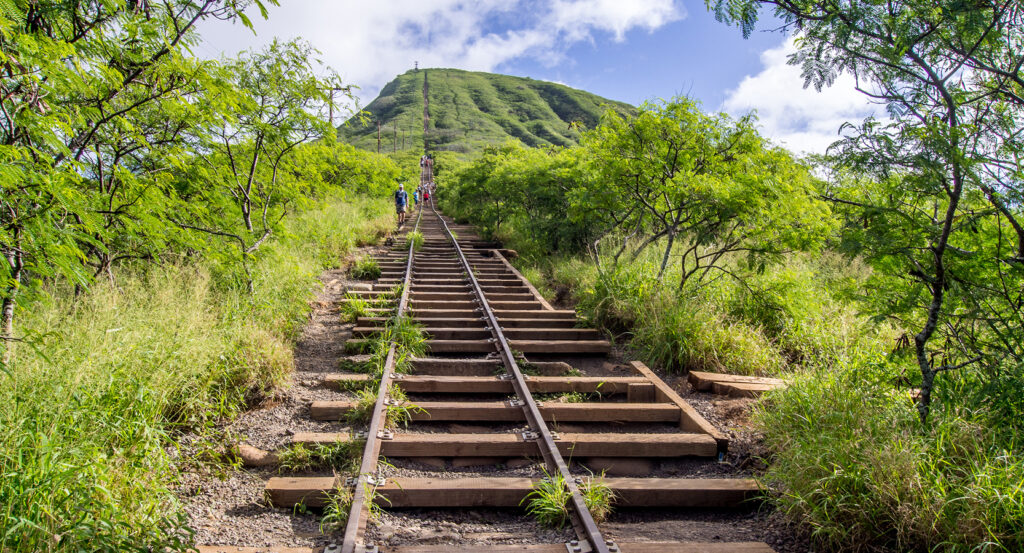
Arrive early in the morning before the sun reaches its peak; the crater's interior can grow intensely hot by midday. Wear sturdy shoes, bring water, and prepare for a leisurely two-mile walk along the loop trail that winds through the collections. Start with the plumeria grove, the scent alone feels like stepping into a dream, then wander deeper into the desert gardens, where massive cacti stand like sculptures against the red earth. Along the way, you'll encounter informational plaques describing each region's flora, offering insight into how plants survive drought and sun through ingenious adaptations. Photographers will find endless contrasts in light and shadow, especially where bright flowers bloom against black volcanic soil. Combine your visit with the nearby Koko Crater Railway Trail if you're up for a full day, hike the summit in the early morning, then retreat to the garden's calm afterward for a moment of reflection. Admission is free, but the experience feels priceless, a walk through nature's endurance, framed by the crater walls that once birthed it. Koko Crater Botanical Garden is more than a collection of plants, it's a living meditation on survival, serenity, and the quiet strength of the Earth itself.
Where your story begins.
Foresyte Travel reveals places that feel extraordinary long before you arrive.
Experience premium editorial crafted for luxury travelers.