
Why Kyoto National Museum matters.
In the heart of Kyoto, Japan, where tradition and artistry have intertwined for over a millennium, Kyoto National Museum stands as a bridge between eras, a serene yet powerful tribute to the country's cultural soul.
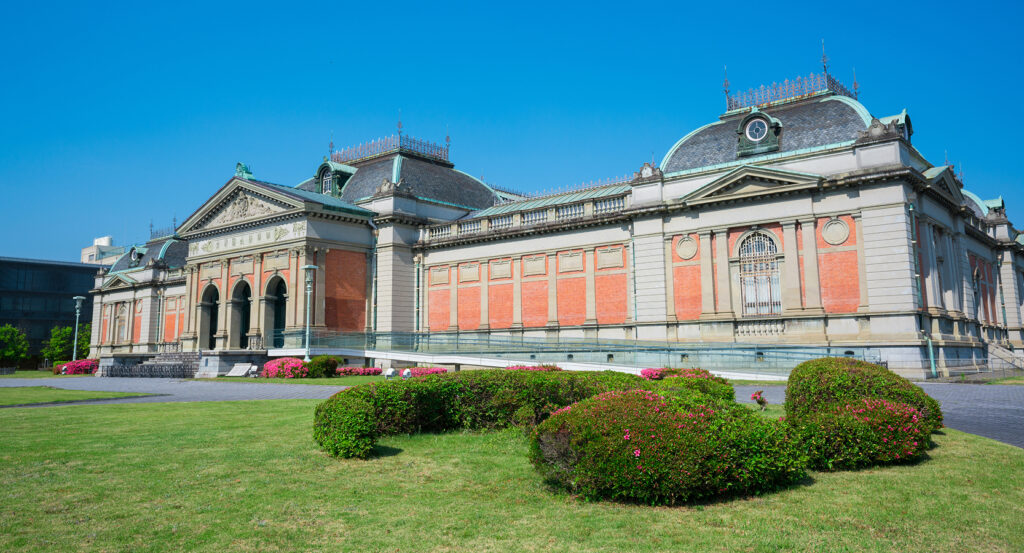
Set in the city's Higashiyama district, near the iconic Sanjūsangen-dō Temple, the museum radiates quiet grandeur, its elegant Meiji-period architecture blending Western neoclassical design with distinctly Japanese restraint. Step through the gate, and time seems to slow. Cherry blossoms ripple across the courtyard in spring, while the air hums with the weight of centuries. Inside, Kyoto National Museum unfolds as one of Japan's greatest cultural sanctuaries, housing over 12,000 artifacts that trace the evolution of Japanese art, religion, and daily life. From Heian-period scrolls and Kamakura-era Buddhist statuary to samurai armor, lacquerware, and ceramics, every gallery feels like a meditation on craftsmanship and devotion. The exhibits are displayed with reverent minimalism, the kind that invites stillness, letting each object breathe in its own light. More than a museum, it feels like a temple of memory, a place where Japan's artistic lineage is not just preserved, but deeply honored.
What defines Kyoto National Museum.
Kyoto National Museum is one of Japan's oldest and most revered cultural institutions, a cornerstone of national heritage and a model of how modernity can coexist with timeless tradition.
Established in 1897, it was originally founded as the Imperial Museum of Kyoto, part of a visionary effort to preserve Japan's art during the country's rapid modernization under Emperor Meiji. The original Main Hall (The Meiji Kotokan), designed by Tokuma Katayama, a student of British architect Josiah Conder, remains one of the few surviving examples of Meiji architecture in Kyoto, recognized today as an Important Cultural Property. But what truly sets the museum apart is its seamless blend of history and innovation. In 2014, the museum unveiled the Heisei Chishinkan Wing, a strikingly modern structure designed by Yoshio Taniguchi, the architect behind New York's MoMA renovation. This new wing captures Kyoto's enduring philosophy: that progress should emerge gently from tradition, never replacing it. Inside, the museum's permanent collection tells Japan's story not through dynasties or battles, but through beauty, devotional sculptures carved for temples, folding screens depicting ethereal landscapes, and delicate textiles that once graced imperial courts. Temporary exhibitions rotate seasonally, often centered around Kyoto's temples and shrines, whose treasures are lent to the museum for public viewing. Few realize that the museum also plays a vital role in cultural preservation, with state-of-the-art restoration labs and collaborations with local artisans who use ancient techniques to repair centuries-old works. Each exhibit, in essence, is a living discussion between the past and present, a reminder that Japan's heritage endures not because it resists change, but because it absorbs it gracefully.
How Kyoto National Museum fits.
A visit to Kyoto National Museum is an experience of reflection and quiet discovery, one that anchors any exploration of Japan's ancient capital.
Plan to spend two to three hours moving through its galleries at an unhurried pace. Begin in the Heisei Chishinkan Wing, where the flow of light and minimalist architecture create a tranquil setting for viewing scrolls, calligraphy, and ceramics that span over 1,200 years. Then, step into the Meiji Kotokan Hall, where the ornate façade gives way to atmospheric rooms housing Buddhist sculptures and ritual objects, their craftsmanship evoking the spiritual heart of Kyoto itself. Don't miss the Seasonal Exhibitions, which often showcase treasures from temples like To-ji, Kiyomizu-dera, and Ninna-ji, offering glimpses into sacred worlds rarely seen by the public. Between exhibits, take a quiet moment in the museum garden, an oasis of stillness where the hum of Kyoto seems to fade away. The on-site café, overlooking the courtyard, serves matcha and Japanese sweets that pair perfectly with the museum's contemplative rhythm. The museum's location makes it an easy addition to a day of exploration, just across from Sanjūsangen-dō and a short walk from Kiyomizu-dera or the Gion district. For the most atmospheric visit, come early in the morning or near closing, when the halls are hushed and the golden light catches the lacquer and silk in unique ways. As you step back into Kyoto's streets, you carry with you more than knowledge, you carry a quiet understanding of Japan's enduring artistry, where every brushstroke, carving, and whisper of color holds a heartbeat from the past.
Where your story begins.
Foresyte Travel reveals places that feel extraordinary long before you arrive.
Enjoy editorial crafted for luxury travelers.
Foresyte may earn a commission when you book.

















































































































