Why Lake Eola matters.
Lake Eola Park is a historic urban park where Downtown Orlando's civic heritage meets the architectural character of Lake Eola Heights, the cultural traditions of Central Florida and the enduring importance of public green space within the city's metropolitan center.
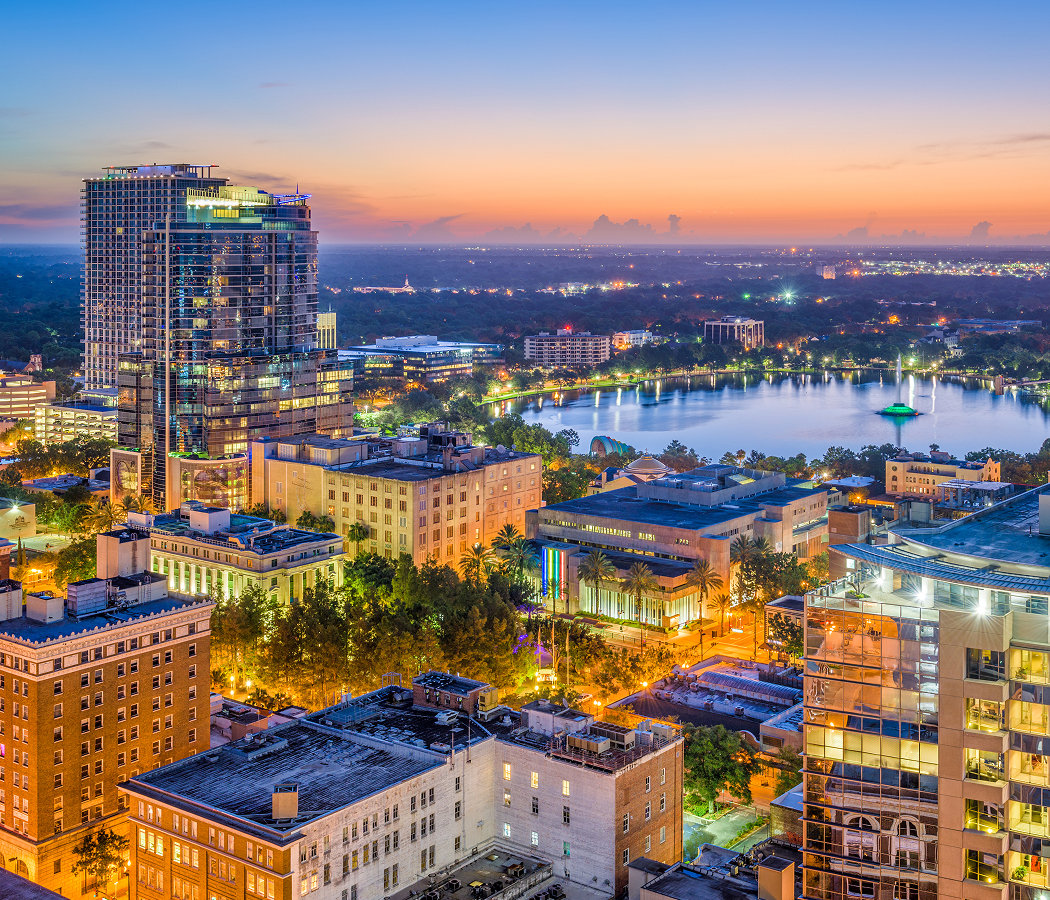
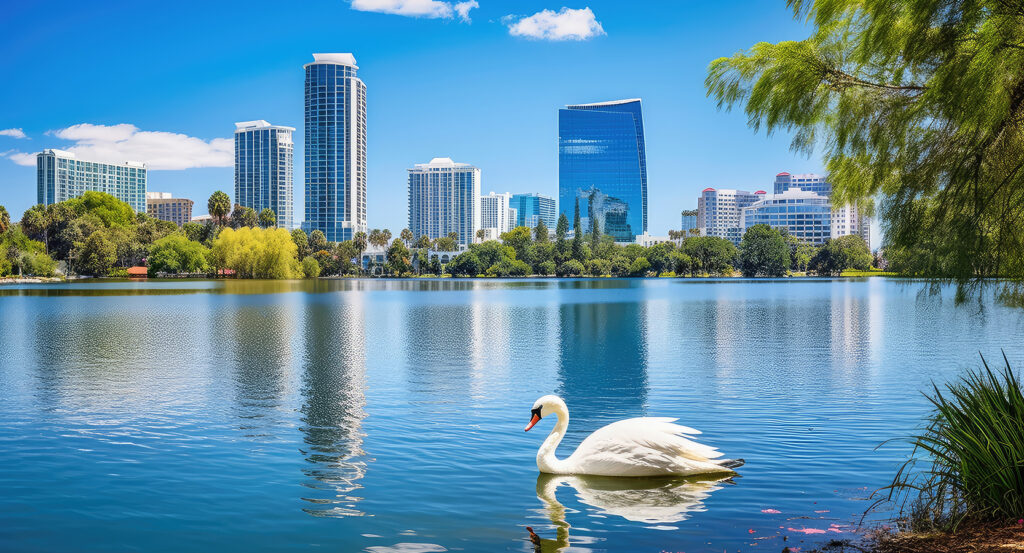
Set along North Eola Drive near East Robinson Street and just steps from the Orlando Farmers Market, the park occupies a substantial freshwater lake surrounded by landscaped lawns, mature trees, pedestrian promenades and the residential and commercial districts of Central Orlando. A continuous lakeside walking path connects shaded gardens, public sculptures, outdoor gathering spaces and waterfront viewpoints, with the Linton E. Allen Memorial Fountain rising from the center of the lake as its principal architectural feature. Swan-shaped paddleboats move across the water alongside the park's resident swans and other waterbirds, establishing a distinctive recreational tradition associated with the city's downtown landscape. The Walt Disney Amphitheater, the Chinese Ting pavilion and surrounding civic spaces accommodate concerts, cultural gatherings and community events throughout the year. The result is a park defined by its historic lakefront setting, recognizable fountain, established recreational traditions and central role in Orlando's public cultural life.
What defines Lake Eola.
Lake Eola Park is best known for its central fountain, resident swans and longstanding role as one of Orlando's principal civic gathering places. The lake developed within Central Florida's landscape of natural depressions and groundwater-fed freshwater basins, establishing a geographical feature that influenced the early settlement and expansion of Orlando. During the nineteenth century, the surrounding area formed part of the developing town's residential landscape, with houses and gardens occupying properties near the water. Jacob Summerlin, a prominent Florida cattleman and landowner, contributed to the establishment of the public park through a land donation in 1883. His contribution helped preserve the lakefront as a public recreational setting during a period of expanding settlement and urban development. The park subsequently became an important component of Orlando's civic improvement efforts, with landscaping, pedestrian facilities and public amenities developing around the shoreline. The introduction of swans contributed to the park's distinctive identity, establishing an association between the lake and the graceful waterbirds that became one of its most recognizable features. Orlando's growth during the early twentieth century increased the importance of accessible public green space within the expanding downtown district. The lakefront accommodated recreational activities, community gatherings and public celebrations, connecting the surrounding residential neighborhoods with the developing commercial center. In 1957, the Linton E. Allen Memorial Fountain was dedicated in the lake, establishing the illuminated water feature that became one of Orlando's most recognizable civic symbols. The fountain was named in honor of Linton E. Allen, a prominent Orlando banker and civic leader whose contributions supported the city's institutional development. Its modernist design incorporated a substantial circular structure and an elaborate arrangement of water jets, creating a distinctive architectural composition within the lake. The fountain's illumination contributed to its nighttime prominence, establishing a visual feature associated with Downtown Orlando's evolving skyline. The park's surrounding neighborhoods underwent substantial changes during the second half of the twentieth century as Orlando developed into a major metropolitan and tourism center. Lake Eola Park retained its position as a public gathering place, connecting historic residential streets with new commercial buildings, cultural institutions and civic facilities. The park's historical importance rests on its preservation of a central freshwater landscape and its development into an enduring symbol of Orlando's civic life.
The Linton E. Allen Memorial Fountain provides the park's principal architectural centerpiece, combining modernist design with an elaborate hydraulic system that produces illuminated water displays. Its circular configuration occupies a prominent position near the center of the lake, creating a focal point visible from the surrounding shoreline. The fountain's structural composition incorporates geometric forms and an arrangement of water jets designed to produce changing patterns across the lake's surface. Its illumination establishes a distinctive nighttime appearance, connecting the water feature with the surrounding downtown skyline. The fountain underwent a substantial restoration following storm damage in 2009, with repairs and technological improvements supporting its continued operation. The surrounding park landscape incorporates a continuous pedestrian path measuring nine-tenths of a mile, establishing a popular walking and recreational circuit around the lake. Mature trees provide substantial shade along sections of the shoreline, contributing to the park's established landscape character. The resident swan population includes several species, whose presence has become closely associated with Orlando's civic imagery. Swan-shaped paddleboats provide a recreational activity that connects the park's wildlife traditions with its waterfront setting. The Walt Disney Amphitheater occupies a substantial portion of the lakeside landscape, providing an outdoor performance venue for concerts, theatrical presentations and community celebrations. Its covered stage and surrounding lawn establish a flexible setting for public cultural programming within the downtown district. The Chinese Ting pavilion contributes another distinctive architectural element, incorporating traditional Chinese design features within a landscaped garden setting. The structure was presented to Orlando as a symbol of friendship with its sister city, Guilin, China, connecting the park with the city's international cultural relationships. Public sculptures and commemorative installations occupy additional locations around the lake, contributing to the park's collection of civic art. The surrounding neighborhoods contain historic residential buildings, contemporary apartment towers, restaurants and commercial spaces, creating a varied architectural backdrop to the lakefront. Lake Eola Heights, immediately north of the park, preserves an important collection of historic houses associated with Orlando's late nineteenth- and early twentieth-century residential development. Its streets contain examples of Queen Anne, Craftsman and Mediterranean Revival architecture, connecting the park's public landscape with the architectural history of the surrounding city. The park's recreational and cultural importance emerges from the combination of waterfront access, civic art, public performances and the distinctive residential geography of Central Orlando.
How Lake Eola fits.
Lake Eola Park works as the civic centerpiece for a Downtown Orlando itinerary connecting the city's historic residential architecture with its principal performing arts institutions and the cultural development of Central Florida's metropolitan center.
Begin at Lake Eola Heights Historic District, the residential neighborhood immediately north of the park. Its tree-lined streets preserve an extensive collection of historic houses associated with Orlando's development during the late nineteenth and early twentieth centuries. Architectural styles include Queen Anne, Craftsman, Colonial Revival and Mediterranean Revival, creating a substantial record of the city's early residential expansion. The neighborhood's historic designation recognizes the significance of its surviving buildings and established street patterns within the development of Central Orlando. Walking through the district provides a close perspective on the domestic architecture and residential traditions that shaped the city's early urban character. Continue to Orange County Regional History Center, the cultural institution occupying the historic Orange County Courthouse in Downtown Orlando. The building's substantial masonry architecture and formal civic design establish a distinctive setting for exhibitions devoted to Central Florida's history. Its collections explore Indigenous communities, nineteenth-century settlement, agricultural development, transportation and the emergence of the region's contemporary metropolitan economy. Historical artifacts, photographs and interpretive exhibitions connect the development of Orlando with the wider history of Orange County and the surrounding region. The institution's location within the downtown civic district provides a complementary perspective on the historical development of the city surrounding Lake Eola. Conclude at Dr. Phillips Center for the Performing Arts, the major cultural complex located south of the park within Downtown Orlando. Its contemporary architecture incorporates substantial glass façades, landscaped public spaces and multiple performance venues designed for theater, music, dance and large-scale productions. The complex includes Walt Disney Theater and Steinmetz Hall, providing facilities for touring productions, orchestral performances and a broad range of performing arts programming. Steinmetz Hall incorporates advanced acoustic engineering designed to accommodate performances requiring exceptional sound quality. The center's development strengthened Orlando's cultural infrastructure, establishing a major institutional destination within the metropolitan center. The progression moves from the historic residential streets surrounding Lake Eola through the city's regional history collections and culminates in the performing arts institutions that contribute to Orlando's contemporary cultural life.
Where your story begins.
Foresyte Travel reveals places that feel extraordinary long before you arrive.
Enjoy editorial crafted for luxury travelers.
Foresyte may earn a commission when you book.