
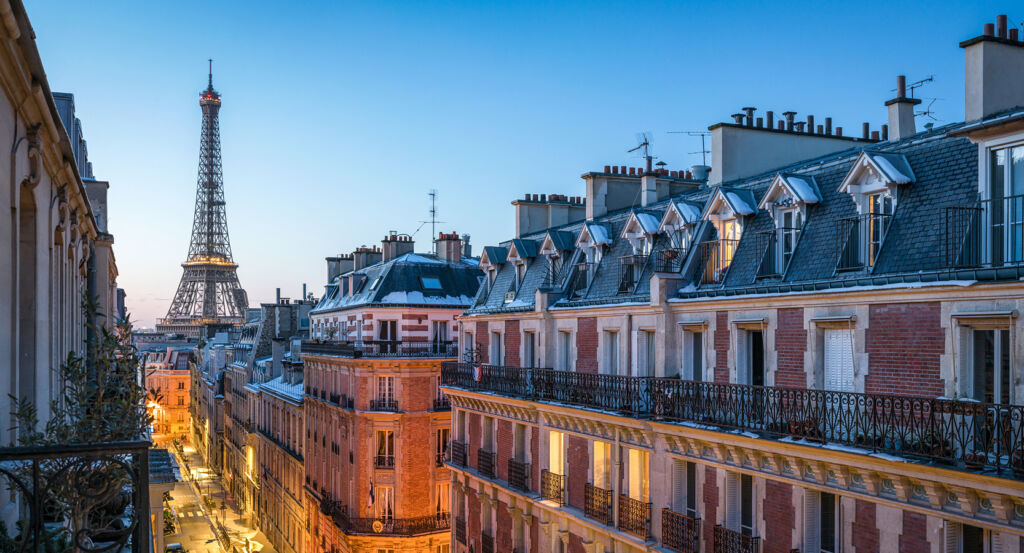
Why you should experience Le Burgundy Paris in Paris, France.
Le Burgundy Paris is a cultured luxury hotel where Place-Vendôme's couture character, nineteenth-century hospitality inheritance, contemporary French art and MICHELIN-starred gastronomy converge inside an address welcoming international travelers since 1850.
Set along Rue Duphot near Rue Saint-Honoré and just steps from Place de la Madeleine, the hotel emerged during a period when the surrounding district was flourishing with theaters, cafés, luxury merchants and specialist food shops, with its enduring name reflecting the Anglomania accompanying Paris's substantial Victorian British clientele. A major reconstruction completed in 2010 recast the property as an intimate Parisian townhouse, while artist Guy de Rougemont shaped its visual character through sculpture and interventions extending from the glass-roofed atrium into the lobby. The contemporary property contains 59 rooms and suites, divided between 41 rooms and 18 suites, alongside Le Baudelaire, Le Charles and a 250-square-meter spa centered on a 15-meter indoor swimming pool. Le Burgundy consequently combines more than 175 years of hotel history with contemporary art, gastronomy and wellness inside one of Central Paris's most concentrated luxury districts.
What you should know about Le Burgundy Paris.
Le Burgundy Paris is best known for opening in 1850 at 6-8 Rue Duphot before undergoing multiple changes of ownership across more than 170 years and emerging from extensive reconstruction in 2010 as the contemporary five-star hotel occupying the address today. The original hotel developed as the Madeleine district expanded into a major nineteenth-century center for theaters, cafés, luxury commerce and specialist food shops, while the property itself attributes the still-unresolved Burgundy name to the period's Anglomania and the significant Victorian English clientele then traveling through Paris. The 2010 reconstruction established the present 59-key configuration of 41 rooms and 18 suites and provided painter and sculptor Guy de Rougemont, elected to the Académie des Beaux-Arts in 1997, with extensive space for artistic intervention across the property. Rougemont's work extends through a major sculpture beneath the Verrière and a white-and-grey Carrara marble floor articulated with brass, while additional commissions include a fresco by Italian painter Marco Del Re, engraved marble surfaces, paintings and mosaics surrounding the swimming pool. Le Burgundy's 250-square-meter spa incorporates two double treatment rooms, a 15-meter indoor pool, sauna, hammam and fitness room, while Le Baudelaire has retained one MICHELIN Star continuously since 2011, giving the hotel a hospitality program spanning nineteenth-century origins, twenty-first-century reconstruction, contemporary art, gastronomy and wellness.
Guy de Rougemont provides the central artistic thread through Le Burgundy Paris, with the Académie des Beaux-Arts member treating the Verrière, lobby and circulation spaces as parts of a broader collection rather than confining his work to individual paintings. Marco Del Re develops that program through his fresco, while engraved marble, pool mosaics and additional paintings extend the collection across architectural surfaces and connect the guestrooms with the public spaces established during the 2010 reconstruction. Le Baudelaire adds a culinary institution to the same creative structure, having held a MICHELIN Star since 2011 and currently operating under Executive Chef Mylo Levin through three, five and seven-course menus centered on seasonal produce and sustainable gastronomy. Together, Guy de Rougemont, Marco Del Re, Mylo Levin and the MICHELIN Guide establish Le Burgundy as a hotel where visual art and gastronomy developed into permanent components of the character created after the 2010 reconstruction.
How to fold Le Burgundy Paris into your trip.
Le Burgundy Paris works as the anchor for an afternoon tracing decorative arts, private collecting and nineteenth-century architectural culture through the western 1st Arrondissement.
Begin at Musée des Arts Décoratifs, where collections spanning furniture, jewelry, fashion, textiles, ceramics, glass and graphic design occupy the Marsan wing of Palais du Louvre, establishing a deep record of the French decorative traditions echoed by Le Burgundy's own integration of furniture, marble and commissioned art. Continue to Musée de l'Orangerie, whose building originated in 1852 as Napoleon III's winter shelter for the Tuileries orange trees before Claude Monet worked with architect Camille Lefèvre on the two elliptical rooms created for his Nymphéas, opened to the public in 1927 following the artist's death. Conclude at Musée Jacquemart-André, where Édouard André commissioned architect Henri Parent to create his Boulevard Haussmann residence from 1869 and later assembled an extensive collection with painter Nélie Jacquemart encompassing Italian Renaissance painting, eighteenth-century French decorative arts and works by Rembrandt, Botticelli, Fragonard and Boucher. The progression moves from institutional decorative arts through Monet's purpose-designed painting environment into the private collecting culture of Édouard André and Nélie Jacquemart, creating an artistic sequence closely aligned with Le Burgundy Paris's synthesis of commissioned art, interiors and connoisseurship.
Where your story begins.
Foresyte Travel reveals places that feel extraordinary long before you arrive.
Experience premium editorial crafted for luxury travelers.














































































































