
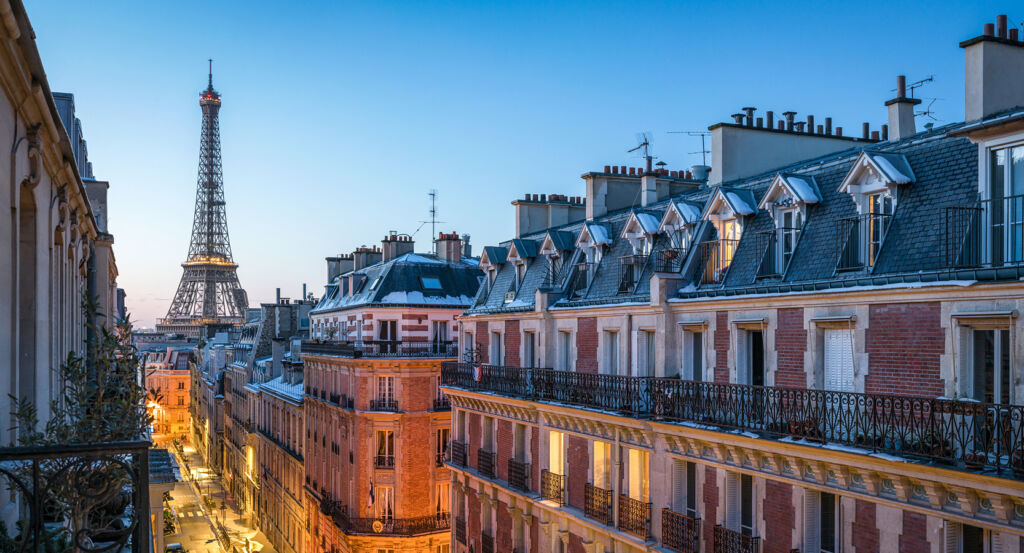
Why you should experience Le Pavillon de la Reine in Paris, France.
Le Pavillon de la Reine is a secluded palace hotel where Archives's aristocratic character, Grand Siècle inheritance, Marais cultural depth and centuries of discreet Parisian refinement converge behind the northern arcades of Place des Vosges.
Set along Place des Vosges near Rue de Béarn and just steps from Maison de Victor Hugo, the hotel occupies the seventeenth-century Pavillon de la Reine, whose red brick, pale stone, steep slate roof and tall chimneys belong to the architectural composition developed around the former Place Royale during the reigns of Henri IV and Louis XIII. Chevalier Paris has shaped the property as an independent family hotel, while Didier Benderli of Kérylos Intérieurs has layered individually conceived rooms with contemporary furniture, period references, patterned textiles and preserved architectural fabric. The current 56-room collection progresses from Classic, Superior and Deluxe rooms through Junior Suites, family accommodation, larger suites, the 75-square-meter Suite de la Reine and the independent 62-square-meter triplex Le Petit Pavillon. The result is a hotel where Bourbon-era architecture, family ownership, authored interiors and a hidden courtyard sustain an unusually private expression of Marais hospitality.
What you should know about Le Pavillon de la Reine.
Le Pavillon de la Reine is best known for occupying the north pavilion of Place des Vosges, constructed between 1605 and 1608 during the creation of Henri IV's Place Royale and distinguished from the corresponding Pavillon du Roi by a medallion carrying a sun associated with the Medici, while the hotel's name commemorates Anne of Austria, wife of Louis XIII, who lived during the seventeenth century in the wing separating the residence from the square. Place Royale was inaugurated in 1612 around the celebrations associated with Louis XIII and Anne of Austria and received the name Place des Vosges in 1800, establishing the architectural setting that continues to define the hotel more than four centuries later. Chevalier Paris traces its family hospitality history to an Auvergnat grandfather who developed several Parisian brasseries during the 1950s before the following generation entered the hotel business during the 1980s, eventually building an independent collection that now includes Pavillon Faubourg Saint-Germain, Pavillon des Lettres and Hôtel du Petit Moulin alongside Le Pavillon de la Reine. Didier Benderli of Kérylos Intérieurs directs the contemporary decorative character across 56 individually conceived rooms and suites, with the 75-square-meter Suite de la Reine incorporating seventeenth-century Versailles parquet, gold-leaf painting, a period decorative fireplace, marble bathroom and an exclusive chandelier by sculptural lighting designer Alexandre Logé. The independently entered Le Petit Pavillon extends the accommodation program through 62 square meters across three levels, retaining exposed Marais beams and terracotta flooring while functioning as a two-bedroom private apartment within the courtyard.
Restaurant Anne introduced a new gastronomic chapter in spring 2018 when chef Mathieu Pacaud began creating the menu for owner Jérôme Chevalier, with the restaurant receiving its first MICHELIN Star in 2020 before Thibault Sombardier and executive chef Matthieu Pirola assumed the current culinary direction. MICHELIN continues awarding Anne one star for its modern cuisine, while Sombardier's menus develop the property's intimate dining character through preparations such as scallops with hazelnut oil, lemon and Champagne gelée and sweetbread with mushrooms and parsley sabayon. Spa de la Reine by CODAGE establishes a separate wellness program across 250 square meters containing two treatment cabins, a hammam, jacuzzi and fitness room, with CODAGE developing personalized facial and body protocols around the French company's formulation expertise. Together, Jérôme Chevalier, Didier Benderli, Thibault Sombardier, Matthieu Pirola and CODAGE have expanded a seventeenth-century address into a contemporary hotel whose design, cuisine and wellness remain grounded in independent Parisian stewardship.
How to fold Le Pavillon de la Reine into your trip.
Le Pavillon de la Reine works as the anchor for an afternoon tracing private interiors, collecting and the preservation of Parisian cultural memory through the Marais.
Begin at Maison de Victor Hugo, where Victor Hugo occupied the second floor of Hôtel de Rohan-Guéménée from 1832 to 1848 and Paul Meurice later created the museum, personally financing work and securing family donations before inaugurating it on June 30, 1903. Continue to Musée Carnavalet, where the City of Paris transformed the sixteenth-century Hôtel Carnavalet into its historical museum in 1880, eventually expanding into Hôtel Le Peletier de Saint-Fargeau and building a collection now exceeding 618,000 works and objects documenting Paris from prehistory onward. Conclude at Musée Cognacq-Jay, where the eighteenth-century collection assembled between 1900 and 1927 by La Samaritaine founder Ernest Cognacq and Marie-Louise Jay has occupied the sixteenth-century Hôtel Donon since 1990, bringing works by Boucher, Fragonard, Chardin, Tiepolo and Canaletto into an intimate domestic setting. The progression moves from Hugo's private world through the documentary history of Paris into an eighteenth-century collector's vision, revealing the layers of domestic architecture, cultural stewardship and connoisseurship surrounding Le Pavillon de la Reine.
Where your story begins.
Foresyte Travel reveals places that feel extraordinary long before you arrive.
Experience premium editorial crafted for luxury travelers.














































































































