
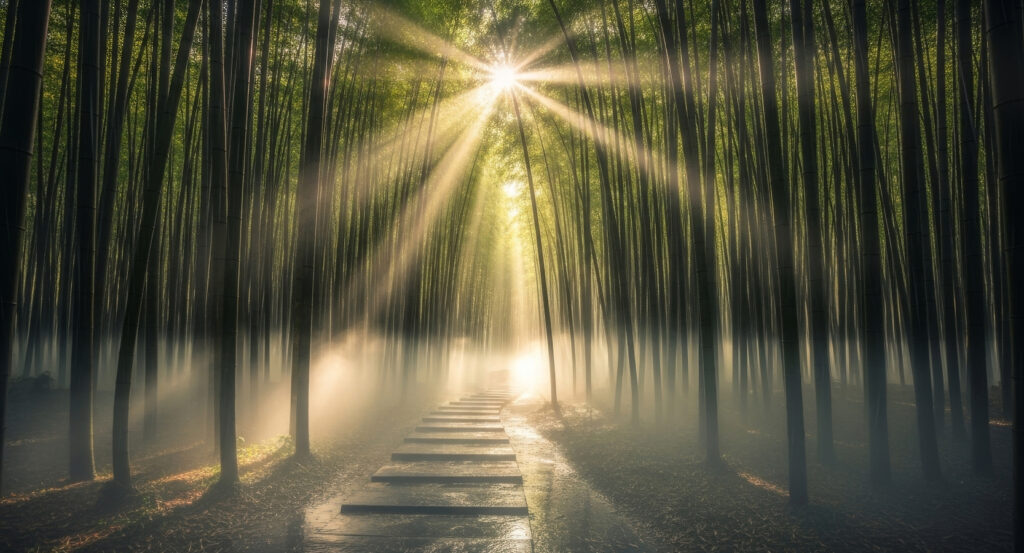
Why you should experience Muni Kyoto in Kyoto, Japan.
Muni Kyoto is Kyoto expressed through precision, reduction, and controlled intensity, a hotel that strips Arashiyama of sentimentality and replaces it with focus, proportion, and an almost architectural silence.
Located directly along the Katsura River in Arashiyama, Muni occupies ground that many hotels treat romantically and instead renders it exact. Arrival is intentional and clean. You step out of a district known for crowds, photography, and seasonal performance into a space that feels disciplined, contemporary, and almost confrontational in its calm. The building does not attempt to blend invisibly into tradition, nor does it perform modernity for effect. It asserts clarity. Materials are stark but refined: stone, glass, timber, and controlled light assembled with restraint. Public spaces feel pared back to essentials, removing visual noise until only structure, proportion, and landscape remain. Movement through the hotel is linear and legible, encouraging awareness. Guest rooms extend this rigor with remarkable consistency. They are generous in size and deliberately sparse, designed to hold attention on what matters. Beds are substantial and deeply comfortable, engineered for rest after long days walking river paths, hills, and dense temple zones. Windows open fully toward the Katsura River or Arashiyama's wooded slopes, turning the outside world into the dominant presence. The landscape is not framed romantically; it is presented clearly. Furniture is minimal and precisely placed. Seating aligns with views rather than walls, desks are unobtrusive, and storage disappears into the architecture. The room feels less like a hotel environment and more like a controlled living volume designed for inhabitation. Lighting is restrained and deliberate. Daylight governs most of the experience, while evening illumination is soft, directional, and intentionally limited, encouraging earlier rest and deeper calm. Bathrooms function as extensions of this discipline. Stone surfaces, deep tubs, and controlled acoustics transform bathing into a physical reset. Water, temperature, and silence are treated as primary elements. Dining at Muni Kyoto is central to its identity. Meals are precise, quiet, and uncompromising. Presentation avoids flourish, focusing instead on clarity, seasonality, and technique. Eating here feels concentrated and deliberate, aligning with the hotel's broader insistence on attention and presence. Shared spaces throughout the property act as transitional volumes. Corridors, lounges, and terraces are designed to decompress movement and sharpen perception. Service at Muni Kyoto is reserved, exacting, and deeply controlled. Interactions are minimal but purposeful, guided by timing. Staff appear when needed and withdraw immediately, maintaining the hotel's sense of composure. The property attracts travelers who value intensity over comfort signaling: repeat visitors to Kyoto, architects, designers, cultural purists, and guests who want Arashiyama. Muni Kyoto does not soften the district or translate it into romance. It sharpens it, offering a stay that feels deliberate, cerebral, and quietly demanding.
What you should know about Muni Kyoto.
Muni Kyoto was conceived as a reaction against ornamental hospitality, built on the belief that clarity and discipline are more restorative than abundance.
The property's design philosophy centers on subtraction. Architects and planners intentionally removed decorative cues, cultural pastiche, and visual comfort layers in favor of structure, material honesty, and spatial precision. The building's alignment with the river is exacting, treating the Katsura not as scenery but as a fixed reference line around which volumes are organized. Guest rooms were designed through behavioral observation, particularly how people respond to silence, reduced stimuli, and sustained views. Furniture was reduced to essentials, storage concealed, and surfaces left uninterrupted to allow the mind to settle. Lighting design rejects brightness as default, favoring low-intensity sources that support circadian rhythm and physical calm. Bathrooms were engineered as physical reset chambers, with attention paid to acoustics, thermal stability, and spatial enclosure. Dining spaces were developed to support concentration, limiting noise, visual distraction, and movement. Operational culture mirrors this architectural severity. Staff training emphasizes restraint, precision, and respect for solitude. Interactions are efficient and exact, reinforcing the hotel's disciplined atmosphere. Over time, Muni Kyoto has become a reference point for travelers seeking architectural immersion. In a district where many accommodations rely on nostalgia or scenic appeal, Muni stands apart by offering Arashiyama as an experience of clarity.
How to fold Muni Kyoto into your trip.
Muni Kyoto works best when you treat it as a concentrated immersion rather than a casual base, allowing its discipline to reshape how you experience Arashiyama and Kyoto at large.
Plan the stay here with intention. Begin mornings early, stepping out along the river before crowds gather, letting silence dictate pace. Because the hotel sits at the heart of Arashiyama, excursions should be local and minimal. Walk bamboo paths, river edges, and nearby temples slowly, returning often. Midday returns are encouraged, not avoided. Come back to rest, bathe, and sit quietly with the view before heading out again. Afternoons should remain light. The hotel's environment is designed to hold attention inward, not support frantic sightseeing. Evenings are best spent on property or very nearby. Dine deliberately, return early, and allow darkness to end the day. Late nights and constant transit work against the hotel's purpose. Muni Kyoto pairs especially well with shorter stays focused on depth, architectural interest, and physical recalibration.
Where your story begins.
Foresyte Travel reveals places that feel extraordinary long before you arrive.
Experience premium editorial crafted for luxury travelers.

















































































































