
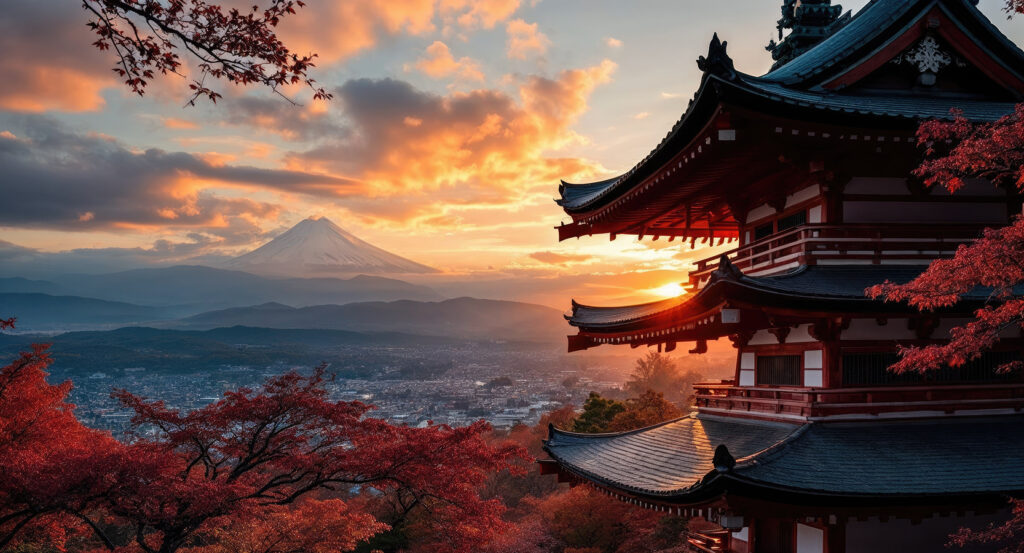
Why Okazaki matters.
Okazaki is the cultural heart of modern Kyoto, where world-class museums, historic shrines, and elegant public spaces converge within one of the city's most refined and intellectually significant districts.
Grand cultural institutions, scenic canals, historic gardens, performing arts venues, grand torii gates, and tree-lined boulevards create a neighborhood that showcases Kyoto's role as both an ancient capital and a center of contemporary culture. Developed extensively during the Meiji period as part of Kyoto's modernization efforts, Okazaki became home to many of the city's most important civic and cultural projects. The district's carefully planned landscapes and institutions reflect a commitment to preserving tradition while embracing artistic and educational advancement. Today, visitors encounter a unique blend of history, architecture, and cultural life that distinguishes the area from many of Kyoto's more temple-focused neighborhoods. The result is a neighborhood that feels sophisticated, inspiring, and deeply connected to the city's evolving identity. To the east, Sakyo Ward, Kyoto's temple districts, forested hillsides, and cultural landmarks extend naturally from Okazaki toward the foothills of Higashiyama, reinforcing the neighborhood's position within one of Japan's most celebrated cultural landscapes. Every museum, canal, and public square reflects a neighborhood shaped by creativity, education, and civic ambition.
What defines Okazaki.
Okazaki is best known for being home to Heian Shrine, among Kyoto's most iconic landmarks and a grand tribute to the city's imperial heritage.
Constructed in 1895 to commemorate the 1,100th anniversary of Kyoto's founding as Japan's capital, the shrine was designed as a partial reconstruction of the original imperial palace from the Heian period. Its enormous vermilion torii gate, expansive ceremonial grounds, and celebrated gardens helped establish it as one of the city's most recognizable cultural landmarks. The shrine serves as both a place of worship and a symbol of Kyoto's enduring historical importance within Japanese civilization. Over time, it became a focal point for festivals, cultural events, and seasonal celebrations that attract visitors from across the country. Few landmarks in Kyoto possess such a direct connection to the city's character as Japan's former imperial capital.
How Okazaki fits.
Okazaki works as an exploration of the cultural institutions, historic landmarks, and scenic public spaces that define one of Kyoto's most distinguished districts.
Begin at Heian Shrine, where the neighborhood's defining connection to imperial history and cultural character immediately comes into focus. Continue toward the Kyoto Municipal Museum of Art, whose collections and architecture reveal the artistic traditions and creative legacy that helped shape the district's reputation. From there, make your way along the Lake Biwa Canal, where tree-lined pathways, historic engineering works, and seasonal scenery provide a broader perspective on the civic projects that transformed modern Kyoto. Along the route, you'll encounter performance venues, public gardens, cultural institutions, neighborhood cafés, scenic walkways, architectural landmarks, and gathering spaces that showcase the neighborhood's remarkable depth. The progression moves naturally from imperial monument to artistic centerpiece to historic canal corridor, revealing the forces that shaped the neighborhood. Okazaki remains one of the city's most enriching destinations, preserving a remarkable balance between cultural achievement, historical significance, and everyday beauty.
Where your story begins.
Foresyte Travel reveals places that feel extraordinary long before you arrive.
Enjoy editorial crafted for luxury travelers.
Foresyte may earn a commission when you book.

















































































































