
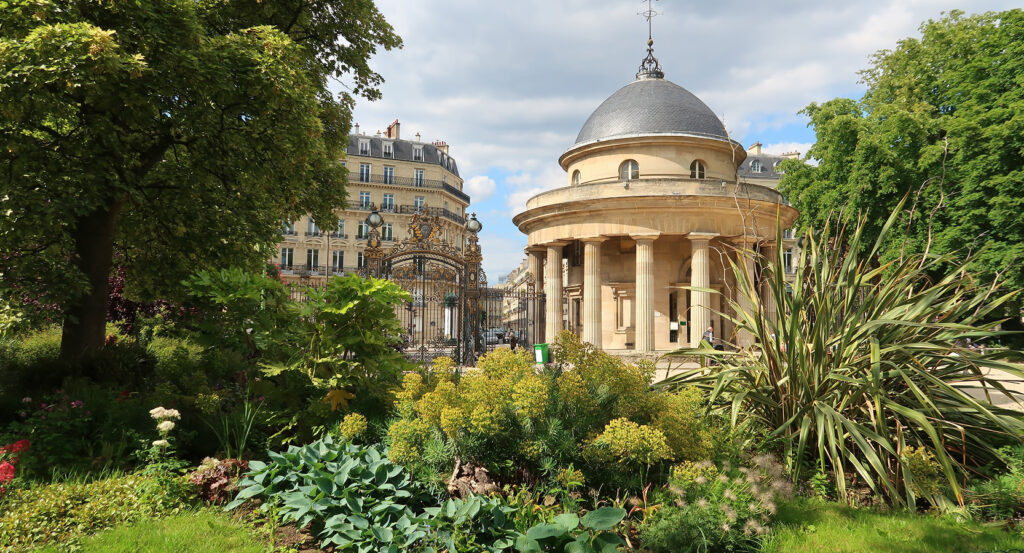
Why you should experience The Pond at Parc Monceau in Paris, France.
The pond at Parc Monceau is the park's beating heart, a tranquil expanse of water where reflections blur the line between dream and daylight.
Encircled by willows, poplars, and fragments of classical architecture, the pond feels like a portal to another age. It's here that the play of light and water turns ordinary moments into art, morning sunlight dances on ripples like liquid gold, while evening shadows drape the surface in painterly indigo. Paris is a city that knows how to stage emotion, and nowhere is that more evident than around this pond. Created in the late 18th century as part of the Duke of Chartres' vision for a “garden of illusion,” the water was meant to evoke reflection in both the literal and philosophical sense. Walkers are drawn instinctively to its edge, where the mirrored images of colonnades, bridges, and sky whisper something eternal, that beauty, in Paris, isn't meant to be seized but savored. The air smells faintly of grass and rain; the soundscape, a gentle mix of birdsong and footsteps on gravel, composes its own symphony.
What you should know about The Pond at Parc Monceau.
What few realize is that the Parc Monceau pond is itself a marvel of early landscape engineering, an artificial body designed to mimic the spontaneity of nature.
In an age obsessed with reason and proportion, its irregular shape and meandering banks were a revolutionary gesture toward resonant design. The pond was intended not just to please the eye but to stir the soul, a living metaphor for the unpredictability of life and the passage of time. Underneath its calm surface lies a network of 18th-century hydraulic channels that once powered fountains and fed ornamental cascades throughout the park. During the Second Empire, Baron Haussmann's citywide redesign nearly erased such features, but Monceau was spared, because its charm resisted modernization. Today, the pond still performs its original trick: it feels wild though it's meticulously planned. The blend of water, stone, and flora captures the Enlightenment's great paradox, that reason and emotion, order and chaos, must coexist to create something truly human.
How to fold The Pond at Parc Monceau into your trip.
To fold the Parc Monceau pond into your journey through Paris, treat it as both destination and pause.
Begin your stroll from the Rotunda de Chartres, winding through tree-shaded paths until the glimmer of water appears ahead. The pond rewards the patient traveler, it reveals its beauty slowly, like a secret unfolding. Take a seat on one of the curved benches and watch the city's rhythms pass before you: joggers, elderly couples feeding ducks, artists sketching reflections. If you're visiting in spring, cherry blossoms will drift across the water like pastel confetti; in autumn, the surface turns molten gold beneath the falling leaves. Pack a book, a croissant, or a journal, this is where inspiration lingers. The pond's stillness offers what the rest of Paris rarely does: a moment of quiet intimacy in a city built on motion. It's a place to listen, not to the noise of the world, but to yourself, echoed softly back in the ripples.
Where your story begins.
Foresyte Travel reveals places that feel extraordinary long before you arrive.
Experience premium editorial crafted for luxury travelers.














































































































