
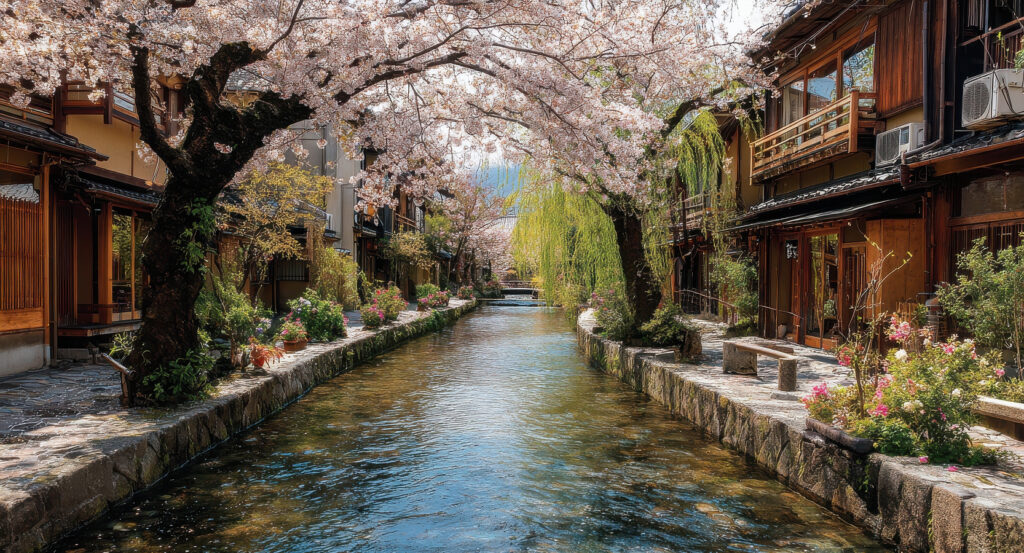
Why Park Hyatt Kyoto matters.
Park Hyatt Kyoto is Kyoto distilled into gravity, silence, and architectural restraint, a hotel that does not merely overlook the city but absorbs it, translating centuries of spiritual weight and hillside movement into an experience defined by composure.
Set along the Higashiyama slopes near Kodai-ji and Yasaka Pagoda, the hotel occupies one of the most consequential pieces of land in the city. This is not incidental placement; it is existential positioning. Arrival unfolds slowly, almost reverently. Streets narrow, elevation shifts, crowds thin, and the city's energy compresses into something quieter and heavier. Entry into the hotel feels less like stepping inside and more like being held. Architecture here is intentionally subdued. Volumes are controlled, materials are grounded, and transitions are deliberate. Nothing is designed to distract from the environment outside; everything is designed to steady you within it. Public spaces feel hushed, weighty, and exacting. Stone, timber, and glass are deployed with restraint, creating interiors that feel anchored. Sightlines are carefully managed, revealing fragments of temple roofs, hillsides, and sky. Movement through the hotel is slow by design, encouraging presence through frictionless calm. Guest rooms and suites continue this philosophy with remarkable discipline. These are not rooms designed to impress on entry; they are rooms designed to hold you over time. Layouts prioritize proportion, circulation, and psychological ease. Beds are low, substantial, and deeply restorative, positioned to reinforce rest. Windows frame Kyoto as lived topography: tiled roofs, treetops, stone paths, and shifting light across the hillside. The city feels close, but never invasive. Furniture is minimal and precise. Seating is placed where the body naturally pauses, desks align with usable light, and storage allows for full inhabitation. Lighting is subtle, layered, and emotionally intelligent, supporting early starts, midday returns, and long evenings. Bathrooms function as private recovery chambers. Deep soaking tubs, generous counter space, and controlled lighting turn routine into grounding ritual, particularly valuable in a district defined by walking, elevation, and physical density. Dining at Park Hyatt Kyoto reflects the same intentional restraint. Meals feel aligned with place and pace. Spaces are intimate, acoustically calm, and designed to support attentiveness. Eating here feels like continuation, not interruption. Shared spaces throughout the hotel operate as buffers. Corridors, terraces, and lounges are designed to decompress rather than entertain, allowing the intensity of Higashiyama to dissipate gradually. Service is refined, precise, and emotionally attuned. Interactions are measured and unforced, shaped by timing. Staff understand that guests here are often processing something larger than itinerary: history, beauty, fatigue, or reflection. Support arrives quietly, recedes cleanly, and never competes for attention. Park Hyatt Kyoto attracts travelers who value depth over novelty: cultural pilgrims, repeat visitors, long-stay guests, and anyone who wants proximity to Kyoto's spiritual core. This is not a hotel that explains Kyoto or curates it for consumption. It provides a structure strong enough to let Kyoto be fully felt.
What defines Park Hyatt Kyoto.
Park Hyatt Kyoto was conceived with the understanding that building near sacred ground requires humility, not assertion, and its design reflects an unusual willingness to disappear.
The hotel's architecture was shaped around the existing hillside. Elevation changes were preserved and integrated, allowing movement through the property to echo the physical experience of Higashiyama itself. Designers prioritized horizontality and enclosure to counterbalance the exertion and verticality of the surrounding streets. Materials were selected for mass and absorption rather than shine: stone that anchors the eye, wood that dampens sound, glass that frames rather than reflects. Public spaces were planned as decompression sequences, enabling guests to shed the external environment gradually. Guest rooms were designed with behavioral reality in mind. Planners observed how guests in this district move: early mornings, midday fatigue, late returns, and frequent pauses. This informed layouts that emphasize circulation clarity, adaptable lighting, and genuine storage capacity. Bathrooms were engineered as recovery environments, with attention paid to water pressure stability, temperature consistency, and spatial comfort. Dining venues were intentionally restrained in scale and tone, reinforcing the idea that nourishment here should restore equilibrium. Operational culture mirrors this architectural humility. Staff training emphasizes pacing, resonant awareness, and situational judgment over scripted luxury cues. Interactions feel grounded and intentional, particularly important in a location where guests often arrive physically tired and mentally saturated. Over time, Park Hyatt Kyoto has cultivated loyalty among travelers who return because the experience remains centered and reliable even during peak seasons. In a city where proximity to landmarks often comes at the cost of peace, this property distinguishes itself by offering stillness.
How Park Hyatt Kyoto fits.
Park Hyatt Kyoto works best when you allow it to function as a stabilizing counterweight rather than a trophy stay, shaping how you move through Higashiyama rather than merely housing you within it.
Begin mornings early, stepping out toward Kodai-ji, Yasaka Pagoda, or nearby temple paths before crowds accumulate. Let proximity work in your favor by moving slowly and returning often. Because the hotel sits just beyond the densest foot traffic, midday returns feel restorative. Come back to rest, bathe, or sit quietly before reentering the city. Afternoons are best spent locally. Explore side streets, small shrines, and residential lanes where Kyoto reveals itself. The hotel's calm allows you to recalibrate. Evenings unfold. Walk lantern-lit slopes as the city quiets, dine without urgency, or attend a performance knowing that your return will be into silence rather than stimulation. Late arrivals feel grounding because the hotel's interior language mirrors the descent of the neighborhood into night. Park Hyatt Kyoto pairs especially well with trips centered on cultural depth, spiritual sites, or physical exploration, where resonant and physical recovery matters as much as access. By the time you leave, Higashiyama will feel less overwhelming and more intelligible, and the hotel will feel like the reason you were able to stay present. In a city defined by reverence and repetition, Park Hyatt Kyoto offers a rare balance: closeness without chaos, luxury without assertion, and hospitality that understands when to stand back and let the city speak.
Where your story begins.
Foresyte Travel reveals places that feel extraordinary long before you arrive.
Enjoy editorial crafted for luxury travelers.
Foresyte may earn a commission when you book.

















































































































