
Why Polux by Paul Pairet matters.
Polux by Paul Pairet is a celebrated French bistro where Xintiandi's restored shikumen architecture meets Paul Pairet's interpretation of Parisian café culture, connecting traditional French comfort food, contemporary culinary technique and the international reputation of one of Shanghai's most influential chefs.
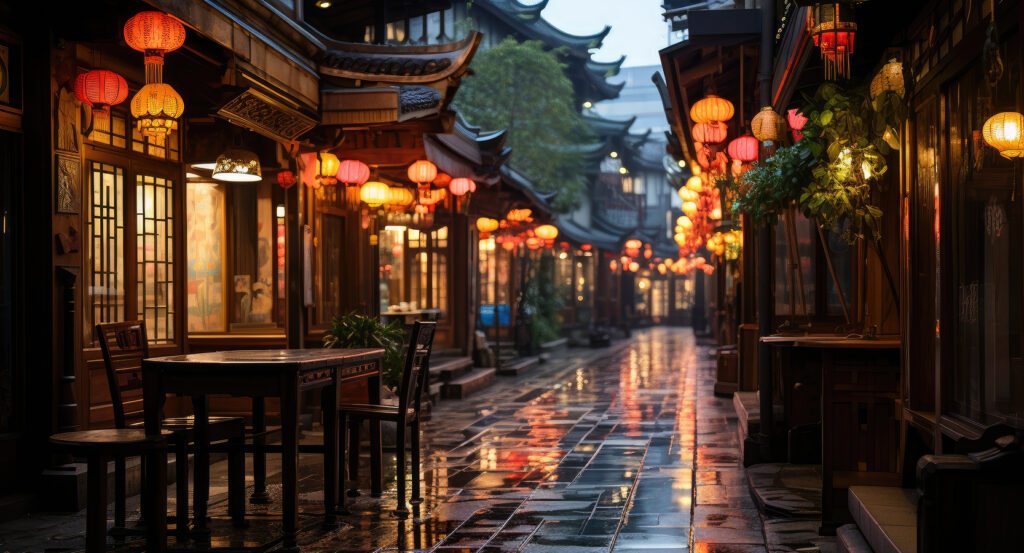
Taicang Road runs through the northern section of Xintiandi in Huangpu District, placing the restaurant at Lane 181 near the pedestrian streets and restored residential buildings that distinguish the historic neighborhood. The restaurant occupies a street-level property within Xintiandi Beili, whose brick façades and traditional shikumen architectural elements preserve the character of Shanghai's early twentieth-century residential development. Inside, patterned floor tiles, ceiling fans, leather chairs and timber furnishings establish an interior inspired by traditional Parisian cafés. Large windows connect the dining room with the surrounding pedestrian lanes, and an outdoor terrace extends seating into the neighborhood's public spaces. The result is a French café whose familiar European furnishings and restored Shanghai surroundings establish an accessible setting for Pairet's distinctive approach to bistro cooking.
What defines Polux by Paul Pairet.
Polux is best known for Paul Pairet translating the inventive French cooking that established his international reputation into an informal, all-day Shanghai bistro when the restaurant opened in March 2019. Born in Perpignan in southern France in 1964, Pairet studied hospitality in Toulouse after developing an early interest in scientific experimentation. His culinary career subsequently carried him through Hong Kong, Sydney and Jakarta, developing a professional foundation that connected classical French cooking with international ingredients and unfamiliar culinary traditions. Pairet attracted considerable attention during the late 1990s through his work at Café Mosaic in Paris, where his unconventional interpretations of familiar dishes brought him into contact with Alain Ducasse. Ducasse subsequently helped arrange Pairet's move to Istanbul, extending a career that had already crossed several continents. Shanghai became the decisive setting for his independent culinary ambitions when he arrived in 2005 to lead Jade on 36 at Pudong Shangri-La. The restaurant introduced his technically ambitious cooking to a city whose international dining culture was expanding rapidly. Pairet left the hotel in 2008 and joined restaurateur VOL Group to establish Mr. & Mrs. Bund at Bund 18 the following year. The restaurant developed a contemporary French menu built around recognizable dishes, unconventional presentations and an extensive selection of preparations designed for sharing. Its international standing advanced in 2013 when it entered The World's 50 Best Restaurants at 43rd, becoming the first mainland Chinese restaurant to appear on the principal ranking. Pairet had already undertaken a more ambitious project through Ultraviolet, which opened in May 2012 after years of development. The restaurant combined a single table for ten diners with twenty courses and coordinated visual, acoustic and aromatic effects, establishing an influential model for technologically integrated fine dining. Ultraviolet received three MICHELIN stars in the 2018 Shanghai guide and retained the distinction through the 2025 selection, becoming the most internationally recognized expression of Pairet's experimental cooking. His professional achievements included the inaugural Lifetime Achievement Award from Asia's 50 Best Restaurants in 2013, the organization's Chefs' Choice Award in 2016 and Restaurateur of the Year from Les Grandes Tables du Monde in 2018. Polux emerged from a different ambition within this expanding restaurant portfolio. Pairet wanted a neighborhood café that could accommodate breakfast, brunch, lunch, afternoon drinks and dinner through recognizable French cooking at accessible prices. The name carried two personal associations: Pollux, the character from the French animated television series Le Manège enchanté, and a French nickname connected with the chef himself. The restaurant opened in Xintiandi during March 2019, introducing a casual establishment whose culinary direction drew upon the same technical knowledge underlying Pairet's more elaborate restaurants. MICHELIN awarded Polux a Bib Gourmand within six months of opening, recognizing the quality and value of its French bistro cooking. The distinction established the restaurant as an important component of Pairet's Shanghai portfolio and demonstrated the adaptability of his culinary approach across substantially different dining formats. During the COVID-19 disruption of early 2020, Polux closed for one week before reopening, becoming one of the first of Pairet's establishments to resume operations. Its comparatively informal format helped the restaurant recover during a period when Shanghai's international hospitality industry faced severe uncertainty. Pairet subsequently expanded his professional activities through television, becoming a judge on France's Top Chef and introducing his culinary approach to a substantially wider audience. The permanent closure of Ultraviolet in March 2025 ended the most experimental chapter of his Shanghai restaurant career, placing greater emphasis on the enduring accessibility of Mr. & Mrs. Bund and Polux. His subsequent international expansion included Nonos & Comestibles at Hôtel de Crillon in Paris and two Singapore concepts launched at Resorts World Sentosa in November 2025. A 2026 licensing agreement also established plans to extend the Polux concept to Taipei, demonstrating the commercial potential of the casual French café developed in Shanghai. Polux occupies a distinctive position within Pairet's career, translating decades of technical experimentation and international recognition into an approachable restaurant organized around the enduring appeal of French bistro cooking.
Paul Pairet's cooking at Polux begins with the familiar structure of a Parisian café meal, developing traditional French preparations through careful control of texture, seasoning and temperature. The menu places substantial emphasis on recognizable dishes whose apparent simplicity depends on precise execution, allowing the chef's technical background to shape food associated with everyday French dining. Onion soup provides a defining example through a deeply flavored broth whose richness develops from carefully cooked onions and concentrated savory ingredients. The onions acquire sweetness through prolonged cooking, creating a foundation that supports the broth's substantial flavor. Toasted bread introduces a contrasting texture above the liquid, and melted cheese develops a browned surface that connects the soup's sweetness with the richness of dairy. The relationship between softened onions, crisp bread and melted cheese gives the preparation its distinctive character, preserving the familiar comfort of a French classic through disciplined cooking. Pairet extends this approach across a menu that draws upon the recognizable foundations of French café cuisine, including eggs, sandwiches, substantial meat preparations and carefully composed desserts. Breakfast and brunch establish the restaurant's informal character through dishes designed for unhurried dining, connecting morning service with the broader tradition of European cafés as neighborhood gathering places. Eggs require particular attention to temperature and timing, with controlled cooking preserving their delicate texture and allowing accompanying ingredients to contribute richness or acidity. The kitchen's substantial lunch and dinner preparations introduce more concentrated savory flavors through roasting, sautéing and classical sauce development. Meat dishes rely on careful temperature management to preserve tenderness, and sauces connect the principal ingredient with vegetables or starches through concentrated cooking juices. Seafood preparations introduce a lighter register, allowing delicate flesh and restrained seasoning to balance the richer dishes associated with traditional bistro cooking. Pairet's established culinary approach emphasizes the physical behavior of ingredients, making the contrast between crisp surfaces, tender interiors and carefully balanced sauces central to the finished dish. This attention extends into desserts, where French pastry techniques develop familiar combinations of cream, fruit, chocolate and cooked sugar through controlled textures. The restaurant's drinks program supports the same café format through coffee, wine and cocktails, allowing the meal to move naturally between different periods of the day. French wines contribute an established accompaniment to the kitchen's cooking, with acidity and tannin providing contrasting relationships to rich sauces, roasted meats and dairy-based preparations. The dining room's close arrangement of tables and its adjoining terrace preserve the conversational character of a neighborhood café, allowing food and drink to remain central to extended gatherings. Polux distinguishes itself through this integration of classical French comfort food, technical precision and relaxed all-day hospitality, making Pairet's internationally recognized cooking accessible through the familiar conventions of a Parisian bistro.
How Polux by Paul Pairet fits.
Polux by Paul Pairet works as the concluding destination for a Central Shanghai itinerary connecting the revolutionary history of modern China, the preservation of traditional shikumen residences and the urban redevelopment that transformed Xintiandi into a prominent cultural district.
Begin at the Site of the First National Congress of the Chinese Communist Party, the historic shikumen residence occupying Huangpi South Road near Xingye Road. The building hosted the opening sessions of the Chinese Communist Party's first national congress in July 1921, bringing together delegates who established the political organization that subsequently became central to twentieth-century Chinese history. The congress initially convened in a residential building associated with Li Hanjun, whose family provided the meeting location. Participants included Mao Zedong, Dong Biwu and other early Communist organizers, alongside representatives of the Communist International. Police surveillance interrupted the proceedings, and the delegates subsequently completed the congress aboard a boat on South Lake in Jiaxing, Zhejiang Province. The Shanghai building became a major historical memorial after the establishment of the People's Republic of China in 1949. Restoration preserved its shikumen architecture, and the site opened to the public as a memorial in 1952. A major museum expansion completed in 2021 introduced extensive exhibitions examining the founding of the party and its subsequent historical development. Continue to Shikumen Open House Museum, a restored residential property within Xintiandi that preserves the domestic architecture associated with Shanghai's traditional lane-house communities. Shikumen housing developed during the nineteenth century as the city expanded rapidly through commercial growth and population movement. The architectural form combined Chinese courtyard-house traditions with Western-influenced construction, introducing distinctive stone-framed entrances, brick façades and narrow residential lanes. The museum reconstructs a household interior associated with Shanghai's early twentieth-century urban middle class, incorporating period furnishings and domestic objects that demonstrate the organization of family life within these compact residences. Ground-floor rooms preserve the relationship between shared domestic activities and enclosed courtyards, with upper levels accommodating sleeping quarters and private family spaces. The building provides a physical connection to the residential architecture that preceded Xintiandi's commercial redevelopment. Conclude at Xintiandi Style II, the contemporary retail and cultural complex occupying the southern section of the Xintiandi district. The development forms part of the larger transformation initiated by Shui On Land, whose Xintiandi project began during the late 1990s through the restoration and redevelopment of historic shikumen neighborhoods. American architect Benjamin Wood contributed to the original master plan, establishing an approach that preserved characteristic brick façades and stone gateways alongside new commercial interiors. Xintiandi's first phase opened in 2001, introducing a pedestrian district organized around restaurants, retail establishments and public gathering spaces. Subsequent development expanded the district through contemporary commercial buildings and new pedestrian connections, establishing a substantial urban destination within Huangpu District. Xintiandi Style II represents a later stage of this redevelopment, incorporating contemporary retail design and cultural programming into the district's evolving commercial landscape. The progression moves from the historic residence associated with the founding of modern Chinese political organization through a preserved example of Shanghai's traditional domestic architecture and culminates at the contemporary development that extended Xintiandi's transformation into a major cultural and commercial district.
Where your story begins.
Foresyte Travel reveals places that feel extraordinary long before you arrive.
Enjoy editorial crafted for luxury travelers.
Foresyte may earn a commission when you book.

















































































































