
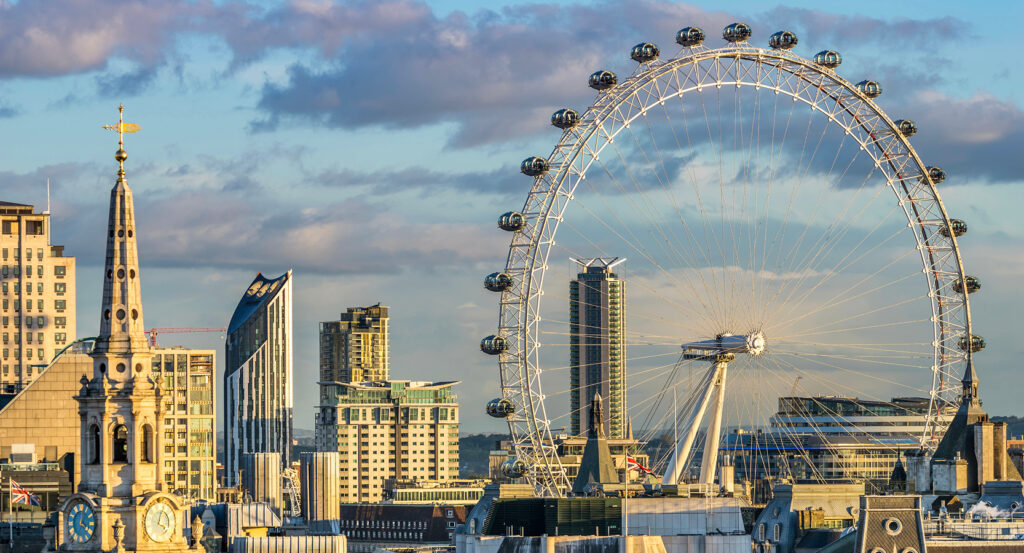
Why you should experience Queen's Circus in London, England.
Queen's Circus is a graceful corridor where Battersea's Victorian planning, garden square traditions, residential heritage, and South London's enduring character continue defining one of the borough's most distinctive civic spaces.
Running through Battersea between Clapham Junction and Wandsworth Town, the corridor encircles a landscaped green framed by Victorian terraces, mature trees, period residences, and quiet residential streets that preserve the orderly vision established during the district's nineteenth-century expansion. London stock brick façades, decorative cornices, cast-iron railings, and carefully maintained front gardens reinforce the area's historic character while providing a calm contrast to the surrounding commercial corridors. Local schools, churches, neighbourhood businesses, and nearby public spaces continue supporting a strong sense of community across the district. The result is an experience shaped by thoughtful planning, architectural continuity, and Battersea's longstanding residential appeal.
What you should know about Queen's Circus.
Queen's Circus is best known for forming part of the planned Victorian expansion of Battersea during the second half of the nineteenth century, when former agricultural land was systematically developed into residential streets serving London's rapidly growing population. The circular layout reflects contemporary urban planning principles that incorporated formal open spaces within new suburban neighbourhoods while improving air circulation, visual harmony, and access to public gardens. Builders introduced London stock brick terraces, slate roofs, decorative lintels, bay windows, stucco detailing, cast-iron railings, and uniform building lines that continue defining much of the surrounding streetscape despite later residential adaptation. Battersea's population expanded dramatically following railway construction and industrial growth during the nineteenth century, encouraging the creation of schools, churches, commercial parades, and civic institutions that supported one of South London's fastest-growing communities.
Clapham Junction station opened in 1863 and developed into one of Europe's busiest railway interchanges through the convergence of multiple mainline routes serving Southwest England. Battersea Arts Centre occupies the former Battersea Town Hall, completed in 1893 to designs by Edward William Mountford before reopening as a nationally recognised centre for theatre and creative programming. Battersea Park opened in 1858 across 200 acres following plans promoted by Sir James Pennethorne, providing ornamental gardens, lakes, sporting facilities, and riverside landscapes beside the Thames. St. Mary's Church traces its origins to the medieval period while preserving architectural elements spanning several centuries of parish history within Battersea.
How to fold Queen's Circus into your trip.
Queen's Circus works as an exploration of Battersea's Victorian planning, cultural institutions, and public landscapes.
Begin at Battersea Park, where expansive gardens and riverside scenery introduce the green spaces that shaped the surrounding district during the Victorian era. Continue to Battersea Arts Centre, whose restored civic building reflects the borough's commitment to culture and public life. Conclude at Clapham Junction Station, where one of Britain's busiest railway hubs highlights the transport networks that fueled Battersea's nineteenth-century expansion. The progression moves naturally from landscaped parkland to civic culture before concluding with railway engineering that helped define the neighbourhood's growth.
Where your story begins.
Foresyte Travel reveals places that feel extraordinary long before you arrive.
Experience premium editorial crafted for luxury travelers.














































































































