
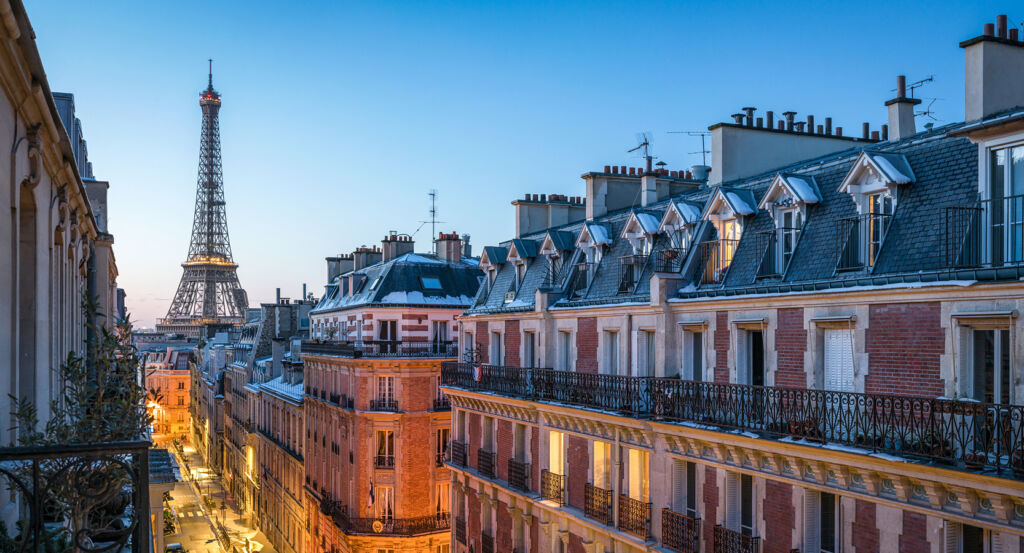
Why you should experience R. Kipling Hotel in Paris, France.
R. Kipling Hotel is a literary-inspired boutique hotel where South Pigalle's bohemian heritage, cabaret culture, cosmopolitan imagination, and intimate Parisian hospitality converge through interiors inspired by Rudyard Kipling's travels across Asia.
Set along Rue Blanche near Boulevard de Clichy and just steps from Moulin Rouge, the hotel places 40 rooms within a six-floor property whose British-inflected interiors combine travel objects, colonial references, patterned textiles, deep greens, warm woods, leather seating, and an intimate library atmosphere. Guestrooms continue the narrative through Asian decorative objects, botanical patterns, dark timber, expressive lighting, and carefully assembled furnishings that evoke the collected home of a nineteenth-century traveler. A lounge, self-service bar, breakfast room, and compact meeting space extend the residential atmosphere beyond the accommodations while preserving the scale expected from an independent Paris address. The result is a hotel where literature, travel, collecting, and the creative character of South Pigalle become parts of one coherent hospitality identity.
What you should know about R. Kipling Hotel.
R. Kipling Hotel is best known for transforming the former Husa Calais Montmartre into a 40-room, four-star boutique property whose character was conceived by interior designer Christine Gérondeau as a direct homage to British author Rudyard Kipling, the Bombay-born writer whose travels and writing across British India supplied the conceptual style for the interiors. Gérondeau developed the hotel around the imagined residence of a cultivated traveler returning from Asia, combining British club references with colonial-style furniture, Asian objects, travel-inspired decoration, deep blue and green palettes, patterned wallpapers, leather, timber, books, framed imagery, and eclectic objects assembled to suggest souvenirs accumulated across successive journeys. The six-floor accommodation program encompasses 40 rooms, including standard, superior, triple, and suite configurations, with soundproofing, air conditioning, premium bedding, flat-screen televisions, coffee facilities, and selected balconies extending a deliberately intimate design concept across a comparatively compact inventory. The literary premise distinguishes the property within HappyCulture's Paris collection because the name, decorative narrative, library atmosphere, and Asian references originate from a specific historical figure rather than an abstract design theme, turning Kipling's biography and nineteenth-century travel culture into the organizing idea behind the hotel.
Christine Gérondeau developed R. Kipling Hotel alongside a wider generation of highly individualized Paris boutique properties, using furniture, books, lighting, textiles, and collected objects to construct an interior narrative whose British and Asian references remain recognizable throughout the public spaces and accommodations. Rudyard Kipling, born in Bombay in 1865 and later author of The Jungle Book, Kim, and The Man Who Would Be King, gives that decorative program unusual biographical depth because travel through India and the wider British Empire became fundamental material within his literary career. HappyCulture subsequently incorporated R. Kipling Hotel into its hospitality portfolio while retaining the 40-room format, four-star positioning, library, bar, concierge operation, meeting facilities, and travel-centered decorative character that distinguish the property from standardized chain accommodation. Together, Christine Gérondeau, Rudyard Kipling, and HappyCulture explain how R. Kipling Hotel developed around a sustained literary concept in which authorship, travel history, Asian visual references, British club culture, and contemporary boutique hospitality reinforce the same narrative across all six floors.
How to fold R. Kipling Hotel into your trip.
R. Kipling Hotel works as an afternoon and evening tracing the literary, artistic, and theatrical character of South Pigalle.
Begin at Musée de la Vie Romantique, where Ary Scheffer's former residence, paintings, sculpture, literary associations, and garden introduce the intimate salons and artistic circles that shaped this part of Paris during the nineteenth century. Continue to R. Kipling Hotel, where Christine Gérondeau's travel-inspired interiors, Asian objects, library atmosphere, and Rudyard Kipling references provide a natural midpoint connecting literary imagination with the neighborhood's enduring taste for theatrical interiors. Continue to Théâtre de Paris, where a performance within the historic Rue Blanche theater carries the outing into the stage culture that has animated South Pigalle across successive generations of actors, playwrights, and audiences. Conclude at La Nouvelle Ève, where elaborate costumes, choreography, music, and a richly decorated auditorium provide the evening's celebratory payoff through the cabaret tradition inseparable from the cultural character of the surrounding streets. The progression moves from Romantic-era artistic circles through literary hospitality and Parisian theater before culminating in cabaret, bringing together the writing, visual imagination, performance, and bohemian culture that define South Pigalle.
Where your story begins.
Foresyte Travel reveals places that feel extraordinary long before you arrive.
Experience premium editorial crafted for luxury travelers.














































































































