
Why you should experience Museum of Relief Maps in Paris, France.
Museum of Relief Maps at Hôtel des Invalides in Paris transform military might into marble poetry.
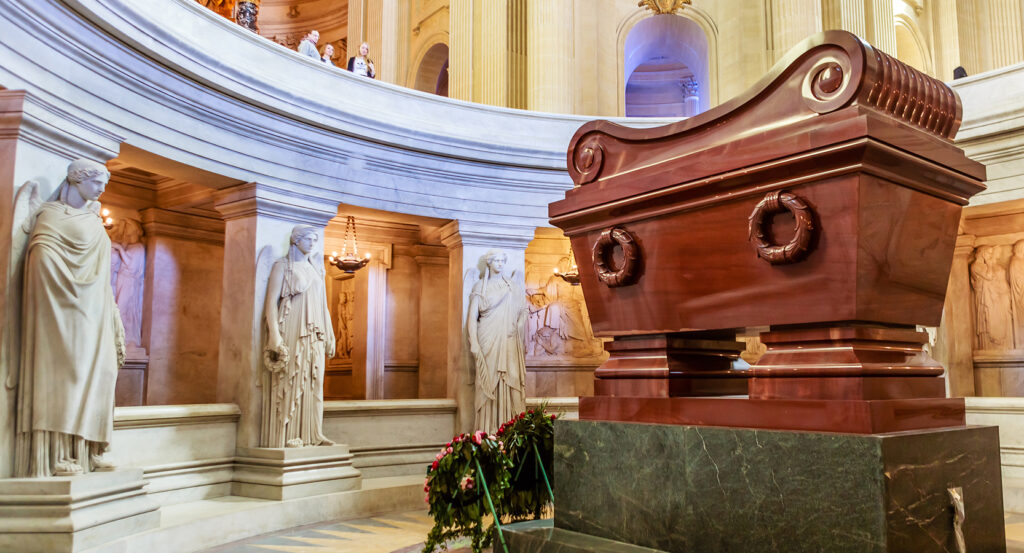
Each figure, draped in classical robes, frozen in noble restraint, captures one of the emperor's triumphs: Austerlitz, Rivoli, Marengo, Jena. Yet these aren't simple depictions of war; they are allegories of discipline, courage, and divine right. The chiseling is exquisite, musculature rendered with painterly sensitivity, expressions caught between pride and melancholy. They rise from the curved walls as if pushing against time itself, each one a ghost of conquest, carved to remind the world that Napoleon's power was as much psychological as it was territorial. The blend of light across their surfaces, particularly in the late afternoon, gives the illusion of motion, the faint stirring of drapery, the suggestion of breath in cold stone. The sculptures form a silent chorus around the tomb, a perpetual guard of marble sentinels whose beauty softens the weight of imperial ego.
What you should know about Museum of Relief Maps.
What few realize is that these reliefs were part of a 19th-century propaganda masterpiece, an artistic campaign to reframe Napoleon's image for a divided France.
Commissioned under Louis-Philippe, the sculptures were designed to humanize the emperor while glorifying his legacy, transforming battlefield ferocity into neoclassical virtue. Their style borrows heavily from ancient Roman sarcophagi and Renaissance funerary art, deliberate references to the lineage of emperors and visionaries Napoleon sought to join. Each goddess of Victory stands not in triumph but in contemplation, her posture subdued, her expression serene, a reflection of post-war France's yearning for unity and peace. The artistry hides political messaging: through these figures, Visconti and his sculptors redefined empire as enlightenment, ambition as destiny. Even today, the craftsmanship remains among the finest examples of sculptural allegory in Europe, an enduring discussion between beauty, propaganda, and memory.
How to fold Museum of Relief Maps into your trip.
When weaving the relief sculptures into your visit, give yourself time to orbit the chamber slowly, they were meant to be read like a story, not merely observed.
Start at the entrance and walk clockwise, tracing the chronological rhythm of Napoleon's campaigns. Note the way the marble catches light differently from each angle, the sculptures come alive as you move, their gestures illuminated and then shadowed, like the rise and fall of empire itself. If you visit when the crypt is quiet, the atmosphere sharpens, footsteps fade, and the figures seem to lean closer, whispering fragments of forgotten victories. Bring binoculars or a camera view if you want to study the minute carving of laurel leaves and armor plates; they reveal the devotion of artisans who worked not for vanity but for immortality. Before leaving, look back once more from the upper balcony, from that distance, the reliefs appear to encircle the tomb like time encircles legacy, holding Napoleon forever within their marble embrace.
Where your story begins.
Foresyte Travel reveals places that feel extraordinary long before you arrive.
Experience premium editorial crafted for luxury travelers.














































































































