Why you should experience Renaissance Daytona Beach Oceanfront Hotel in Daytona Beach, Florida.
Renaissance Daytona Beach Oceanfront Hotel is a modern coastal statement where design-forward confidence, Atlantic proximity, and social energy converge into a stay that feels intentional, current, and distinctly urban for a beachfront setting.
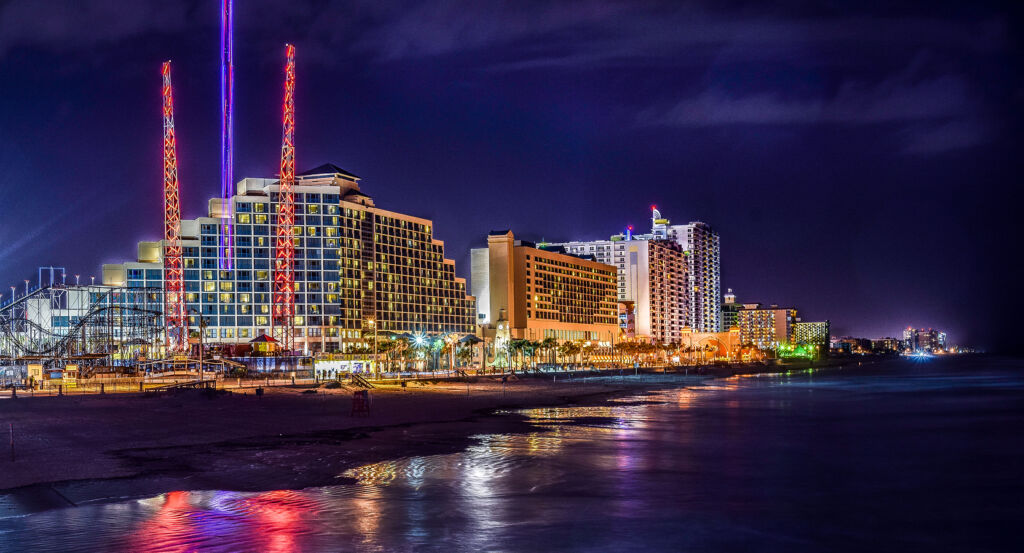
From the moment you arrive, the hotel signals that it belongs to a different category than legacy oceanfront resorts. This is not nostalgia-driven beach lodging, and it does not lean on the past to justify its presence. Instead, it presents Daytona Beach through a contemporary lens, using architecture, scale, and interior composition to create a sense of arrival that feels elevated. The building's clean lines and vertical orientation establish immediate visual authority along the shoreline, offering height and openness. Inside, public spaces are expansive and light-filled, designed to keep the ocean in constant discussion with the interior. Floor-to-ceiling glass draws the Atlantic inward, allowing natural light to move through the hotel throughout the day and reframing the coastline as a living backdrop. The lobby functions as a social crossroads rather than a passageway, encouraging lingering, conversation, and informal gathering without tipping into performance. Seating is layered and intentional, supporting both quiet observation and communal energy, while circulation remains fluid enough that movement never feels obstructed. Guest rooms continue this design-led clarity. Interiors are composed and contemporary, favoring clean palettes, tactile materials, and restraint over ornament. The ocean remains the focal point, framed deliberately through windows and balconies that elevate the view. Beds are generous and deeply comfortable, designed for recovery after long days. Lighting transitions smoothly from day to night, supporting both productivity and rest. Bathrooms feel refined and efficient, offering space, clean lines, and intuitive flow that make daily routines feel effortless. The overall effect is a room that feels calm, confident, and adult, allowing the coastline to set the mood. Outdoor spaces extend this sensibility. The pool deck is positioned to preserve sightlines and maintain social energy without crowding, functioning as a daytime hub that feels active but controlled. Guests move easily between pool, bar, and beach, creating a seamless rhythm between land and water. The beach itself remains wide and open, allowing early walks, midday swims, and evening transitions. Because access is immediate, the ocean becomes part of daily habit. Dining and beverage experiences reinforce the hotel's social-forward identity. Food and drink are framed as extensions of the environment, designed to complement the view and the pace of the day. Meals feel contemporary and flexible, supporting both casual engagement and longer stays. Service throughout the property aligns with this tone. Staff interactions are polished but relaxed, attentive without intrusion, reinforcing a sense of confidence rather than performance. What ultimately defines Renaissance Daytona Beach Oceanfront Hotel is perspective.
What you should know about Renaissance Daytona Beach Oceanfront Hotel.
Renaissance Daytona Beach Oceanfront Hotel is intentionally positioned as a cultural and social bridge between Daytona Beach's legacy character and its emerging modern direction, and that positioning shapes everything from layout to programming.
As part of Marriott's Renaissance brand, the hotel is designed to reflect its location while introducing a global, contemporary sensibility. This property does not replicate a standard beachfront formula. Instead, it interprets Daytona Beach through modern architecture, vertical openness, and flexible public spaces that support both leisure and connection. One lesser-known strength of the hotel lies in how it manages scale. By building upward rather than outward, the property preserves ground-level openness and ensures a higher percentage of rooms receive meaningful ocean views. This vertical approach also creates a different physical relationship with the Atlantic. Higher elevations soften ambient noise, extend sightlines, and allow light to behave differently throughout the day, contributing to a calmer, more expansive experience even during busy periods. Internally, the hotel is engineered for flow. Circulation patterns, elevator placement, and public space distribution are designed to absorb volume. This becomes particularly important during events, conferences, and peak travel seasons, when the hotel operates at high capacity. Sound management plays a quiet but critical role. Construction materials and spatial planning help buffer noise between rooms and public areas, allowing social energy to exist. Operationally, the hotel benefits from systems designed for flexibility. Public areas can shift between quiet daytime use and lively evening energy without reconfiguration, supporting a wide range of guest needs without fragmenting experience. Sustainability considerations are integrated into design and operation, particularly around energy efficiency and water management, which are essential for a large oceanfront property. These systems support long-term performance without drawing attention away from guest experience. The hotel's location also carries strategic weight. Positioned close to Daytona's attractions while remaining visually anchored to the ocean, it allows guests to engage with the city selectively, returning to an environment that remains composed and consistent. Over time, Renaissance Daytona Beach Oceanfront Hotel has attracted travelers who want coastal access without sacrificing modernity, design, or social vitality. In a destination long associated with familiarity, the hotel stands as a marker of Daytona Beach's evolving identity.
How to fold Renaissance Daytona Beach Oceanfront Hotel into your trip.
Renaissance Daytona Beach Oceanfront Hotel is best experienced when you allow its design and ocean alignment to set the rhythm of your days rather than filling them with constant movement.
Begin mornings with light. Let sunrise filter through the room before stepping into the day, using the ocean as a visual reset. Coffee and breakfast work best when paired with the view, allowing the day to unfold. Mid-mornings invite exploration at an easy pace. Walk the beach, swim, or observe the shoreline before returning upward as the sun climbs. The transition between sand and elevation becomes a natural cadence. Late mornings and afternoons can oscillate between pool, room, and quiet public spaces, using design and openness as forms of rest. Lunch fits easily into this flow, casual and unforced, keeping the afternoon open-ended. Afternoons invite choice. Stay within the hotel's orbit and let time stretch, or step out to explore nearby attractions knowing return will feel immediate and calm. As evening approaches, the hotel's social energy subtly increases. Sunset reframes the coastline, compressing the day into color and movement. Dinner becomes a moment to linger rather than schedule, and drinks feel like extensions of conversation rather than endpoints. Returning to the room at night offers immediate decompression. The ocean's presence softens, sound steadies, and sleep arrives. Over multiple days, this pattern compounds. Mornings feel expansive. Afternoons feel balanced. Evenings feel resolved. When departure comes, Renaissance Daytona Beach Oceanfront Hotel leaves behind a clear impression: not of nostalgia revisited, but of a destination seen through a modern lens. This is Daytona Beach experienced with clarity, confidence, and contemporary coastal ease.
Where your story begins.
Foresyte Travel reveals places that feel extraordinary long before you arrive.
Experience premium editorial crafted for luxury travelers.