Why Rodin Museum matters.
Rodin Museum in Philadelphia is a meditation in bronze and stone, a sanctuary where human emotion takes shape in the quiet language of sculpture.
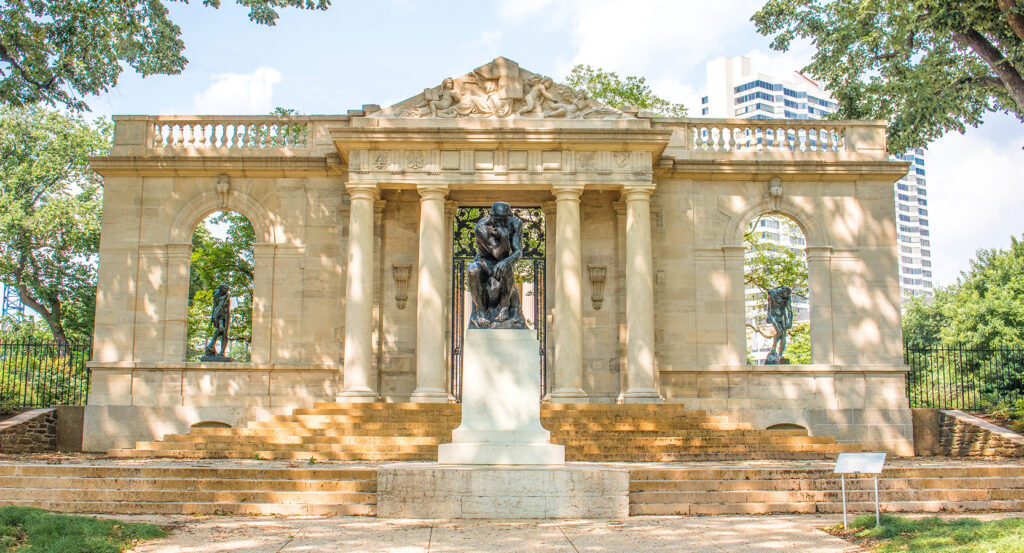
Tucked along the Benjamin Franklin Parkway between the Barnes Foundation and the Philadelphia Museum of Art, this intimate space feels like stepping into a small corner of Paris itself. From the moment you approach its Beaux-Arts façade, framed by formal gardens and reflecting pools, the air shifts, calm, reverent, timeless. Inside, Auguste Rodin's figures emerge from shadow and light, their surfaces alive with tension and tenderness. The Thinker greets you in the courtyard, not as a symbol of intellect, but as a man caught in the ache of thought. Within, The Kiss radiates warmth and sensuality, while The Burghers of Calais captures sacrifice and human dignity with staggering power. The museum houses one of the largest collections of Rodin's work outside France, more than 150 pieces that explore the full range of his genius, from early studies to grand masterpieces. Yet what makes Rodin Museum unforgettable is not its scale, but its intimacy. Each room invites you to linger, to listen, to feel, to witness how Rodin turned the raw material of the human spirit into form.
What defines Rodin Museum.
Beneath its tranquil atmosphere lies a story of vision, devotion, and cultural diplomacy, a transatlantic collaboration that forever shaped Philadelphia's artistic identity.
The museum was born from the passion of Jules E. Mastbaum, a Philadelphia movie-theater magnate who began collecting Rodin's work in the 1920s after being deeply moved by a visit to Paris. Within a few short years, Mastbaum amassed an extraordinary collection, intending to share it with the public as a gift to his city. He commissioned French architect Paul Cret and landscape designer Jacques Gréber, both key figures in the design of the Parkway, to create a setting worthy of the art it would hold. Completed in 1929, the museum opened two years after Mastbaum's death, fulfilling his dream of creating a space where beauty and contemplation could coexist. Every detail of the design echoes Rodin's own philosophy, the harmony between art and nature, the discussion between body and soul. The building's limestone walls seem to breathe in rhythm with the sculptures inside, and the garden, with its fountains, manicured hedges, and gentle symmetry, serves as both frame and sanctuary. Few visitors realize that the museum's collection includes multiple casts and studies that illuminate Rodin's creative process, from rough clay maquettes to polished bronzes. Among its treasures are early versions of The Gates of Hell, a grand work that consumed much of Rodin's career and served as a fountain of ideas for his other sculptures. The museum remains a living tribute to Mastbaum's generosity and Rodin's revolutionary spirit, a union of American philanthropy and French artistry that continues to inspire nearly a century later.
How Rodin Museum fits.
Visiting Rodin Museum is a journey best taken slowly, an experience of stillness and reflection that reveals more the longer you linger.
Begin outside, where The Thinker sits poised above the reflecting pool, his shadow mirrored in the water below. Take a few moments to circle the sculpture; its familiarity fades as you begin to notice the subtlety of his pose, the tension in his hands, the weight of contemplation in his frame. From there, move into the garden court, where The Gates of Hell towers over visitors like a vision from Dante, its writhing figures embodying both torment and transcendence. Inside the museum, follow the natural rhythm of the space. The lighting is soft, the air cool, ideal for noticing the play of texture and shadow across Rodin's bronzes and marbles. Allow yourself to move intuitively, pausing before the tender embrace of The Kiss or the solemn dignity of The Burghers of Calais. Each piece seems to pulse with life, demanding not admiration but empathy. If possible, visit on a weekday morning or late afternoon, when the museum is quiet and the light slants through the windows in golden hues. Pair your visit with a stroll through the neighboring gardens of the Parkway, stopping by the Barnes Foundation or the Philadelphia Museum of Art to see how Rodin's modern humanism paved the way for the expressive forms that followed. End your experience where you began, outside, in the garden, where sculpture and nature merge into silence. Rodin Museum in Philadelphia isn't just a collection of art; it's a mirror of the human condition, carved in bronze and bathed in light, waiting for those willing to look long enough to feel.
Where your story begins.
Foresyte Travel reveals places that feel extraordinary long before you arrive.
Enjoy editorial crafted for luxury travelers.
Foresyte may earn a commission when you book.