
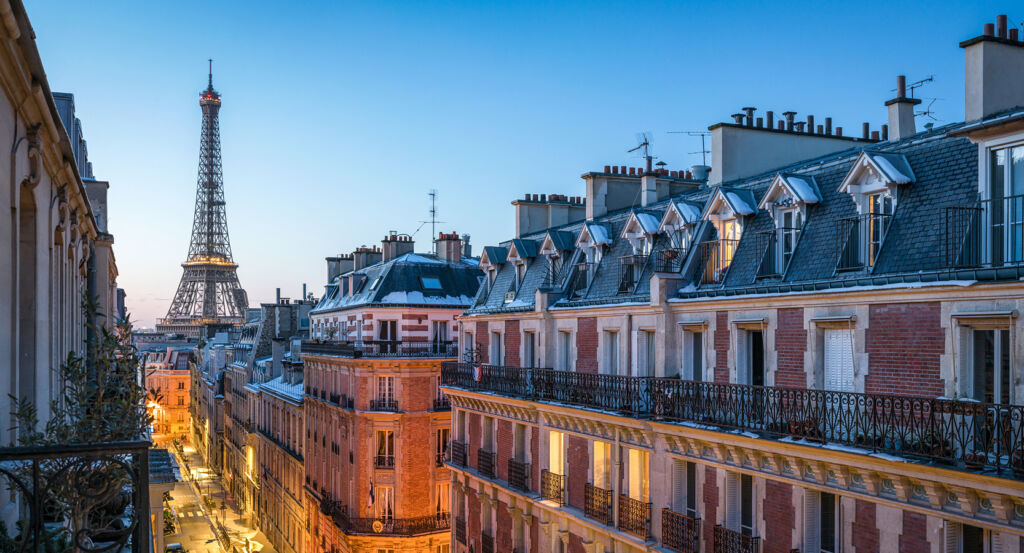
Why Rue de Charenton matters.
Rue de Charenton is a historic Quinze-Vingts corridor where artisan tradition, railway heritage, industrial innovation, and energetic eastern Paris life converge along one of the capital's oldest thoroughfares.
Running through Quinze-Vingts between Place de la Bastille and Porte de Charenton, this expansive corridor unfolds through historic markets, elegant nineteenth century buildings, celebrated cultural venues, neighborhood cafés, independent shops, and beautifully preserved residential architecture that reflects centuries of continuous urban evolution. Former artisan workshops, lively commercial storefronts, broad tree-lined sections, and thriving local businesses create a streetscape where the legacy of the Faubourg Saint-Antoine continues shaping everyday Parisian life. Every stretch of the avenue reveals another chapter in the transformation of eastern Paris from medieval suburb to one of the capital's most dynamic neighborhoods. The result is a corridor defined by historical continuity, commercial vitality, and one of Paris' most significant eastern arteries.
What defines Rue de Charenton.
Rue de Charenton is best known for following the ancient route linking Paris with the medieval town of Charenton while serving for centuries as one of the principal commercial approaches to the capital from southeastern France. During the seventeenth and eighteenth centuries the corridor became closely tied to the flourishing cabinetmaking and decorative arts industries of nearby Faubourg Saint-Antoine, where master ébénistes produced luxury furnishings for the royal court and European aristocracy after benefiting from the district's exemption from restrictive Parisian guild regulations. The avenue entered a new era during the nineteenth century with the arrival of the Gare de Lyon district and the rapid industrialization of eastern Paris, attracting warehouses, manufacturers, wine merchants, and transport businesses that reinforced its importance as a commercial gateway. The corridor also became home to Viaduc des Arts, the remarkable rehabilitation of the nineteenth century Viaduc de Bastille completed in the 1990s by architect Patrick Berger, transforming former railway arches into internationally acclaimed workshops for cabinetmakers, violin makers, glass artists, metalworkers, furniture designers, and luxury artisans while creating one of Europe's most celebrated examples of adaptive urban reuse. Nearby Marché d'Aligre further enriches the avenue's heritage as one of Paris' oldest and most energetic food markets, preserving a marketplace tradition that has animated the neighborhood for generations.
The corridor continues expressing the remarkable continuity between craftsmanship, commerce, transportation, and urban renewal that has defined eastern Paris for centuries. Historic artisan workshops coexist with contemporary design studios, while restored railway infrastructure and long-established neighborhood institutions demonstrate how thoughtful preservation has sustained the district's creative identity. Few streets demonstrate the evolution of Parisian craftsmanship and commercial enterprise as completely as Rue de Charenton.
How Rue de Charenton fits.
Rue de Charenton works as an exploration through Quinze-Vingts' celebrated artisan heritage and historic marketplaces.
Begin at Marché d'Aligre, where one of Paris' liveliest traditional markets introduces the neighborhood's enduring commercial spirit before following Rue de Charenton through the historic Faubourg Saint-Antoine. Continue to Viaduc des Arts, where beautifully restored railway arches house exceptional artisan workshops that celebrate centuries of French craftsmanship. Conclude at Coulée Verte René-Dumont, the pioneering elevated park created atop the former Vincennes railway, where innovative landscape architecture provides a memorable finale celebrating the remarkable reinvention of eastern Paris' industrial legacy. The progression moves naturally from historic commerce to master craftsmanship before culminating in one of the world's earliest elevated urban parks, revealing why Rue de Charenton remains one of Paris' most rewarding historic corridors.
Where your story begins.
Foresyte Travel reveals places that feel extraordinary long before you arrive.
Experience premium editorial crafted for luxury travelers.
Foresyte Travel may earn a commission when you book through the link on this page.














































































































