
Why Quinze-Vingts matters.
Quinze-Vingts is a richly layered enclave where Bastille meets the eastern Right Bank through faubourg streets, secluded artisan courts and broad transportation corridors carrying the district from old Paris toward the Seine.
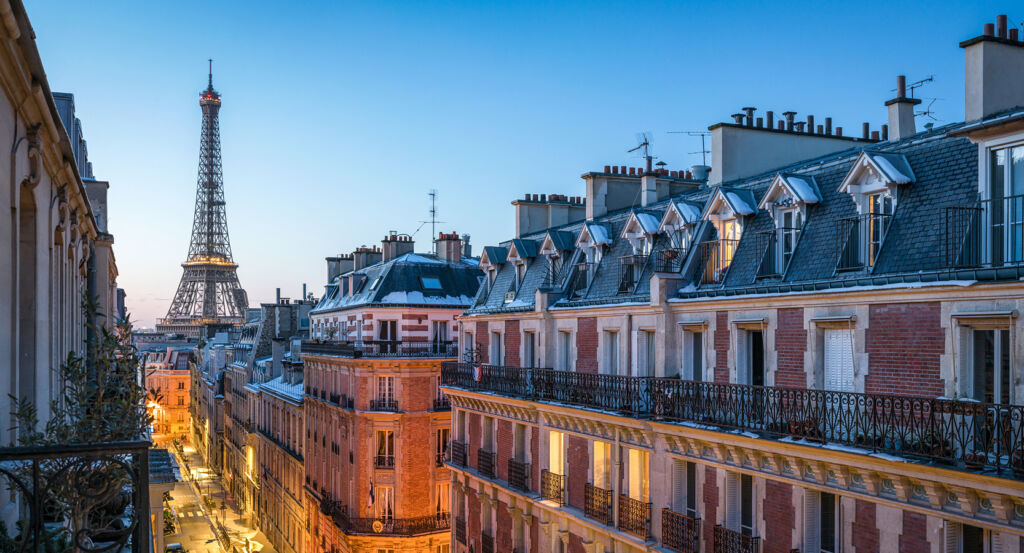
Positioned between Bastille, Sainte-Marguerite, and Bercy, the neighborhood occupies the western edge of the 12th Arrondissement where Rue du Faubourg Saint-Antoine, Rue de Charenton and Avenue Daumesnil spread east from the former city threshold toward Gare de Lyon and the river. Long plots opening through gates into successive courtyards preserve the physical depth of the old faubourg, with residential facades concealing passages once organized around workshops, timber storage and small-scale production. Rue du Faubourg Saint-Antoine establishes the primary encounter through an arterial street whose comparatively formal frontage repeatedly breaks open into enclosed courts carrying the neighborhood far beyond the visible street wall. Rue de Charenton introduces a second spatial rhythm as its older diagonal alignment passes between compact buildings and side streets before approaching the immense transportation infrastructure around Gare de Lyon. Avenue Daumesnil shifts the scale again through its extended nineteenth-century axis and long arcaded structure, adding a strong linear counterpoint to the compressed courts farther north. The result is a neighborhood where inherited faubourg geography and metropolitan infrastructure occupy the same compact territory, preparing a history shaped by the medieval institution for blind Parisians that eventually supplied Quinze-Vingts with its name.
What defines Quinze-Vingts.
Quinze-Vingts is best known for the institution founded by Louis IX 1260 as the Maison des pauvres aveugles de Paris, established to house 300 blind people on territory extending from the present Place du Palais-Royal toward the Tuileries. Its enduring name came from the medieval system of counting by twenties, with fifteen twenties producing the 300 members for whom the congregation was conceived. The community remained near Rue Saint-Honoré for more than five centuries before Cardinal Louis de Rohan initiated its transfer east under Louis XVI. Rohan selected the former Caserne des Mousquetaires Noirs on Rue de Charenton, a complex Robert de Cotte had built between 1699 and 1704 with 340 rooms for the second company of royal musketeers. Louis XVI had dissolved that company in 1775, creating the opportunity for the Quinze-Vingts congregation to occupy the site in 1779 and permanently attach its medieval name to eastern Paris. Medical treatment gradually overtook residence as the institution's central purpose during the nineteenth century. Doctor Fieuzal, supported by Léon Gambetta, established a free ophthalmological clinic there in 1880 for people whose vision remained treatable, beginning the institution's development into a specialist center for eye disease. The complex subsequently served wounded soldiers with ocular injuries during the First World War, and rebuilding between 1957 and 1968 removed most of De Cotte's former barracks. The surviving entrance porch and sections of the Chapelle Saint-Rémy preserve the architectural connection between the musketeers and the hospital, binding a thirteenth-century charitable foundation to more than two centuries of ophthalmology on Rue de Charenton.
Craft production supplied a separate mechanism for shaping the streets surrounding Quinze-Vingts through their position inside the Faubourg Saint-Antoine. The Abbaye Saint-Antoine-des-Champs exercised authority over extensive eastern territory from the Middle Ages, and Louis XI granted its artisans freedom from the powerful Parisian corporations in 1471. Woodworkers used that freedom to experiment beyond tightly controlled guild practices, drawing joiners, cabinetmakers and related specialists into courts extending along the faubourg. The concentration became immense: by 1700 the district contained 500 menuisiers and 400 ébénistes, with royal and aristocratic commissions supporting sophisticated furniture production. Foreign craftsmen joined the cluster during the eighteenth century, including German cabinetmakers who concentrated along Rue du Faubourg Saint-Antoine, Rue de Charenton, Rue de Charonne and nearby streets, creating professional networks in which workshops stood within close reach of complementary trades. Revolutionary politics grew from the same densely populated manufacturing territory as artisans and workers participated in the upheavals of 1789, 1830, 1848 and 1871. Paris divided the old faubourg between the 11th and 12th Arrondissements in 1860, but furniture making persisted along its inherited courts and passages, leaving Quinze-Vingts embedded within a production district whose economic history had developed across centuries of specialized craft.
How Quinze-Vingts fits.
Quinze-Vingts works as the anchor for a daytime exploration connecting a presidential cultural project at Bastille, an early nineteenth-century waterway extending beneath the square and a pioneering planted promenade built along a former railway corridor.
Begin at Opéra Bastille, conceived after François Mitterrand announced plans in 1982 for a new Paris opera house at the symbolically charged Place de la Bastille. An international architectural competition launched in February 1983 drew 756 anonymous projects from 45 nationalities, with Canadian-Uruguayan architect Carlos Ott emerging from the final selection that November at age 35. Foundation work began in 1985, stage equipment followed in 1988 and the completed building opened on July 13, 1989 for the bicentenary of the French Revolution. Robert Wilson staged La Nuit d'avant le jour for the inauguration as Georges Prêtre conducted performers including Plácido Domingo, Barbara Hendricks and Ruggero Raimondi before 32 visiting heads of state. Continue to Port de l'Arsenal, the basin forming the southern beginning of Canal Saint-Martin, whose creation belonged to Napoleon Bonaparte's 1802 program for improving the capital's water supply through the Ourcq, Saint-Denis and Saint-Martin canals. The canal was completed in 1825, linking the Seine with Bassin de la Villette through a hydraulic route later transformed when sections north of Bastille were covered; the Arsenal basin remained exposed beside the former fortress site and was redesigned as a marina in 1983, preserving the visible transition between river navigation and the canal system disappearing beneath Central Paris. Conclude at Coulée verte René-Dumont, where Philippe Mathieux and landscape architect Jacques Vergely converted the abandoned route of the Bastille to La Varenne railway into an elevated and sunken linear garden between 1988 and 1993. Trains had crossed the corridor from 1853 until 1969, passing successively across viaduct, embankment and cutting; the designers retained those changing elevations across a 4.5-kilometer planted route whose elevated section later supplied a precedent studied by the creators of New York's High Line. The progression moves from Ott translating a presidential cultural ambition into a new opera house through Napoleonic hydraulic engineering connecting the Seine with northeastern Paris into Mathieux and Vergely converting obsolete transportation ground into elevated landscape, tracing three generations of metropolitan intervention around Quinze-Vingts.
Where your story begins.
Foresyte Travel reveals places that feel extraordinary long before you arrive.
Experience premium editorial crafted for luxury travelers.
Foresyte Travel may earn a commission when you book through the link on this page.














































































































