
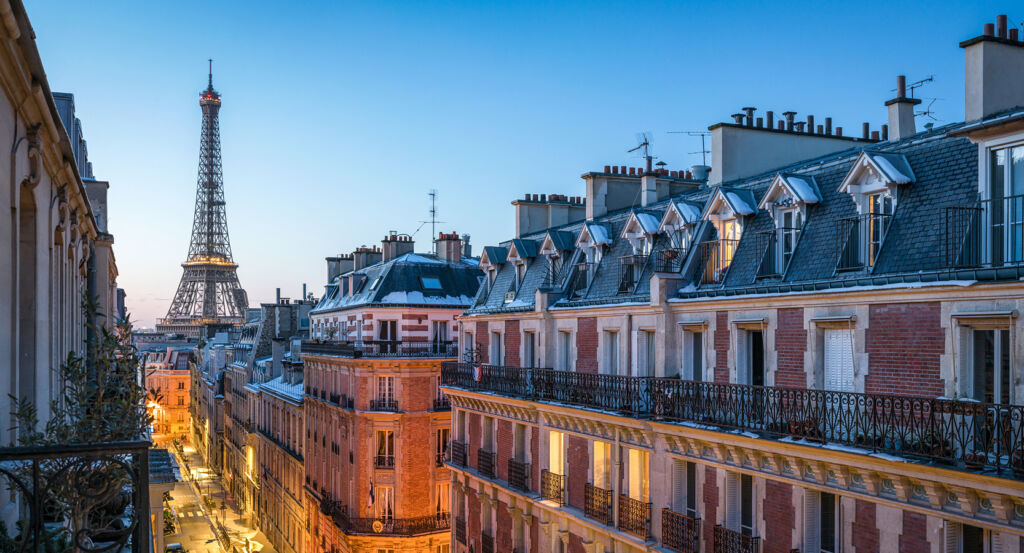
Why 12th Arrondissement matters.
12th Arrondissement is an expansive enclave where the historic Faubourg Saint-Antoine meets eastern Paris through artisan streets, former railway corridors, the Seine-facing territory of Bercy and an exceptional sweep of planted ground extending toward Vincennes.
Positioned between Bastille, the Seine, and Vincennes, the neighborhood occupies a broad eastern sector where Avenue Daumesnil and Rue de Charenton carry Central Paris outward through districts whose changing scale reveals successive stages of metropolitan expansion. Dense blocks and workshop passages define the western edge before the streets broaden around Reuilly and Picpus, then loosen further toward planted avenues and the wooded territory beyond the former fortifications. Rue du Faubourg Saint-Antoine establishes the primary encounter through a centuries-old commercial axis whose deep courtyards preserve the physical logic of furniture production behind comparatively narrow street frontages. Bercy introduces a distinct river-oriented geography through former wine territory where surviving stone storehouses, rail traces and planted public ground recall an economy built around goods arriving from Burgundy and the Seine. Avenue Daumesnil supplies another long eastward movement, linking Bastille with residential streets, former railway infrastructure and the increasingly green approaches to Vincennes. The result is an Arrondissement whose physical breadth carries Paris from old artisan faubourg to river commerce and metropolitan greenery, preparing a history shaped by territories that developed independently before their incorporation into the modern capital.
What you should know 12th Arrondissement.
12th Arrondissement is best known for uniting territories whose artisan, commercial and revolutionary histories developed outside the old center before the enlargement of Paris created the Arrondissement in 1860. Faubourg Saint-Antoine formed its western historical engine, where joiners and cabinetmakers concentrated along a road extending east from the Bastille and built a manufacturing culture around interconnected woodworking trades. The royal Abbaye Saint-Antoine-des-Champs reinforced that development through privileges that distinguished the faubourg from the guild-controlled economy inside Paris, helping workshops multiply through its courtyards and passages. That artisan population became a major political force during the final years of the Ancien Régime, with unrest around Jean-Baptiste Réveillon's wallpaper manufacture erupting in April 1789 before residents of the faubourg participated in the taking of the Bastille on July 14. Revolutionary conflict returned to the eastern district during the nineteenth century, placing the Faubourg Saint-Antoine among the principal Parisian territories associated with the uprisings of 1830 and 1848. A different economy developed beside the Seine at Bercy, where wine merchants benefited from proximity to Paris and from operating beyond its tax boundary, establishing cellars and storehouses that connected the capital with Burgundy. The law extending Paris to the Thiers fortifications reorganized these territories in 1860, combining Quinze-Vingts, part of Bercy and territory from Saint-Mandé into the new Arrondissement. Furniture craftsmanship remained powerful after annexation, and the founding of École Boulle in 1886 carried that woodworking inheritance into formal education in furniture, interior decoration and applied arts.
The eastern landscape developed through another historical mechanism as royal hunting territory became one of Paris's great public green expanses. The woodland around Vincennes had belonged to the forest belt surrounding ancient Lutetia before passing through ecclesiastical and royal possession, and Charles V's fourteenth-century transformation of the Vincennes hunting residence strengthened its connection with the Crown. Louis-Philippe converted the château and domain to military use during the nineteenth century, establishing a new phase before Napoleon III transferred the woodland to the City of Paris for public recreation. Engineer Jean-Charles Alphand then reorganized the landscape through curving paths, four lakes and connecting waterways derived from the scenic principles that also shaped major Second Empire parks. The former military and royal domain consequently became the eastern counterpart to the new planted landscapes appearing elsewhere across Haussmannian Paris. A 1926 decree formally attached the Bois de Vincennes to Paris and the 12th Arrondissement, greatly enlarging the district and binding its dense urban territory to a wooded expanse reaching the municipal boundary. That union explains the Arrondissement's unusual geographic range, in which streets descended from artisan and suburban settlements continue eastward into a landscape whose origins belong to royal hunting, military occupation and nineteenth-century park design.
How 12th Arrondissement fits.
12th Arrondissement works as the anchor for a daytime exploration connecting nineteenth-century railway engineering adapted for contemporary craft, a film institution built around Henri Langlois's preservation campaign and an Art Deco palace whose architecture and decoration preserve the political culture of the 1931 Colonial Exhibition.
Begin at Viaduc des Arts, whose masonry arches belonged to the railway opened in 1859 between Bastille and La Varenne-Saint-Maur, carrying trains above Avenue Daumesnil as the eastern suburbs became increasingly connected with Central Paris. Passenger service ended in 1969, and the City began rehabilitating the viaduct's arches in 1989 before the former railway emerged in the 1990s as an elevated planted route with craft workshops below; 62 vaults survive, with close to 50 devoted to artistic trades, joining nineteenth-century transport engineering to the Arrondissement's much older tradition of specialized making. Continue to Cinémathèque française, founded in 1936 by Henri Langlois, Georges Franju, Jean Mitry and Paul Auguste Harlé to preserve and exhibit films alongside costumes, posters, cameras, drawings and other objects connected with cinema. After more than four decades at Palais de Chaillot, the institution moved to Bercy in September 2005, occupying Frank Gehry's building at 51 Rue de Bercy and bringing collections assembled through Langlois's pioneering conception of cinema preservation into an architectural work originally conceived for another cultural institution. Conclude at Palais de la Porte Dorée, designed by Albert Laprade with Léon Jaussely for the 1931 Exposition coloniale internationale and constructed between 1929 and 1931 as the exhibition's permanent colonial museum. Alfred Auguste Janniot covered the facade with a 1,130-square-meter relief carved with Gabriel Forestier, Charles Barberis and 30 specialist workers, using allegorical imagery to present the colonial economy promoted by the exhibition; Pierre-Henri Ducos de la Haille developed the interior fresco program, and designers including Jacques-Émile Ruhlmann, Eugène Printz, Raymond Subes, Edgar Brandt and Gilbert Poillerat contributed to its decorated salons. The progression moves from railway infrastructure reworked around artistic craft through Langlois's campaign to preserve cinema into Laprade, Janniot and Ducos de la Haille's vast architectural program for the Colonial Exhibition, exposing three distinct moments when eastern Paris became ground for ambitious cultural reinvention.
Where your story begins.
Foresyte Travel reveals places that feel extraordinary long before you arrive.
Experience premium editorial crafted for luxury travelers.
Foresyte Travel may earn a commission when you book through the link on this page.














































































































