
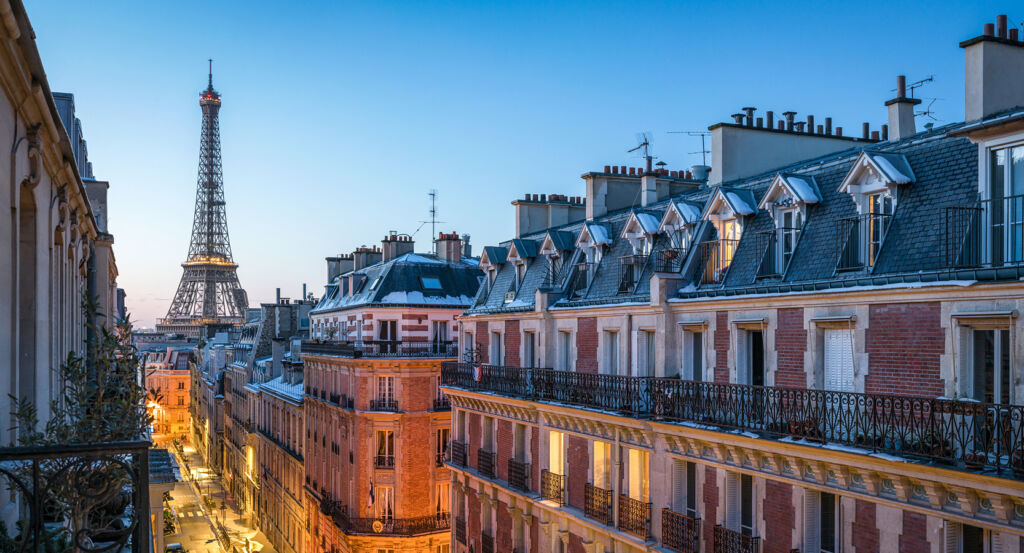
Why you should experience Rue de la Roquette in Paris, France.
Rue de la Roquette is a spirited Roquette corridor where revolutionary history, working-class heritage, creative energy, and contemporary Parisian life converge along one of eastern Paris' most dynamic historic streets.
Running through Roquette between Place de la Bastille and Père-Lachaise, this lively corridor unfolds through neighborhood cafés, independent boutiques, artisan workshops, celebrated restaurants, historic façades, and diverse cultural venues that reflect centuries of continuous transformation. Bustling terraces, local food markets, restored nineteenth century buildings, and thriving creative businesses create a streetscape where the district's industrial past has evolved into one of the capital's most engaging neighborhood destinations. Every stretch of the corridor reveals the resilience and character that have long distinguished the eastern Arrondissements. The result is a corridor defined by cultural authenticity, historical depth, and one of Paris' most compelling urban thoroughfares.
What you should know about Rue de la Roquette.
Rue de la Roquette is best known for connecting the revolutionary heart of Bastille with the former village of La Roquette while witnessing some of the most significant political, industrial, and social transformations in modern Paris. The corridor became internationally associated with Petite Roquette Prison, opened in 1836 by architect Hippolyte Lebas as one of Europe's most influential experiments in cellular incarceration, and Grande Roquette Prison, whose gates received generations of condemned prisoners before its demolition in 1900 after serving as Paris' principal site of public executions. During the nineteenth century the avenue also emerged as the commercial spine of the rapidly industrializing Faubourg Saint-Antoine, supporting cabinetmakers, metalworkers, printers, and skilled artisans whose craftsmanship established eastern Paris as one of France's foremost manufacturing districts. The street's proximity to the July Column, commemorating the Revolution of 1830, and to Père-Lachaise Cemetery, resting place of figures including Oscar Wilde, Frédéric Chopin, Édith Piaf, Jim Morrison, and Marcel Proust, further reinforced its place within the political and cultural history of the capital. In recent decades, thoughtful preservation and adaptive reuse have transformed former workshops and industrial buildings into acclaimed restaurants, galleries, design studios, and independent businesses while retaining the neighborhood's unmistakable working-class identity.
The corridor continues illustrating how Paris repeatedly reinvents its historic neighborhoods without erasing the events and institutions that shaped them. Former industrial buildings now house creative enterprises, surviving nineteenth century architecture preserves the scale of the original faubourg, and longstanding neighborhood establishments coexist alongside contemporary cultural venues that attract a new generation of artists, designers, and entrepreneurs. Few Parisian streets reveal such a complete narrative of revolution, imprisonment, craftsmanship, industrial growth, and urban renewal within a single continuous corridor.
How to fold Rue de la Roquette into your trip.
Rue de la Roquette works as an exploration through Roquette's revolutionary landmarks, neighborhood culture, and historic institutions.
Begin at Place de la Bastille, where the July Column introduces the revolutionary legacy that shaped the district before following Rue de la Roquette through one of eastern Paris' most character-rich corridors. Continue toward Atelier des Lumières, whose immersive digital exhibitions occupy a beautifully repurposed nineteenth century iron foundry reflecting the neighborhood's industrial heritage. Conclude at Père-Lachaise Cemetery, where one of the world's most celebrated burial grounds provides a memorable finale celebrating the extraordinary writers, composers, artists, and public figures whose legacies continue defining Parisian culture. The progression moves naturally from revolutionary history to industrial reinvention before culminating in one of the world's most significant cultural landmarks, revealing why Rue de la Roquette remains one of Paris' most rewarding historic corridors.
Where your story begins.
Foresyte Travel reveals places that feel extraordinary long before you arrive.
Experience premium editorial crafted for luxury travelers.














































































































