
Why Rue Monge matters.
Rue Monge is a historic Sorbonne corridor where scientific discovery, Roman heritage, intellectual tradition, and energetic Left Bank life converge along one of Paris' most influential nineteenth century streets.
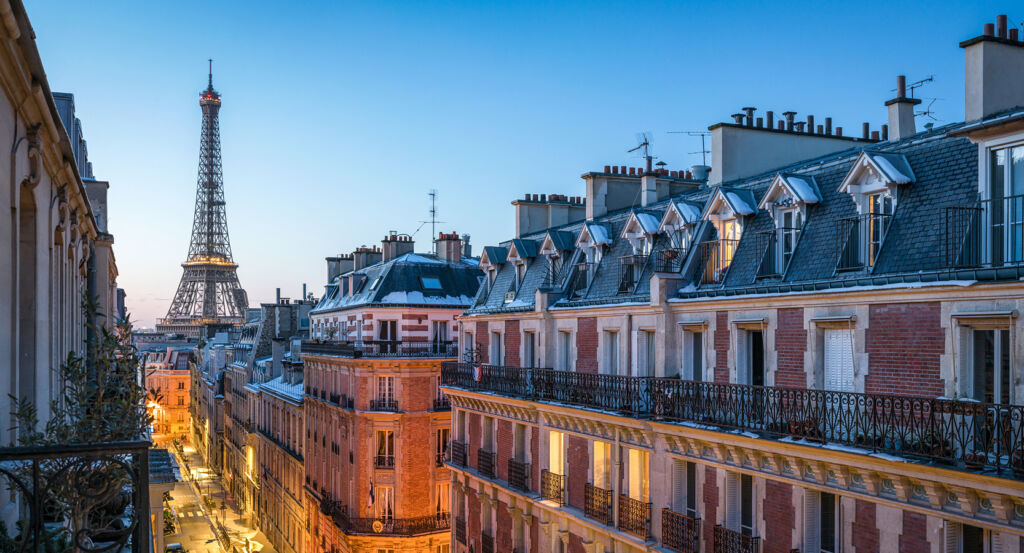
Running through Sorbonne between Jardin des Plantes and Place de la Contrescarpe, this distinguished historic corridor unfolds through elegant Haussmannian buildings, renowned academic institutions, lively neighborhood cafés, traditional markets, independent bookshops, and centuries of architectural heritage that define the character of the Latin Quarter. Graceful limestone façades, thriving terraces, neighborhood merchants, and tree-lined streets create an atmosphere where scholars, researchers, residents, and visitors have long contributed to one of Europe's greatest centers of learning. Every block reflects the enduring relationship between education, science, and everyday Parisian life. The result is a corridor defined by intellectual prestige, historical continuity, and one of the Left Bank's most rewarding urban experiences.
What defines Rue Monge.
Rue Monge is best known for opening in 1868 during Baron Haussmann's transformation of Paris and honoring Gaspard Monge, the pioneering mathematician who founded descriptive geometry, co-founded the École Polytechnique during the French Revolution, and fundamentally shaped modern engineering education through innovations that influenced architecture, military science, and industrial design around the world. The corridor also occupies one of the capital's richest archaeological landscapes through its proximity to the Roman Arènes de Lutèce, where the survival of one of the largest amphitheaters in Roman Gaul reinforces Rue Monge's remarkable connection between ancient Lutetia and the scientific institutions that continue defining the Latin Quarter today.
Rue Monge continues expressing that exceptional legacy through celebrated academic institutions, neighborhood food markets, historic cafés, and independent businesses that sustain the intellectual rhythm of the Left Bank. Carefully preserved nineteenth century architecture, lively public spaces, and enduring scholarly traditions demonstrate how the corridor has successfully united scientific achievement, neighborhood vitality, and nearly two thousand years of Parisian history into one of the city's most distinctive streets.
How Rue Monge fits.
Rue Monge works as an exploration through the Latin Quarter's celebrated scientific institutions, ancient landmarks, and intellectual heritage.
Begin at Jardin des Plantes, where France's premier botanical garden establishes the neighborhood's extraordinary scientific legacy before following Rue Monge through the heart of the historic Left Bank. Continue to Arènes de Lutèce, whose remarkably preserved Roman amphitheater reveals the ancient origins of Paris while providing one of the city's most remarkable archaeological experiences. Conclude at Panthéon, where France's greatest scientists, writers, and national figures rest beneath one of the capital's defining monuments, providing a fitting finale celebrating knowledge, history, and intellectual achievement. The progression moves naturally from scientific discovery to Roman antiquity before concluding through France's national temple of greatness, revealing why Rue Monge remains one of Paris' most inspiring historic corridors.
Where your story begins.
Foresyte Travel reveals places that feel extraordinary long before you arrive.
Experience premium editorial crafted for luxury travelers.
Foresyte Travel may earn a commission when you book through the link on this page.














































































































