
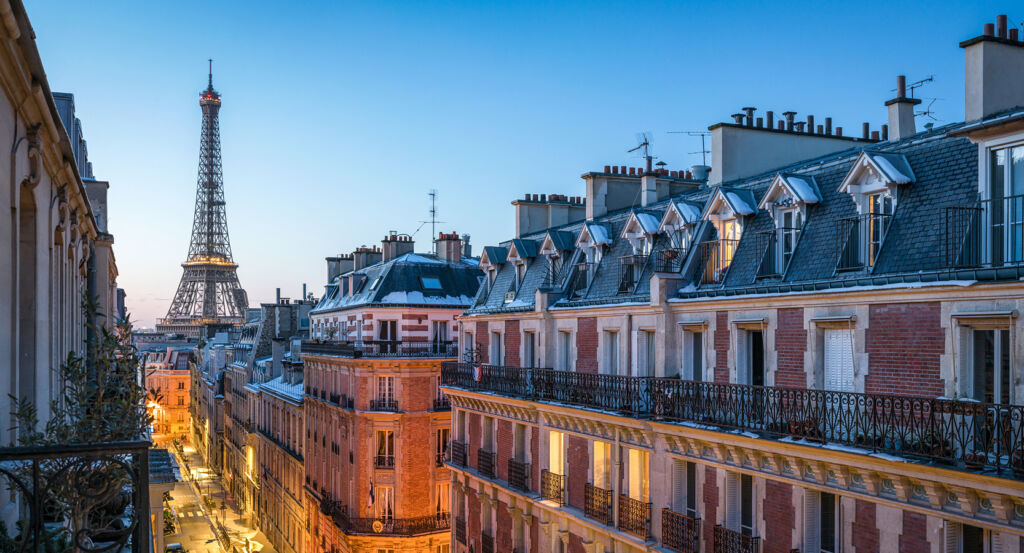
Why Rue Mouffetard matters.
Rue Mouffetard is a renowned Sorbonne corridor where Roman origins, neighborhood tradition, culinary heritage, and centuries of Left Bank life converge along one of Paris' oldest and most atmospheric streets.
Running through Sorbonne between Place de la Contrescarpe and Saint-Médard, this lively historic corridor unfolds through centuries-old stone buildings, thriving market stalls, independent food merchants, traditional cafés, artisan bakeries, and intimate façades that preserve the unmistakable rhythm of everyday Paris. Narrow medieval proportions, energetic terraces, colorful produce displays, and enduring neighborhood institutions create an immersive streetscape where generations of students, residents, merchants, and visitors have shaped one of the capital's most authentic urban experiences. Every block reflects the remarkable continuity of a street whose commercial and cultural traditions have endured since antiquity. The result is a corridor defined by historical depth, neighborhood vitality, and one of Paris' most celebrated market streets.
What defines Rue Mouffetard.
Rue Mouffetard is best known for preserving the route of the ancient Roman road leading south from Lutetia toward Italy, making it among the oldest continuously used streets in Paris while evolving into the Left Bank's foremost medieval market street supplying food, wine, and agricultural goods to generations of Parisians. The corridor also became closely associated with the intellectual life of the Latin Quarter through its proximity to the University of Paris, while celebrated writers including Ernest Hemingway, whose memoir A Moveable Feast vividly described the neighborhood's cafés, markets, and daily life during the 1920s, immortalized Rue Mouffetard as one of the city's defining expressions of authentic Parisian street culture.
Rue Mouffetard continues celebrating that extraordinary legacy through family-owned cheesemongers, butchers, greengrocers, pâtisseries, wine merchants, cafés, and specialty food shops that sustain one of Paris' richest culinary traditions. Medieval architecture, lively open-air commerce, and a deeply rooted neighborhood character preserve the atmosphere that has distinguished the corridor for nearly two thousand years, allowing visitors to experience one of the capital's most enduring expressions of local life.
How Rue Mouffetard fits.
Rue Mouffetard works as a culinary and historical exploration through the Latin Quarter's oldest streets and cultural landmarks.
Begin at Panthéon, where France's grand temple to national achievement introduces the remarkable intellectual heritage of the Left Bank before strolling downhill toward Rue Mouffetard. Continue to Place de la Contrescarpe, whose lively cafés and historic character provide the perfect transition into one of Paris' most celebrated market streets. Conclude at Arènes de Lutèce, where the remarkably preserved Roman amphitheater offers a memorable finale celebrating the ancient origins that continue defining this extraordinary neighborhood. The progression moves naturally from national history to neighborhood life before concluding through one of Paris' greatest archaeological landmarks, revealing why Rue Mouffetard remains one of the capital's most authentic historic corridors.
Where your story begins.
Foresyte Travel reveals places that feel extraordinary long before you arrive.
Enjoy editorial crafted for luxury travelers.
Foresyte may earn a commission when you book.














































































































