
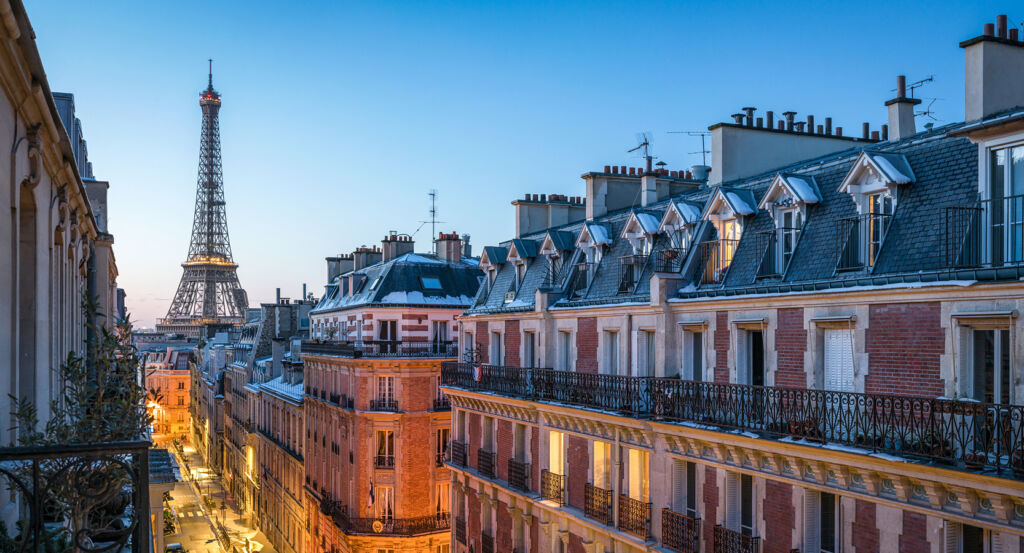
Why you should experience Salpêtrière in Paris, France.
Salpêtrière is a historic Left Bank neighborhood where medical innovation, scientific discovery, architectural grandeur, and centuries of human resilience converge around one of the world's most influential healthcare institutions.
Positioned between Jardin des Plantes, Croulebarbe, and the Seine, this expansive district weaves together grand seventeenth-century hospital architecture, peaceful courtyards, research institutes, university campuses, riverside promenades, and broad tree-lined avenues into a landscape that has shaped the global history of medicine for more than 350 years. Grand pavilions, historic chapels, contemporary clinical facilities, and internationally respected research centers stand beside quiet residential streets, reflecting an extraordinary continuity between scientific progress and everyday Parisian life. Established under Louis XIV as one of Europe's largest charitable institutions before evolving into a global center of neurological research and medical education, Salpêtrière continues defining Paris through scholarship, innovation, and compassionate care. The result is a neighborhood defined by scientific achievement, architectural continuity, and one of the most influential medical legacies in the world.
What you should know about Salpêtrière.
Salpêtrière is best known for centering upon the Pitié-Salpêtrière Hospital, founded in 1656 as part of Louis XIV's Hôpital Général and transformed during the nineteenth century by neurologist Jean-Martin Charcot into the world's leading center for the scientific study of neurological disease, where pioneering research into multiple sclerosis, Parkinson's disease, amyotrophic lateral sclerosis, hysteria, and modern clinical neurology attracted physicians from across Europe while profoundly influencing figures including Sigmund Freud, Joseph Babinski, Georges Gilles de la Tourette, and Pierre Marie. The immense institution evolved from one of Europe's largest charitable hospitals into the birthplace of modern neurology through Charcot's internationally renowned clinical lectures, systematic observation of neurological disorders, groundbreaking medical photography, pathological anatomy, and rigorous bedside teaching, establishing a model of clinical medicine whose influence permanently reshaped neurological diagnosis, medical education, and neuroscientific research around the world.
That extraordinary scientific legacy remains embedded throughout the neighborhood, where historic hospital buildings continue operating alongside cutting-edge laboratories, university departments, and one of Europe's foremost academic medical campuses. Broad courtyards, the remarkable seventeenth-century Chapelle Saint-Louis, preserved pavilions, specialized institutes, and contemporary research facilities collectively demonstrate how successive generations expanded rather than replaced the institution's original mission of care, education, and discovery. Few places anywhere have contributed so continuously to the advancement of medicine, making Salpêtrière not simply a historic district but one of the foundational landscapes in the development of modern neuroscience and clinical practice.
How to fold Salpêtrière into your trip.
Salpêtrière works as an exploration of Paris's medical heritage, grand architecture, and Left Bank intellectual history.
Begin at Chapelle Saint-Louis de la Salpêtrière, where the extraordinary seventeenth-century domed church immediately introduces the grand vision behind one of Europe's largest historic hospital complexes before exploring the surrounding grounds. Continue to Jardin des Plantes, whose world-renowned botanical collections, galleries, and scientific institutions reinforce the neighborhood's enduring relationship with research, education, and discovery. Conclude at Institut du Monde Arabe, where innovative architecture and internationally acclaimed exhibitions provide a compelling finale celebrating the exchange of knowledge, culture, and scholarship across centuries. The progression moves naturally from grand hospital architecture to scientific exploration before concluding through one of Paris's defining cultural institutions, revealing why Salpêtrière remains one of the capital's most intellectually significant neighborhoods.
Where your story begins.
Foresyte Travel reveals places that feel extraordinary long before you arrive.
Experience premium editorial crafted for luxury travelers.














































































































