
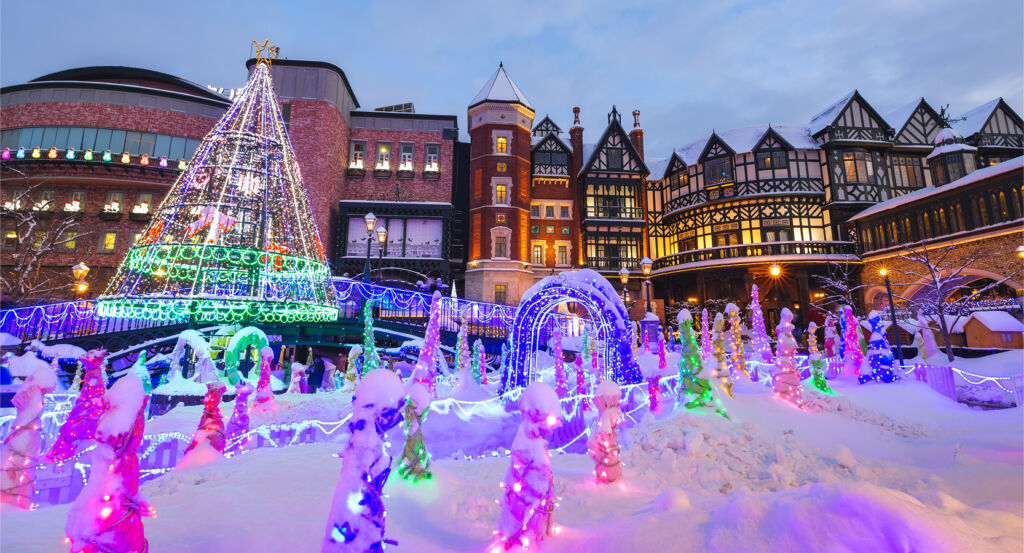
Why you should experience Sapporo Grand Hotel in Sapporo, Japan.
Sapporo Grand Hotel is a historic city landmark that is defined by enduring refinement and quiet confidence, offering a stay where the rhythm of Hokkaido's capital is felt through measured comfort.
Located in the heart of Sapporo within easy walking distance of Odori Park, major transit connections, and urban corridors, this hotel occupies a distinct place in the city's consciousness, simultaneously present in daily life and convivially removed from its bustle. Arrival here is not about showmanship; it is about easing into a space that knows exactly what it is and what it offers. The lobby's proportions are composed rather than theatrical, circulation lines are clear, and lighting is balanced to support orientation without competing with daylight. Materials, warm woods, soft metals, and deep textiles, convey substance rather than trend, establishing a tone of calm competence rather than decoration. Shared spaces feel purposeful: seating that accommodates planning, reading, or quiet pause; finishes that feel familiar under hand; and lighting that supports both alertness and transition. Guest rooms extend this internal logic with layouts that feel generous in their restraint. Beds are substantial and engineered for true restorative sleep, not visual flash. Furnishings are modern but unobtrusive, selected to support daily use. Windows frame city views that change with sky and season, from Odori's green ribbons to the distant mountain edge, reminding you that the city is not backdrop, but context. Bathrooms are thoughtfully composed for routine ease and personal reset. Across the property, the experience feels sophisticated, grounded, and deeply familiar. Sapporo Grand Hotel is ideal for travelers who want Sapporo to feel steady, approachable, and unmistakably authentic as a capital city, a place encountered through context and presence.
What you should know about Sapporo Grand Hotel.
Sapporo Grand Hotel is best known for institutional longevity and urban continuity, a hospitality philosophy that treats consistency, proportion, and functional calm as core components of comfort.
This hotel has been part of Sapporo's architectural and social landscape for decades, and its design reflects an understanding of what sustained presence demands. Arrival is a clear example: there is no dramatic threshold, no theatrical staging. Instead, you move from street to interior with an ease born of clear sightlines and intentional restraint. Shared spaces are composed to support presence. Materials are chosen for quiet resilience, timbers that read warm without sheen, fabrics that absorb sound rather than reflect it, and surfaces that feel tactile under hand rather than graphic. Acoustic behavior is a subtle strength here. Despite being centrally located, exterior urban noise settles into context rather than intrusion, and interior sound dissipates in ways that respect stillness without isolating you from place. Lighting strategy reinforces this ambient consistency. Daylight enters public areas and rooms with even balance, while artificial illumination remains warm and steady, avoiding dramatic contrasts that could disrupt perception. This visual consistency supports circadian rhythm. Service culture mirrors this foundational calm. Interactions are courteous, precise, and unfussy, focused on practical clarity. Staff provide guidance rooted in actual movement, transit access, walking routes, dining clusters, rather than theatrical storytelling or themed experiences. There is an implicit respect for autonomy: you are supported. Another dimension of the hotel's character is how it reframes routine itself. Odori Park's seasonal flows, the City Hall's regular rhythm, and the quiet pulse of office districts nearby all become sources of spatial orientation. Over multiple nights, this regularity becomes grounding. Routes become familiar, landmarks anchor memory, and presence becomes easy. The hotel does not rely on decorative cultural motifs or thematic program to establish place. Its character emerges from durability of design, consistency of experience, and clarity of purpose.
How to fold Sapporo Grand Hotel into your trip.
Sapporo Grand Hotel works as a central urban basecamp, a place that supports both intentional exploration and genuine rest.
Begin your mornings on foot. Step outside into Odori's broad avenues, seasonal gardens, and planned city grid. Let the neighborhood's order and clarity support efficient movement to museums, markets, waterfront promenades, and cultural destinations. Because the hotel is centrally located and easy to navigate, returning midday is seamless, a quiet shower, a brief reset, or a moment of calm before heading back out. Afternoon excursions can flex between neighborhood discovery and coordinated longer outings, culinary districts, transit corridors, or mountain edges are all reachable. Evenings unfold with composure. Dine nearby in local favorites or upscale options, then return to the hotel's deliberate calm where rest feels like a natural continuation of the day. Over longer stays, the advantages compound. Sapporo's clear layout becomes intuitive, routes become familiar, and daily patterns settle into rhythm. Business travelers benefit from the hotel's proximity to transit and its operational clarity, which preserves focus between commitments. Leisure travelers gain endurance, the ability to explore widely. Anchoring your stay at Sapporo Grand Hotel allows the city to be encountered as a coherent, navigable environment, not a sequence of disjointed experiences. The hotel does not compete with glitzy resorts or thematic escapes. It offers something more enduring: stability, composure, and spatial clarity. In doing so, it delivers a stay that feels thoughtfully arranged, steady, and deeply connected to Sapporo's urban logic, where rest is not withdrawal from place, but the foundation that makes engagement possible.
Where your story begins.
Foresyte Travel reveals places that feel extraordinary long before you arrive.
Experience premium editorial crafted for luxury travelers.

















































































































