Why you should experience Sears Street in Dallas, Texas.
Sears Street is a historic Cedars corridor where industrial heritage, creative revitalization, and urban innovation converge along one of the neighborhood's enduring streets.
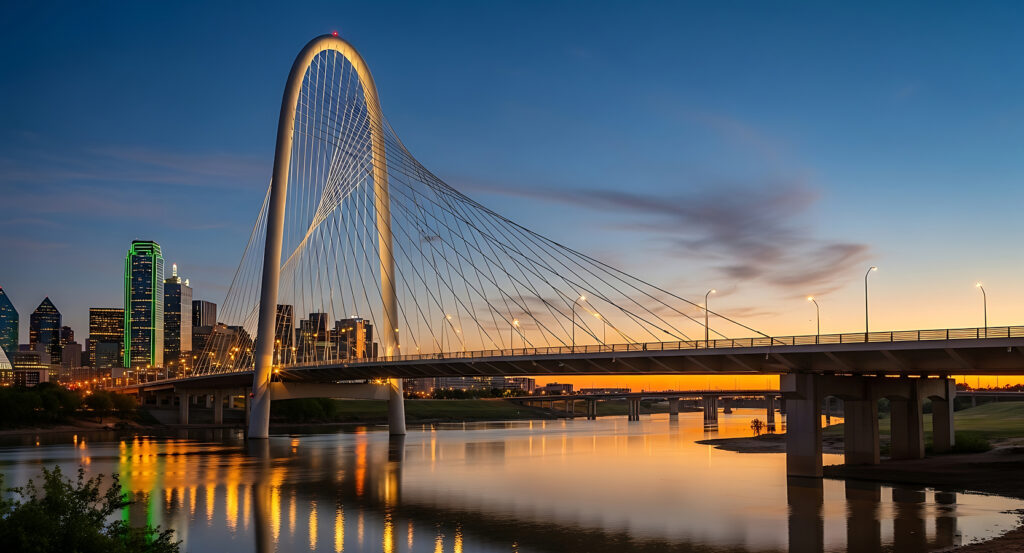
Running through the Cedars between Downtown, South Dallas, and the Trinity River, this evolving corridor connects adaptive reuse warehouses, creative studios, neighborhood businesses, public art, contemporary residential developments, and welcoming pedestrian spaces that collectively showcase Dallas' remarkable urban transformation. Historic brick industrial buildings, architecturally significant warehouses, landscaped streetscapes, artist workspaces, locally owned cafés, energetic gathering places, and thoughtfully restored commercial properties create an urban landscape where generations of manufacturers, entrepreneurs, artists, designers, and residents have shaped one of Dallas' most dynamic neighborhoods. Sears Street developed as part of the city's expanding warehouse and manufacturing district before evolving into a defining neighborhood connector while preserving its industrial character and creative identity. The result is a corridor defined by adaptive reuse, entrepreneurial spirit, and enduring urban significance.
What you should know about Sears Street.
Sears Street is best known for South Side on Lamar, the landmark 1910 Sears, Roebuck & Co. catalog distribution center transformed into one of the largest historic mixed use redevelopment projects in Texas, preserving more than one million square feet of industrial architecture.
Constructed to serve the booming mail order business across the Southwest, the massive warehouse became one of Dallas' most important industrial landmarks through its innovative reinforced concrete construction, expansive floorplates, and central role in regional commerce. Following decades of industrial use, the building underwent a nationally recognized adaptive reuse transformation that introduced artist lofts, galleries, offices, restaurants, and creative workspaces while preserving its historic architectural character. Today, South Side on Lamar remains a defining symbol of the Cedars' revival and one of the country's most successful examples of industrial preservation. That extraordinary transformation has established Sears Street as a corridor closely connected to one of Dallas' greatest adaptive reuse landmarks.
How to fold Sears Street into your trip.
Sears Street works as an exploration of Dallas' industrial heritage, creative culture, and architectural preservation.
Begin at South Side on Lamar, where the grand former Sears warehouse immediately establishes the corridor's defining historic identity. Continue toward Pioneer Plaza, where the celebrated bronze cattle drive sculpture provides broader perspective on Dallas' frontier heritage and downtown evolution. From there, make your way to Reunion Tower, where panoramic skyline views provide a memorable conclusion while celebrating one of the city's most recognizable architectural landmarks. Along the route, you'll encounter architecturally significant industrial buildings, welcoming public spaces, thriving creative businesses, beautifully preserved warehouses, celebrated civic landmarks, and energetic neighborhood gathering places that reveal the Cedars' exceptional depth. The progression moves naturally from one of Texas' greatest adaptive reuse projects to Dallas' iconic public sculpture to the city's signature observation tower, demonstrating how Sears Street connects industrial history, community life, and architectural discovery within the heart of the Cedars.
Where your story begins.
Foresyte Travel reveals places that feel extraordinary long before you arrive.
Experience premium editorial crafted for luxury travelers.