
Why Sheung Wan matters.
Sheung Wan is a historic waterfront district where Chinese heritage, entrepreneurial spirit, and contemporary creative culture converge on some of the city's oldest streets.
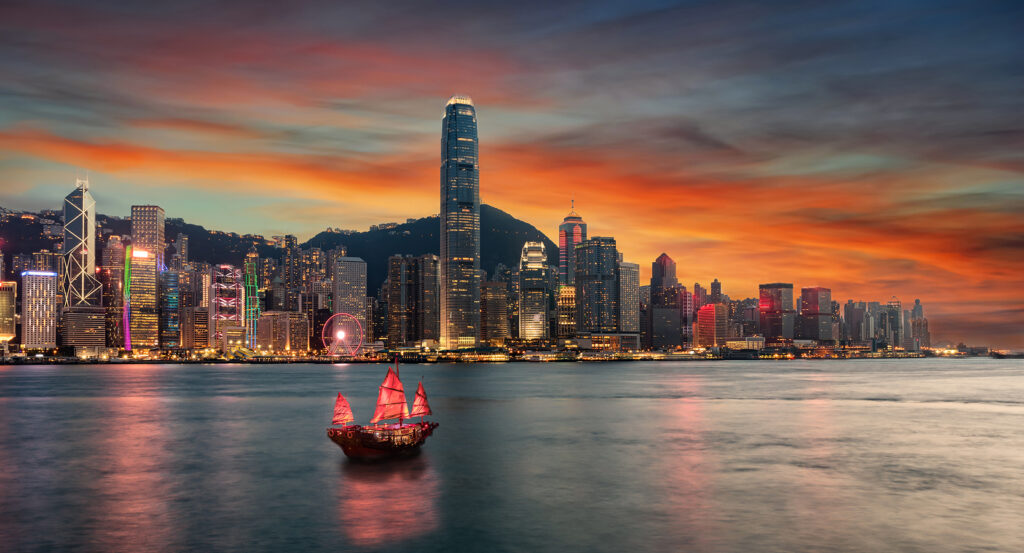
Narrow lanes, traditional medicine shops, restored colonial buildings, trendy galleries, and thriving commercial corridors create a neighborhood that reflects both Hong Kong's origins and its constant reinvention. As one of the earliest settled areas on Hong Kong Island, the district developed into a center of trade, migration, and commerce that helped shape the city's identity. Historic shop houses stand beside modern cafés and creative workspaces while traditional businesses continue operating in streets that have served generations of merchants and residents. The neighborhood's layered character creates a uniquely authentic urban environment where cultural heritage remains highly visible amid contemporary change. Its proximity to the harbor and city center reinforces its longstanding role as a gateway for commerce and exchange. To the east, Central's towering financial district and civic landmarks extend naturally from Sheung Wan along Hong Kong Island's northern shoreline, reinforcing the neighborhood's position within the city's historic urban core. Every alleyway, storefront, and market street reflects a district shaped by trade, migration, and cultural continuity.
What defines Sheung Wan.
Sheung Wan is best known for being home to Hong Kong's historic dried seafood and traditional medicine trade, among the city's oldest and most enduring commercial traditions.
For generations, merchants imported specialty goods from across China and beyond, establishing a network of businesses that became central to the district's identity. Dried seafood, herbal remedies, and traditional products were traded through streets that evolved into some of Hong Kong's most distinctive commercial corridors. The concentration of these businesses helped establish Sheung Wan as a vital link between Chinese cultural traditions and Hong Kong's role as an international trading port. Many of these enterprises continue operating today, preserving a unique aspect of the city's heritage. Few neighborhoods in Hong Kong possess such a direct connection to its historic mercantile foundations.
How Sheung Wan fits.
Sheung Wan works as an exploration of the historic streets, cultural landmarks, and traditional marketplaces that define one of the city's oldest districts.
Begin at Man Mo Temple, where the neighborhood's defining connection to Chinese heritage and community life immediately comes into focus. Continue along Hollywood Road, whose antique shops, galleries, and historic buildings reveal the district's evolution from colonial trading center to creative destination. From there, make your way to Western Market, where heritage architecture and longstanding commercial traditions provide deeper insight into the neighborhood's mercantile past. Along the route, you'll encounter traditional medicine shops, dried seafood merchants, street art, historic stairways, independent cafés, cultural venues, and preserved shop houses that showcase the district's remarkable depth. The progression moves naturally from spiritual landmark to historic commercial corridor to heritage marketplace, revealing the forces that shaped the neighborhood. Sheung Wan remains one of the city's most culturally significant districts, preserving a remarkable balance between tradition, creativity, and everyday urban life.
Where your story begins.
Foresyte Travel reveals places that feel extraordinary long before you arrive.
Enjoy editorial crafted for luxury travelers.
Foresyte may earn a commission when you book.

















































































































